




403
Sorry!!
Error! We're sorry, but the page you were looking for doesn't exist.
Why Artist Marita Setas Ferro Has Been Crocheting Sea Creatures
(MENAFN- Khaleej Times)
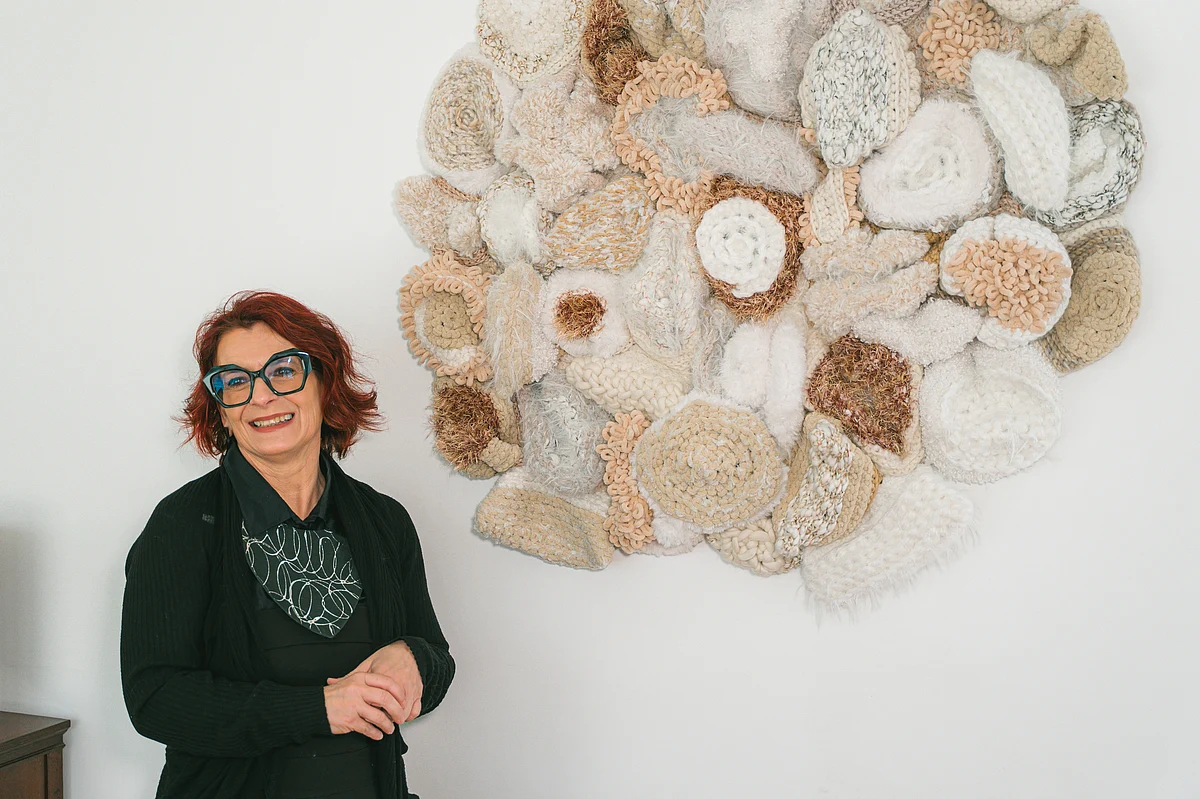
With its kaleidoscope of colours, underwater marine life has been an eternal muse for textile artist Marita Setas Ferro. Luminescent corals, vibrant sea anemones, and shimmering sea beds are reinterpreted through intricate knitting and crochet techniques with her deft hands. Blending craft, culture and contemporary expression, the Portuguese artist brings alive marine and geological forms with yarn and needle. As part of her ongoing series, Things in Nature, a collection of soft textile sculptures, titled Anemones in Volcanic Rock, are currently on display at Hotel Indigo, Downtown, and at Double J Collective Gallery in Dubai.
At the heart of Ferro's creations lie subtle messages around conserving environment and sustainable traditional textile practices.“I wanted to crochet a piece that would invite engagement and provoke thought about these beautiful yet vulnerable marine creatures. Sea anemones with their vibrant colours, graceful organic forms, and spherical shapes have always mesmerised me,” says Ferro, who is the artistic director at Double J Collective Gallery, a European Union climate ambassador and a sustainability fashion specialist.
Recommended For YouThe centrepiece of this series is a striking hexagram-shaped crochet installation in bold hues of grey, burgundy, saffron, and copper soldered together with metal rings. The threads used in the sculpture are carefully chosen from old shops with leftover stocks and yarn boutiques, to keep the craft practice eco-conscious.
Found across all oceans, sea anemones are invertebrates that resemble blooming flowers; they are very flexible, with tentacles that can regenerate. While creating her installation, Ferro says, she was inspired by several intriguing aspects of the sea creatures.“Regeneration and metamorphosis are integral to an artist's work. Anemones with their regenerative powers and poetic movements perfectly embody this concept. Their presence in my work is not just aesthetic but also metaphorical as they have the ability to reinvent, survive change and express beauty through transformation,” she details.
In continuation with her artistic representation of marine natural elements Ferro has crocheted corals, starfishes and shells. Woven with spools of vivid yarn, the creatures appear as seen through a magnifying glass. At the eighth Espinho International Art Biennial, which opened in June 2025 in Portugal, Ferro presented Luminescent Corals - a captivating textile artwork inspired from bioluminescent corals found in the ocean's depths.“During my research on marine life I discovered deep sea corals that emit bioluminescence. Even in darkness they glow with their internal light. And their colours are exceptionally eye-catching in deep blues, purples and greens. Some of them possess medicinal values. The fact that such tiny creatures hidden away from humanity could emit light and heal life was profoundly inspiring for me, and it became the seed for this namesake artwork,” she says.
The series, Things from Nature, is an artistic alert, a call to protect the irreplaceable beauty of nature. Through her textile reinterpretation, the artist expects to evoke a sense of wonder and awareness about life underwater.“I hope when people see my work, they not only admire it aesthetically but also reflect on the fragility of our planet and the urgent need to stop harming the very world that sustains us.”
Her intense love for the sea and her attempt to capture its beauty with her needles stems from having lived along the seashore for many years. Born in 1967 in Beira, Mozambique, Ferro spent the first two years of her life barefoot on the beach playing by the Indian Ocean. Later, her family moved to Porto, a beautiful historic city in Portugal, shaped by granite and sea mist at the mouth of the Douro river.“Our summers were spent by the seaside or in the countryside harvesting almonds, picking grapes, climbing trees, and tasting fruit straight from the trees,” she recollects.
Her father, a nature-loving doctor, and mother, a ceramist, deeply influenced her love for nature and the arts.“At home we would watch nature programmes by Sir David Attenborough and the underwater adventures of French diver Jacques Cousteau. These weekend family rituals planted lasting visual and emotional impressions on my mind that even today pulse through my artistic brain. When I began experimenting with thick yarn and crochet hooks, I naturally gravitated towards creating three dimensional forms, tactile sculptures that echo the complexity of marine life,” Ferro says.
With her background in fine arts and sculpture, Ferro initially worked with metal, wood and leather. Later, as she discovered textile techniques, she instantly felt aligned with the flexibility of the material. Crochet came into her life 16 years ago, when she was 42. Until then, she says, she only knew how to knit. “I made my first crochet sculpture in 2013 as a way to de-stress. I loved it so much that I kept creating. I exhibited my work for the first time in 2015 and again in 2018 in Portugal, but back then textile art was not widely understood. It was only in 2022, when I participated in World Art Dubai, that my work received due recognition,” she reveals.
Today she finds crochet meditative and soothing.“Now I crochet all the time. It's repetitive motions feel like I am having a quiet conversation with myself. I am most at peace with my hook and ball,” she adds.
Her creative process involves watching documentaries, browsing through underwater photography books and collecting images of coral reefs and ocean landscapes. She then carefully selects threads and textures. The final artistic composition, she says, emerges intuitively as she crochets each element while mentally envisioning the entire piece.“Each crochet sculpture takes hours of handwork. Anemones in Volcanic Rock has been one of my most lengthy projects. Between choosing materials, creating the metal structure, stuffing, hand stitching the backing and refining each detail, it took me around 400 hours.”
Besides being a sculptor and crocheter, Ferro also runs an award-winning sustainable accessories brand focused on upcycling and zero waste, made with eco-friendly materials. In her role as an EU climate ambassador she creates awareness about climate change and the importance of sustainable handicrafts.“Sustainability is our responsibility. It's about questioning how we live, create and consume. Overproduction and excess are wasteful and ultimately harmful. As artists and makers we must reflect deeply on the materials we use and the legacy we would leave behind,” she suggests.
Textile art, agrees Ferro, is experiencing a powerful renaissance as a contemporary form of expression. Crochet and knitting are part of broader movements where traditional handicrafts are being revalued.“Textile craft carries emotional resonance and cultural memory, which make them especially compelling. In an increasingly digital world, handmade, unpredictable and deeply human creations remind us of our connection with materiality, traditions and the beauty of imperfection,” she says.

Legal Disclaimer:
MENAFN provides the
information “as is” without warranty of any kind. We do not accept
any responsibility or liability for the accuracy, content, images,
videos, licenses, completeness, legality, or reliability of the information
contained in this article. If you have any complaints or copyright
issues related to this article, kindly contact the provider above.
Most popular stories
Market Research

More Story





Comments
No comment