




403
Sorry!!
Error! We're sorry, but the page you were looking for doesn't exist.
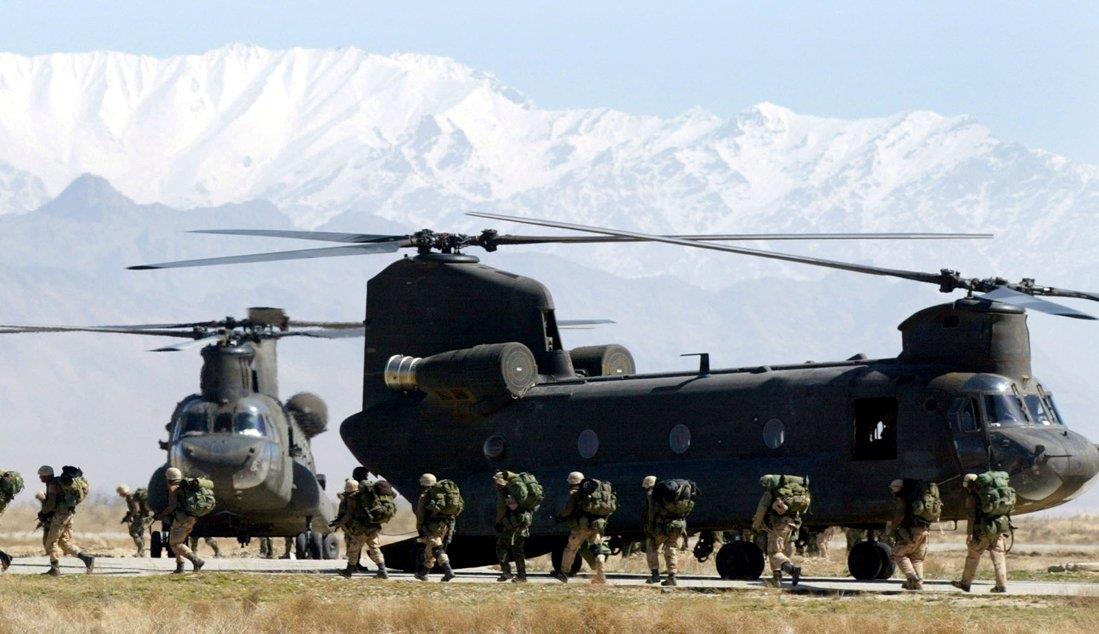
Bagram Airfield: Could Afghanistan's Former US Base Spark A New Uschina Strategic Contest?
(MENAFN- Khaama Press) Najeebullah Rahmati, PhD Scholar, EFL-University, Hyderabad, India.
Bagram Airfield, once the largest U.S. military base in Afghanistan, has reemerged in global debate. Its strategic location near China and Central Asia fuels speculation about potential U.S.–China competition over influence and control. While Washington denies any Chinese presence at Bagram, President Donald Trump claims otherwise, linking the airfield to broader geopolitical rivalries. Analysts say its position could make it a focal point in future regional power struggles.
For two decades, U.S. and NATO forces maintained Bagram Airfield as their largest military base in Afghanistan, a hub for combat operations, logistics, and intelligence gathering. Strategically located just north of Kabul, the base allowed the United States to project power across Central and South Asia.
When U.S. and allied troops withdrew in 2021, Bagram was abandoned and later taken over by the Taliban. According to a 2022 U.S. Department of Defense Inspector General report, approximately $7 billion worth of U.S.-funded military equipment, including aircraft, armored vehicles, and weapons-remained in Afghanistan. Much of this was later displayed by the Taliban.
U.S. President Donald Trump has repeatedly condemned the decision to vacate Bagram, calling it a historic strategic blunder. He claims-without providing evidence-that China has since occupied the airfield, portraying it as a loss with significant geopolitical consequences.
Trump has stressed Bagram's proximity to western China's Xinjiang region, home to sensitive military and nuclear facilities, stating:“We wanted to keep Bagram-not for Afghanistan, but because it's exactly an hour from where China builds its nuclear weapons.”
In speeches and interviews, Trump has asserted that“China now controls Bagram” and that the U.S.“handed over one of the largest military airfields in the world” after spending decades and billions of dollars to build and operate it. He has called the withdrawal“the most embarrassing moment in U.S. history.”
However, no credible evidence supports claims of a Chinese military presence at Bagram. Beijing has neither confirmed such a deployment nor demonstrated intent to establish a permanent base there.
Analysts argue that Trump's narrative serves a domestic political purpose: to undermine Democrats' security credentials ahead of elections. They note that Trump himself initiated the withdrawal process under the February 2020 Doha Agreement with the Taliban, which paved the way for the eventual U.S. exit.
Strategic experts emphasize that returning to Bagram would be costly, politically fraught, and strategically unnecessary under current conditions. Advances in surveillance and strike capabilities allow Washington to monitor threats remotely without a permanent ground presence.
Moreover, reoccupying the airfield would require Taliban consent-implying de facto recognition of their regime-or direct military action, neither of which aligns with current U.S. policy.
China, for its part, has generally avoided foreign military entanglements. Its foreign policy emphasizes economic engagement, non-interference, and cooperation with existing governments, rather than military occupation or regime change.
Beijing's activities in Afghanistan remain limited to investment interests and cautious diplomatic engagement. It has contributed relatively little humanitarian aid compared to other major donors and has not taken a leadership role in regional Afghanistan peace talks.
Afghan observers suggest that if the Taliban were to permit foreign use of Bagram, they might prefer U.S. involvement over China's, seeing greater potential for aid, recognition, and political leverage. Bagram remains a symbol of the U.S. war in Afghanistan and its contentious end, but no verified evidence supports claims of Chinese control.
Trump's assertions appear aimed more at political point-scoring than at reflecting ground realities, especially given his own role in setting the withdrawal in motion. For now, Bagram's fate hinges on Taliban calculations, U.S. strategic priorities, and the broader U.S.-China rivalry-none of which point to an imminent foreign reoccupation.
Facebook Twitter WhatsApp Email Print Telegram
Legal Disclaimer:
MENAFN provides the
information “as is” without warranty of any kind. We do not accept
any responsibility or liability for the accuracy, content, images,
videos, licenses, completeness, legality, or reliability of the information
contained in this article. If you have any complaints or copyright
issues related to this article, kindly contact the provider above.
Most popular stories
Market Research

More Story






Comments
No comment