




403
Sorry!!
Error! We're sorry, but the page you were looking for doesn't exist.
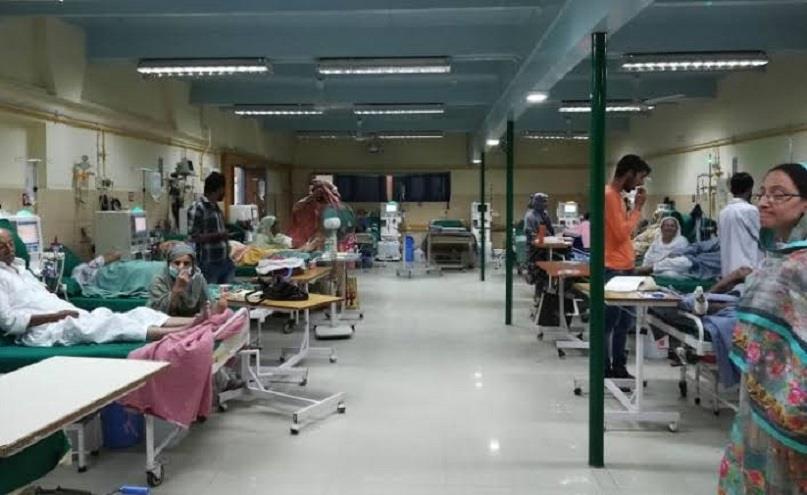
Sick And Struggling: How Healthcare Is Breaking Kashmiri Families
(MENAFN- Kashmir Observer) Srinagar- Earlier this summer, outside SMHS Hospital in Srinagar, a carpenter waited in the shade with his wife. She rested on his shoulder as they stood in line for her prescriptions.
Her heart medicine costs ₹3,500 a month, about half of what he earns.
“We skip meals sometimes,” he said.“She misses doses when we can't afford them. I borrow when there's no other way.”
The carpenter's story is not an exception. It's becoming the rule in Kashmir, where healthcare is turning into a punishing economic burden.
Read Also DHSK Transfers 31 Doctors J&K Adds 250 MBBS Seats In 5 Years: GoIWith strained public hospitals, pricey private care, and patchy insurance coverage, falling sick now means falling behind.
Rural areas face the hardest blows. In 2024, government records showed only 1,030 out of 1,677 sanctioned rural medical officer posts filled. Nearly half of specialist posts at community health centers were also vacant.
“There's a huge gap between demand and supply,” said Dr. Iqbal Mir, who runs a primary health centre in South Kashmir.“Patients often wait weeks or travel hours for even routine check-ups.”
This shortage drives patients toward Srinagar or private clinics, both of which raise out-of-pocket costs.
A visit for a simple diagnostic test can wipe out a week's wages. Private MRIs now cost over ₹5,000. A normal delivery in a Srinagar private hospital ranges from ₹50,000 to ₹80,000.
“These are not elective expenses. These are childbirth, heart issues, cancer care,” said Dr. Naseema Shah, a retired health officer.“People are choosing loans, selling land, even skipping treatment altogether.”
To offset these costs, the government launched the Ayushman Bharat PM-JAY SEHAT scheme in 2020. Over 90% of families in Jammu and Kashmir now have SEHAT cards. But universal enrollment doesn't mean universal access.
“On paper, the scheme looks perfect. In practice, it's another maze,” said Dr. Javed Ahmad Wani, a health policy researcher based in Anantnag.
A 2025 field study across Srinagar, Baramulla, Budgam, and Anantnag found that 11% of eligible patients didn't use the scheme. Of those who did, nearly 7% still paid significant out-of-pocket costs.
“Hospitals deny coverage under the pretext of unlisted procedures or exceeding ceilings,” Dr. Wani said.“The poorest patients end up footing bills they were promised would be covered.”
This is compounded by what remains uncovered – outpatient care.
Most medical expenses in Kashmir come not from surgeries or hospital stays, but from everyday needs: doctor consultations, scans, antibiotics, long-term medication. None of this is reliably reimbursed.
Nationally, nearly 60.6% of health spending in India comes from household pockets. In J&K, the figure is slightly lower, about 43%.
But with low average incomes and widespread informal work, these numbers hurt more here.
“Out-of-pocket payments are the most regressive form of healthcare financing,” said Dr. Ritika Khera, a Delhi-based public health expert.“They hit the poor hardest. The impact is doubly severe in Kashmir, where people already face mobility and livelihood challenges.”
Inflation adds further strain.
In 2023–24, India's general inflation stood around 4.8%. Medical inflation, however, soared to 6.5–8.2%. These figures are likely elevated in Kashmir, given the region's persistent logistical constraints.
“We've seen prices for basic antibiotics triple in five years,” said Muneer Shah, who runs a pharmacy in Sopore.“People come with prescriptions, look at the total, and walk away without buying the full dose.”
This rationing has direct health consequences.
According to NFHS-5, 27% of children in Jammu and Kashmir under five are stunted. Underweight rates rose from 12% in the previous survey to 19%. Wasting, another sign of acute undernutrition, also increased.
“These children are not just underfed, they're under-treated,” said Dr. Kulsum Jan, a pediatrician in Kupwara.“A child who isn't treated for a chest infection today might have reduced lung function forever. That means lower school attendance, reduced adult productivity, and higher future health costs.”
This, experts say, is an economic issue as much as a medical one.
“We're witnessing a classic poverty trap,” said Dr. Rashid Hassan, a public health consultant with years of work in conflict zones.“A single illness tips families into debt. That debt affects nutrition, schooling, and work. It's a chain reaction.”
So what can be done?
“We need clear price caps on essential medicines and diagnostics,” said Dr. Khera.“And we need district-level monitoring to enforce it.”
Hospitals must be held accountable for denying SEHAT coverage.“We need to audit refusals and penalize gatekeeping,” said Dr. Wani.“We must make sure people get what the card promises.”
Experts also bat for filling the workforce gap.“We should offer rural doctors proper salaries, housing, and career incentives,” said Dr. Shah.“It's hard work in hard places. It needs real rewards.”
Also, he said, we must invest in outpatient care.
“Preventive services and early diagnosis are cheaper and more effective,” said Dr. Shah.“Waiting until someone lands in the ICU is the most expensive way to run a health system.”
Legal Disclaimer:
MENAFN provides the
information “as is” without warranty of any kind. We do not accept
any responsibility or liability for the accuracy, content, images,
videos, licenses, completeness, legality, or reliability of the information
contained in this article. If you have any complaints or copyright
issues related to this article, kindly contact the provider above.
Most popular stories
Market Research

More Story



Comments
No comment