









403
Sorry!!
Error! We're sorry, but the page you were looking for doesn't exist.
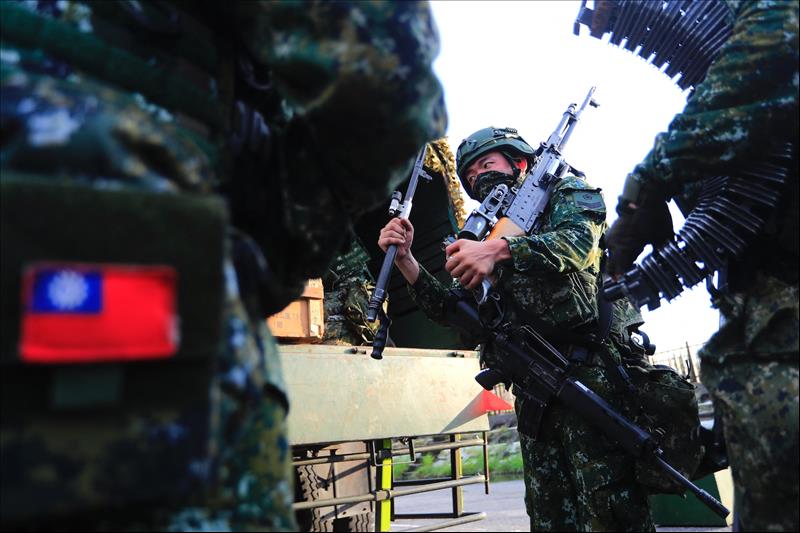
Dependent And Exposed: Taiwan's Military Supply Chain Crisis
(MENAFN- Asia Times)
In modern war, the side that produces faster usually wins. From the Liberty ships of World War II to the drone swarms in Ukraine , mass production, not just strategy or bravery, decides who survives. Taiwan does not yet have that ability.
Currently, Taiwan can produce about 1,000 precision missiles per year . Experts in the United States estimate it would need more than 1,200 anti-ship missile to stop a full-scale Chinese invasion, and that is only one type.
The People's Liberation Army (PLA) already has more than 3,000 ballistic and cruise missiles and can make more quickly. Taiwan's current stockpile could be used up in just a few days.
Instead of building enough at home, Taiwan has depended on US arms sales. That choice now carries high risk. As of 2024, more than US$21 billion in promised weapons-more than Taiwan's whole annual defense budget-have not yet arrived .
Some will not come until 2026 or later, including fighter jets, anti-ship missiles and mobile rocket systems. Even simple weapons like Stinger missiles are arriving three years late. If a war starts soon, they will not be ready.
At home, Taiwan spends only 2.45% of its GDP on defense . This is less than what South Korea or Israel spends and barely more than the NATO guideline. More than half of that spending goes to salaries and upkeep. Less than one-fourth of defense purchases are made inside Taiwan .
Almost all of that goes to just three state-owned companies: the National Chung-Shan Institute of Science and Technology (NCSIST) , the Aerospace Industrial Development Corporation (AIDC) and the China Shipbuilding Corporation (CSBC) . Private industry is barely involved.
So can Taiwan build a real defense industry with the ability to produce large numbers of weapons, manage supply chains and sustain operations during war?
Labor, output and planning gapsTaiwan is known for high-end manufacturing, but it lacks war-ready production. There are about 2.99 million workers in manufacturing, making up 25.9% of the national workforce. Yet fewer than 0.15% work in the defense sector.
Taiwan has around 1.1 million skilled technicians under age 40 who could be mobilized, but there is no reserve force or civilian-military integration plan . The country has only one composite repair dock for fighter jets , and it can service just four to six aircraft at a time.
Production levels are far too low for modern war. In 2024, Taiwan is expected to produce just over 1,000 missiles in total, including surface-to-air, anti-ship, and cruise types . Hsiung Sheng long-range missiles are produced at 140 units per year . Sky Bow III interceptors are limited to 96 per year. The Chien Hsiang loitering munition line is growing but still capped at 200 units annually.

Legal Disclaimer:
MENAFN provides the
information “as is” without warranty of any kind. We do not accept
any responsibility or liability for the accuracy, content, images,
videos, licenses, completeness, legality, or reliability of the information
contained in this article. If you have any complaints or copyright
issues related to this article, kindly contact the provider above.
Most popular stories
Market Research

More Story






Comments
No comment