




403
Sorry!!
Error! We're sorry, but the page you were looking for doesn't exist.
PM Tours Key Economic Sites In Aqaba, Lays Foundation Stones For Ammonia And LPG Storage Projects
(MENAFN- Jordan News Agency)
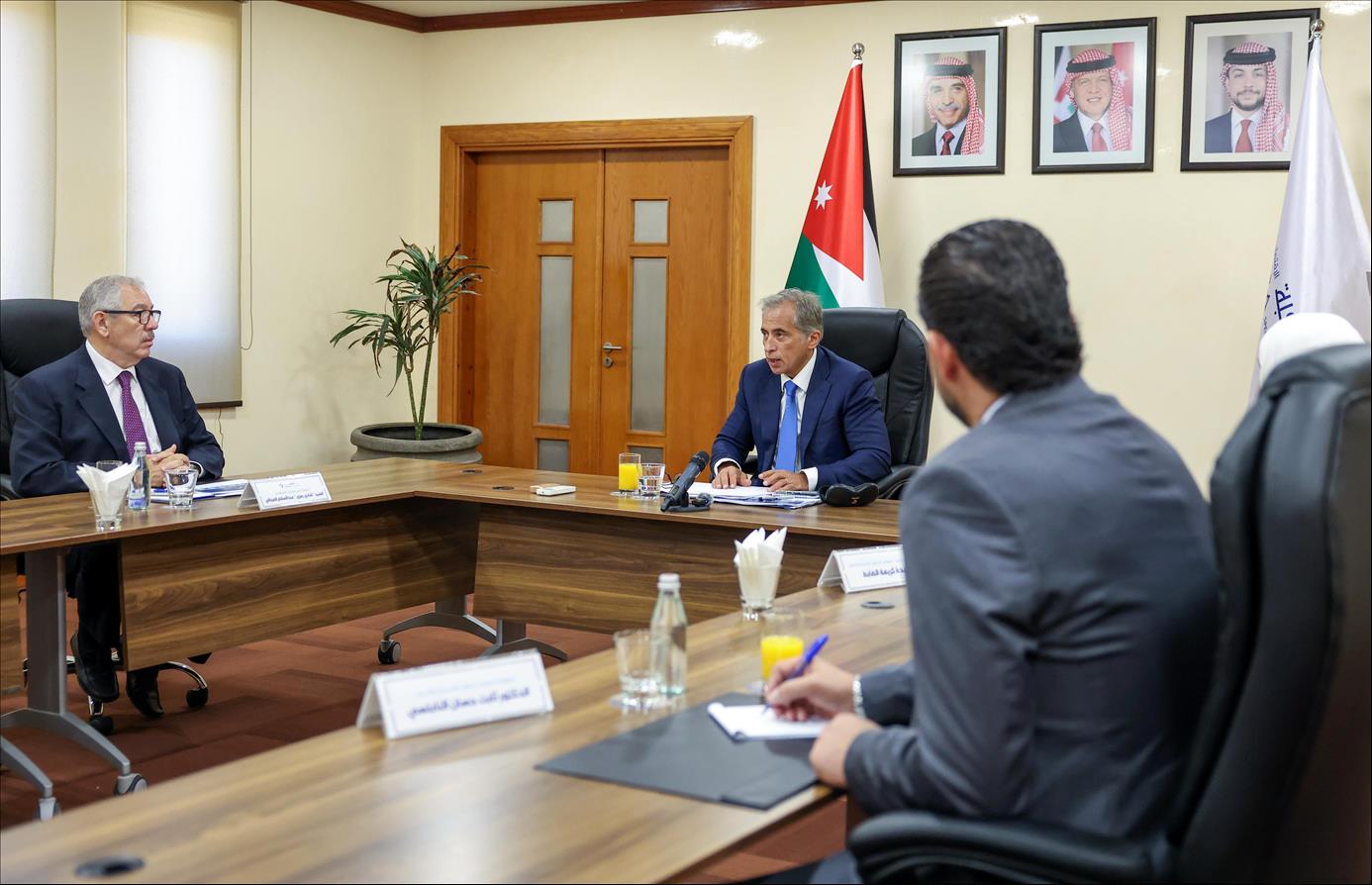
Aqaba, July 10 (Petra) – Prime Minister Jaafar Hassan on Thursday inspected nine economic and development sites across Aqaba and laid foundation stones for two strategic projects an ammonia storage tank and a liquefied petroleum gas (LPG) facility.
During a meeting with the board of commissioners of the Aqaba Special Economic Zone Authority (ASEZA), Hassan described Aqaba as a cornerstone of Jordan's economy with major strategic projects ahead, calling for intensified efforts to support and implement them.
Earlier in the day, the prime minister toured several sites including the Durra border crossing development project, the new Aqaba Port, Aqaba Container Terminal, an emergency and ambulance center, ammonia storage facilities at the Jordan Phosphate Mines Company's (JPMC) industrial complex, the Jordanian Gas Cylinder Manufacturing Company, the Aqaba Marine Reserve International Center, the Aqaba International Exhibition Center, and the Aqaba International Racetrack.
Hassan said Aqaba should serve as a model for the future of Jordan by applying advanced systems, global best practices, and cutting-edge technologies that can later be replicated across the country. He stressed the importance of prioritizing services for residents and visitors alike, in line with Aqaba's growing economy.
The prime minister noted Aqaba's long-standing strategic importance, pointing to the attention it has received from King Abdullah and Crown Prince Hussein over the past 25 years. The city has seen significant demographic and economic expansion, he added.
Hassan said several major strategic projects will be launched from Aqaba, including the National Water Carrier Project and a railway line connecting Aqaba to the mining hubs of Shidiya and Ghor al-Safi, in addition to large-scale port and logistics developments. He underscored the need to implement these projects to support national economic growth and job creation in line with Jordan's Economic Modernization Vision.
He also emphasized the need to ensure that services in Aqaba match the scale of its growing economy and meet the needs of both locals and tourists. Particular attention, he said, should be given to maintaining high-quality, sustainable services on the city's public beaches, and to developing Wadi Rum as a key tourism destination.
During the meeting, ASEZA Chief Commissioner Shadi Al-Majali reaffirmed the authority's commitment to supporting projects that build on Aqaba's achievements over the past two decades and serve the broader national economy.
While visiting the Durra border crossing, Hassan was briefed on progress at the site, which handles around 100,000 travelers monthly. The project, spanning 300 dunums, includes separate lanes and facilities for cargo and tourism traffic, aiming to accommodate increasing demand.
At the new Aqaba Port, the prime minister inspected nine berths, including two dedicated to grain silos. Developed to high standards, the port's handling capacity has reached 6 million tonnes annually a 9% increase over last year while its grain storage capacity has expanded to 200,000 tonnes.
Hassan also visited the Aqaba Container Terminal, one of Jordan's most successful public-private partnerships. A $242 million investment deal was signed last October between Aqaba Development Corporation and APM Terminals to upgrade the terminal into a green port, enhancing Aqaba's regional and global logistics role.
At the JPMC industrial complex in southern Aqaba, Hassan laid the foundation stone for a new double-walled ammonia storage tank. JPMC Chairman Mohammad Thneibat and CEO Abdulwahab Rawad said the project will boost ammonia storage capacity to 55,000 tonnes, supporting the company's fertilizer production and enabling safer maintenance of older tanks.
He also laid the foundation stone for two LPG storage tanks being built by the Jordan Petroleum Refinery Company at a cost of over JOD 15 million, with a combined capacity of 2,000 metric tonnes. Company CEO Eng. Hassan Hiari said the project will improve storage and distribution efficiency while enhancing energy supply security.
During his visit to the JPMC emergency and ambulance center, Hassan praised the facility's round-the-clock, free services for industrial workers and the local community. The center includes 10 beds, multiple specialties, and three ambulances.
He also visited the Aqaba Marine Reserve International Center, established under royal directives to protect the region's unique coral reefs and promote advanced coral cultivation technologies. The center is part of efforts to make Aqaba a global hub for marine conservation and blue economy initiatives.
The prime minister's tour included a stop at the Aqaba International Exhibition Center, located west of King Hussein International Airport. Covering 170,000 square meters, the center aims to position Aqaba as a regional destination for conferences and trade shows. Hassan also visited the Aqaba International Racetrack, designed to host international motorsport events and boost tourism.
He was accompanied by ASEZA Chief Commissioner Shadi Al-Majali, Aqaba Development Corporation CEO Hussein Safadi, and Aqaba Governor Ayman Al-Awaisheh.
A briefing presented to the prime minister outlined Aqaba's recent growth and future projections across sectors including population, healthcare, education, tourism, industry, and port operations.
According to the briefing, Aqaba currently hosts 12 ports, 30 berths, and four industrial zones. Container traffic has grown from 765,662 containers in 2021 to 906,882 currently, with a projected increase to over 977,000 by 2028. The number of registered companies is expected to rise from 1,682 in 2021 to 1,935 by 2028.
In tourism, hotel rooms are projected to nearly double by 2028 from 5,818 in 2021 to 10,849 up from 7,133 this year. ASEZA also aims to increase average tourist stays from 1.8 days in 2024 to three days by 2028.
The city's population has grown from around 217,000 in 2021 to over 250,000 today, with projections reaching over 267,000 by 2028. Aqaba currently has four hospitals, with two more expected by 2028, and four universities.
Aqaba, July 10 (Petra) – Prime Minister Jaafar Hassan on Thursday inspected nine economic and development sites across Aqaba and laid foundation stones for two strategic projects an ammonia storage tank and a liquefied petroleum gas (LPG) facility.
During a meeting with the board of commissioners of the Aqaba Special Economic Zone Authority (ASEZA), Hassan described Aqaba as a cornerstone of Jordan's economy with major strategic projects ahead, calling for intensified efforts to support and implement them.
Earlier in the day, the prime minister toured several sites including the Durra border crossing development project, the new Aqaba Port, Aqaba Container Terminal, an emergency and ambulance center, ammonia storage facilities at the Jordan Phosphate Mines Company's (JPMC) industrial complex, the Jordanian Gas Cylinder Manufacturing Company, the Aqaba Marine Reserve International Center, the Aqaba International Exhibition Center, and the Aqaba International Racetrack.
Hassan said Aqaba should serve as a model for the future of Jordan by applying advanced systems, global best practices, and cutting-edge technologies that can later be replicated across the country. He stressed the importance of prioritizing services for residents and visitors alike, in line with Aqaba's growing economy.
The prime minister noted Aqaba's long-standing strategic importance, pointing to the attention it has received from King Abdullah and Crown Prince Hussein over the past 25 years. The city has seen significant demographic and economic expansion, he added.
Hassan said several major strategic projects will be launched from Aqaba, including the National Water Carrier Project and a railway line connecting Aqaba to the mining hubs of Shidiya and Ghor al-Safi, in addition to large-scale port and logistics developments. He underscored the need to implement these projects to support national economic growth and job creation in line with Jordan's Economic Modernization Vision.
He also emphasized the need to ensure that services in Aqaba match the scale of its growing economy and meet the needs of both locals and tourists. Particular attention, he said, should be given to maintaining high-quality, sustainable services on the city's public beaches, and to developing Wadi Rum as a key tourism destination.
During the meeting, ASEZA Chief Commissioner Shadi Al-Majali reaffirmed the authority's commitment to supporting projects that build on Aqaba's achievements over the past two decades and serve the broader national economy.
While visiting the Durra border crossing, Hassan was briefed on progress at the site, which handles around 100,000 travelers monthly. The project, spanning 300 dunums, includes separate lanes and facilities for cargo and tourism traffic, aiming to accommodate increasing demand.
At the new Aqaba Port, the prime minister inspected nine berths, including two dedicated to grain silos. Developed to high standards, the port's handling capacity has reached 6 million tonnes annually a 9% increase over last year while its grain storage capacity has expanded to 200,000 tonnes.
Hassan also visited the Aqaba Container Terminal, one of Jordan's most successful public-private partnerships. A $242 million investment deal was signed last October between Aqaba Development Corporation and APM Terminals to upgrade the terminal into a green port, enhancing Aqaba's regional and global logistics role.
At the JPMC industrial complex in southern Aqaba, Hassan laid the foundation stone for a new double-walled ammonia storage tank. JPMC Chairman Mohammad Thneibat and CEO Abdulwahab Rawad said the project will boost ammonia storage capacity to 55,000 tonnes, supporting the company's fertilizer production and enabling safer maintenance of older tanks.
He also laid the foundation stone for two LPG storage tanks being built by the Jordan Petroleum Refinery Company at a cost of over JOD 15 million, with a combined capacity of 2,000 metric tonnes. Company CEO Eng. Hassan Hiari said the project will improve storage and distribution efficiency while enhancing energy supply security.
During his visit to the JPMC emergency and ambulance center, Hassan praised the facility's round-the-clock, free services for industrial workers and the local community. The center includes 10 beds, multiple specialties, and three ambulances.
He also visited the Aqaba Marine Reserve International Center, established under royal directives to protect the region's unique coral reefs and promote advanced coral cultivation technologies. The center is part of efforts to make Aqaba a global hub for marine conservation and blue economy initiatives.
The prime minister's tour included a stop at the Aqaba International Exhibition Center, located west of King Hussein International Airport. Covering 170,000 square meters, the center aims to position Aqaba as a regional destination for conferences and trade shows. Hassan also visited the Aqaba International Racetrack, designed to host international motorsport events and boost tourism.
He was accompanied by ASEZA Chief Commissioner Shadi Al-Majali, Aqaba Development Corporation CEO Hussein Safadi, and Aqaba Governor Ayman Al-Awaisheh.
A briefing presented to the prime minister outlined Aqaba's recent growth and future projections across sectors including population, healthcare, education, tourism, industry, and port operations.
According to the briefing, Aqaba currently hosts 12 ports, 30 berths, and four industrial zones. Container traffic has grown from 765,662 containers in 2021 to 906,882 currently, with a projected increase to over 977,000 by 2028. The number of registered companies is expected to rise from 1,682 in 2021 to 1,935 by 2028.
In tourism, hotel rooms are projected to nearly double by 2028 from 5,818 in 2021 to 10,849 up from 7,133 this year. ASEZA also aims to increase average tourist stays from 1.8 days in 2024 to three days by 2028.
The city's population has grown from around 217,000 in 2021 to over 250,000 today, with projections reaching over 267,000 by 2028. Aqaba currently has four hospitals, with two more expected by 2028, and four universities.

Legal Disclaimer:
MENAFN provides the
information “as is” without warranty of any kind. We do not accept
any responsibility or liability for the accuracy, content, images,
videos, licenses, completeness, legality, or reliability of the information
contained in this article. If you have any complaints or copyright
issues related to this article, kindly contact the provider above.
Most popular stories
Market Research

More Story





Comments
No comment