

South America's Tropical Glaciers Are An Endangered Cultural Heritage


I cover climate change and energy through reportages, articles, interviews and in-depth reports. I am interested in the impacts of global warming on everyday life and solutions for an emission-free planet. Passionate about travel and discovery, I studied biology and other natural sciences. I have been a journalist for SWI swissinfo for more than 20 years.
-
More from this auth
Italian Departme
To the Kogi, an indigenous community in northern Colombia, the Sierra Nevada de Santa Maria mountain range is the centre of the universe. There, the rivers and forests are part of a living being: the mountain is a body and the glacier its brain. The glaciers melting, the Kogi believe, is a sign of imbalance between humans and nature.
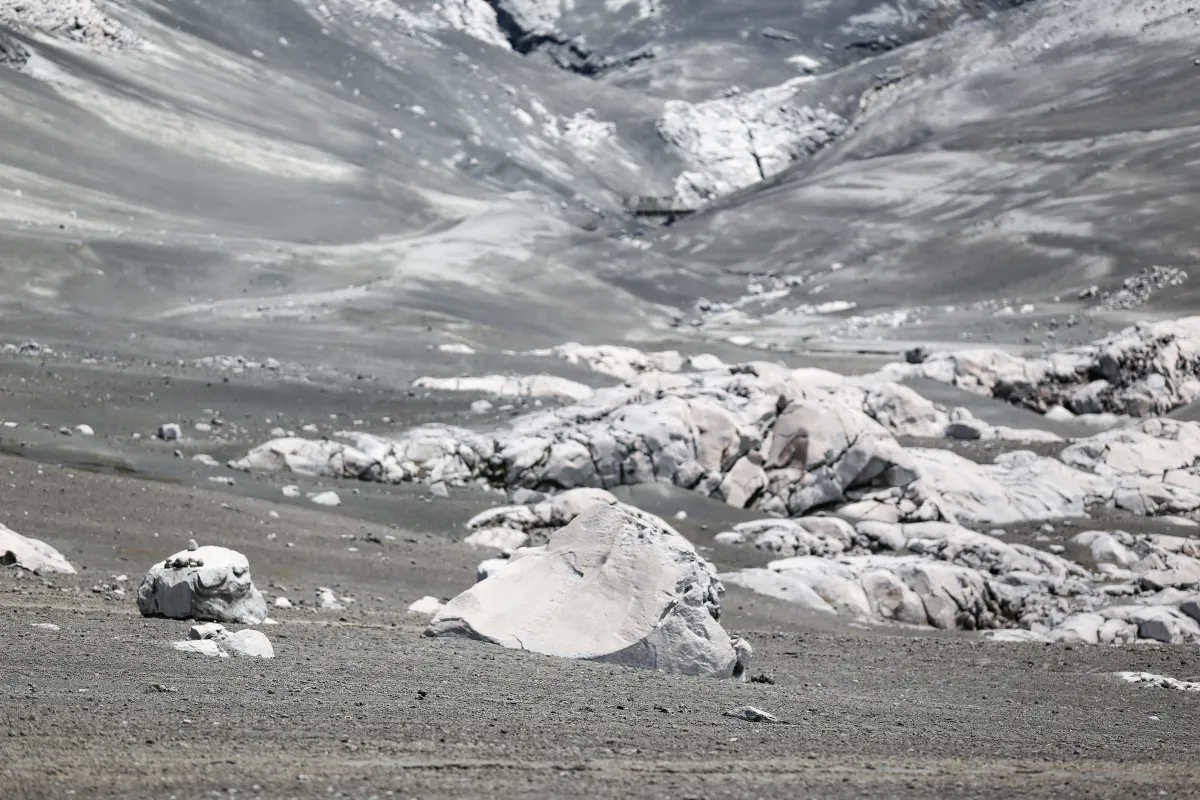
Of the 14 tropical glaciers that existed in Colombia at the beginning of the 20th century, only six remain today. The last to completely melt, the Conejeras Glacier, disappeared just over a year ago.
“We have lost 30% of the glacial surface in the last 12 years,” says Jorge Luis Ceballos Liévano of the Colombian National Institute of Hydrology, Meteorology and Environmental Studies (IDEAM). Ceballos Liéviano is the national correspondent in Colombia for the World Glacier Monitoring Service (WGMSExternal link ), based in Switzerland.
Glaciers, local melting and global impacts
The World Glacier Monitoring Service (WGMSExternal link ) collects and analyses data on the mass balance, volume, area and length of the world's glaciers. It was established in 1986 and is based at the University of Zurich in Switzerland. The WGMS has a network of national correspondents in over 40 countries.
During the International Year for the Conservation of Glaciers, SWI swissinfo contacted some of these correspondents to find out about the state of glaciers in their region, the consequences of ice melt, and their adaptation strategies.
“Should this trend continue into the second half of this century, Colombian glaciers could become extinct,” he warns. Neighbouring Venezuela is the first country on the planet to have lost all of its glaciersExternal link .
The situation is similar in Ecuador, where the total area of glaciers has dropped from just over 97km2 in the late 1950s to 37km2 today, says Bolívar Ernesto Cáceres Correa, a glaciologist at the Ecuadoran Institute of Meteorology and Hydrology and national correspondent in Ecuador for WGMS.“Glaciers below 5,130 metres in elevation will most likely disappear over the next decade,” he predicts.
More More Why the Swiss are leading efforts to track melting glaciersThis content was published on Mar 21, 2025 Glaciers around the world are rapidly melting. Switzerland plays a central role in monitoring glaciers globally.
Read more: Why the Swiss are leading efforts to track melting glacier
Legal Disclaimer:
MENAFN provides the
information “as is” without warranty of any kind. We do not accept any
responsibility or liability for the accuracy, content, images, videos,
licenses, completeness, legality, or reliability of the information
contained in this article. If you have any complaints or copyright issues
related to this article, kindly contact the provider above.
Comments
No comment