




403
Sorry!!
Error! We're sorry, but the page you were looking for doesn't exist.
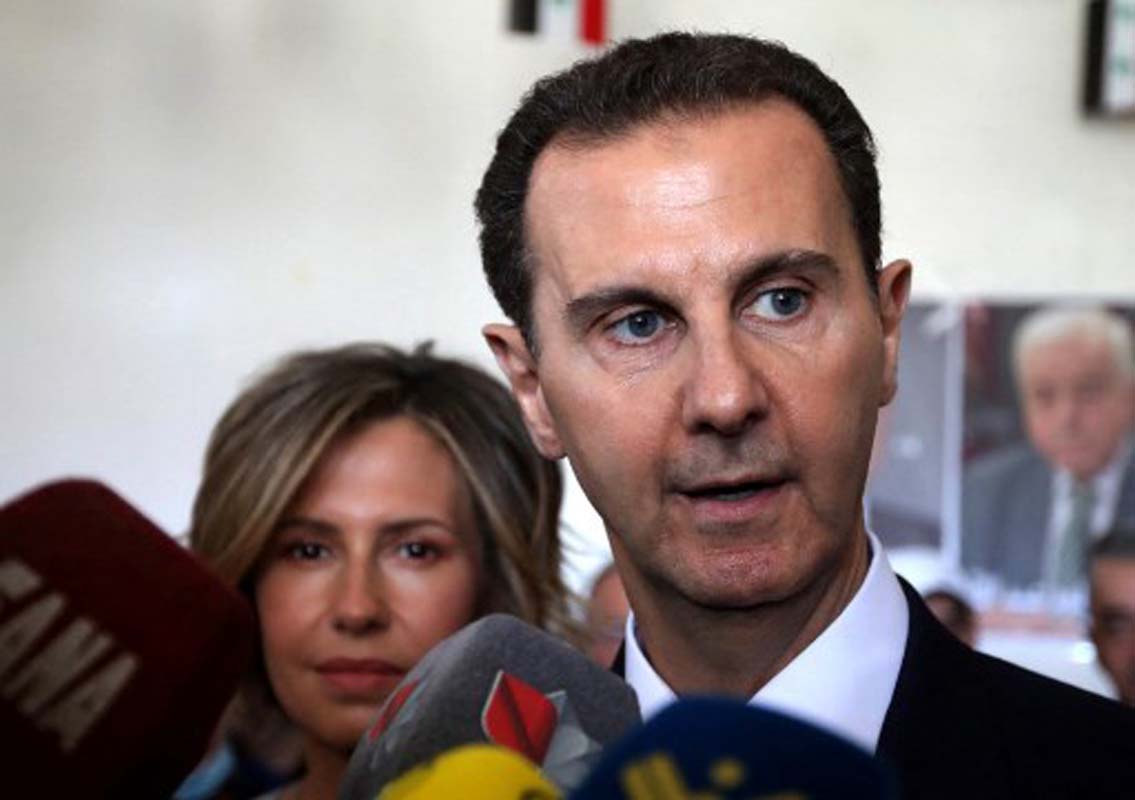
U.S. bombing campaign in Syria following collapse of Bashar al-Assad's regime highlights Western concerns
(MENAFN) The U.S. bombing campaign in Syria following the collapse of Bashar al-Assad's regime highlighted Western concerns about the potential rise of extremist groups in the region. With fears of a political vacuum, Washington acted quickly to prevent extremist factions from exploiting the situation and establishing a hardline theocratic order. The fall of Assad’s regime left Washington shocked, but it was even more surprising for those on the ground when the U.S. Air Force launched airstrikes on 785 locations in Syria while Assad fled to Moscow. The airstrikes were not in support of the rebels who overthrew the Assad regime but were a response to the coalition marching on Damascus, led by Hay'at Tahrir al-Sham (HTS), a group linked to global Islamist extremism.
The U.S. military, along with British special forces and foreign intelligence units, maintains a presence in eastern Syria, with bases protected by Syrian Kurds and desert bunkers for operations against what remains of the Islamic State. The unexpected victory of the rebels over Assad’s government has raised concerns that ISIS might try to reclaim territory it once controlled, further complicating the situation. HTS leader Ahmed al-Sharaa has called for a transitional government, insisting that women not be forced into conservative Islamic dress and urging a ban on indiscriminate shootings. Although he claims, "We are not ISIS," al-Sharaa was once a member of ISIS and has connections to al-Qaeda. Many members of the winning militias share common ideological ties to ISIS and al-Qaeda.
Syria, liberated from Assad's rule, is likely to attract extremists seeking to create a state based on their interpretation of Islam, similar to how jihadists flocked to the country after 2012. These groups aim to establish a model state in the midst of the region's chaos and violence. Sharia leader Abu Muhammad al-Julani, originating from the Golan Heights—territory occupied by Israel since 1967—has expressed his desire to reclaim the Golan and overthrow Assad. As an Islamist, he believes in the unity of the Muslim community and views Syria as a base for reclaiming lost Muslim lands and seeking justice for Muslim lives lost, particularly in Gaza. The ongoing conflict in Gaza, with its devastating toll on civilians, has further inflamed tensions, as the International Criminal Court issued arrest warrants for Israeli leaders over war crimes. Meanwhile, the U.S. has rejected the ICC's decision, continuing to provide military aid to Israel.
The U.S. military, along with British special forces and foreign intelligence units, maintains a presence in eastern Syria, with bases protected by Syrian Kurds and desert bunkers for operations against what remains of the Islamic State. The unexpected victory of the rebels over Assad’s government has raised concerns that ISIS might try to reclaim territory it once controlled, further complicating the situation. HTS leader Ahmed al-Sharaa has called for a transitional government, insisting that women not be forced into conservative Islamic dress and urging a ban on indiscriminate shootings. Although he claims, "We are not ISIS," al-Sharaa was once a member of ISIS and has connections to al-Qaeda. Many members of the winning militias share common ideological ties to ISIS and al-Qaeda.
Syria, liberated from Assad's rule, is likely to attract extremists seeking to create a state based on their interpretation of Islam, similar to how jihadists flocked to the country after 2012. These groups aim to establish a model state in the midst of the region's chaos and violence. Sharia leader Abu Muhammad al-Julani, originating from the Golan Heights—territory occupied by Israel since 1967—has expressed his desire to reclaim the Golan and overthrow Assad. As an Islamist, he believes in the unity of the Muslim community and views Syria as a base for reclaiming lost Muslim lands and seeking justice for Muslim lives lost, particularly in Gaza. The ongoing conflict in Gaza, with its devastating toll on civilians, has further inflamed tensions, as the International Criminal Court issued arrest warrants for Israeli leaders over war crimes. Meanwhile, the U.S. has rejected the ICC's decision, continuing to provide military aid to Israel.

Legal Disclaimer:
MENAFN provides the
information “as is” without warranty of any kind. We do not accept
any responsibility or liability for the accuracy, content, images,
videos, licenses, completeness, legality, or reliability of the information
contained in this article. If you have any complaints or copyright
issues related to this article, kindly contact the provider above.
Most popular stories
Market Research

More Story






Comments
No comment