






403
Sorry!!
Error! We're sorry, but the page you were looking for doesn't exist.
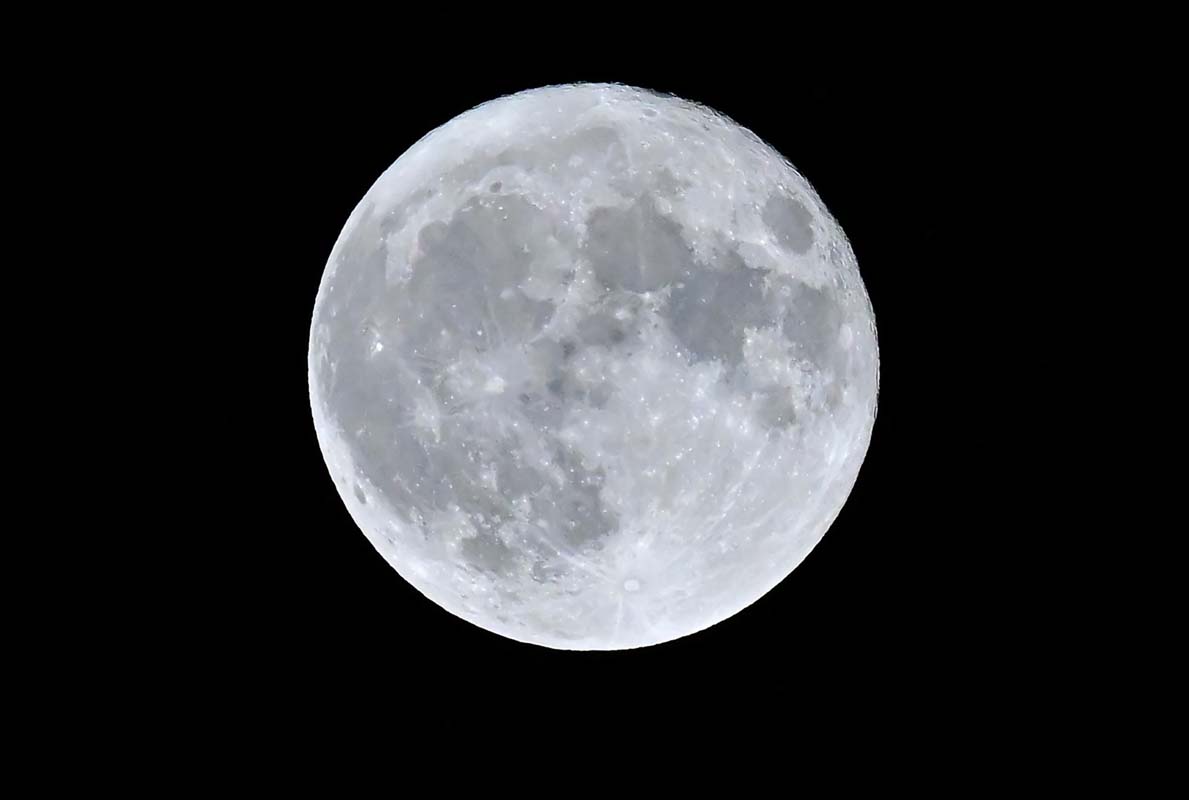
Media reports India deciding on place for Moon, Mars research station
(MENAFN) India is exploring the possibility of establishing a Mars and Moon analogue research station in the Ladakh region, according to a report by the Times of India published on Friday. This initiative aims to support and enhance India's human space program, with a focus on future Mars exploration missions.
The proposed research facility would serve as a critical site for simulating conditions on the Moon and Mars, enabling scientists to conduct experiments and training in environments that closely mimic extraterrestrial conditions. Shubhanshu Shukla, one of the selected astronauts for India's upcoming manned space mission, ‘Gaganyaan,’ is among the scientists involved in this project. He is collaborating with experts from the Indian Institute of Science (IISc) and the Birbal Sahni Institute of Palaeosciences (BSIP) to explore the feasibility of this location.
The choice of Ladakh, with its unique geographical features, is driven by its resemblance to both Martian and lunar landscapes. This similarity would make it an ideal natural laboratory for testing space equipment, training astronauts, and conducting essential research needed for future space missions.
India's space sector has been making significant strides, marked by successful missions such as Chandrayaan-3 to the Moon and Aditya-L1 to the Sun. In line with its ambitious space goals, India is currently developing the Gaganyaan mission to send Indian astronauts into space. Furthermore, the country has plans to establish its own space station by 2035 and aims to land an Indian astronaut on the Moon by 2040.
The establishment of an analogue research station in Ladakh represents a strategic move to advance India's space exploration capabilities and ensure that the country is well-prepared for future interplanetary missions.
The proposed research facility would serve as a critical site for simulating conditions on the Moon and Mars, enabling scientists to conduct experiments and training in environments that closely mimic extraterrestrial conditions. Shubhanshu Shukla, one of the selected astronauts for India's upcoming manned space mission, ‘Gaganyaan,’ is among the scientists involved in this project. He is collaborating with experts from the Indian Institute of Science (IISc) and the Birbal Sahni Institute of Palaeosciences (BSIP) to explore the feasibility of this location.
The choice of Ladakh, with its unique geographical features, is driven by its resemblance to both Martian and lunar landscapes. This similarity would make it an ideal natural laboratory for testing space equipment, training astronauts, and conducting essential research needed for future space missions.
India's space sector has been making significant strides, marked by successful missions such as Chandrayaan-3 to the Moon and Aditya-L1 to the Sun. In line with its ambitious space goals, India is currently developing the Gaganyaan mission to send Indian astronauts into space. Furthermore, the country has plans to establish its own space station by 2035 and aims to land an Indian astronaut on the Moon by 2040.
The establishment of an analogue research station in Ladakh represents a strategic move to advance India's space exploration capabilities and ensure that the country is well-prepared for future interplanetary missions.

Legal Disclaimer:
MENAFN provides the
information “as is” without warranty of any kind. We do not accept
any responsibility or liability for the accuracy, content, images,
videos, licenses, completeness, legality, or reliability of the information
contained in this article. If you have any complaints or copyright
issues related to this article, kindly contact the provider above.
Most popular stories
Market Research

More Story







Comments
No comment