




403
Sorry!!
Error! We're sorry, but the page you were looking for doesn't exist.
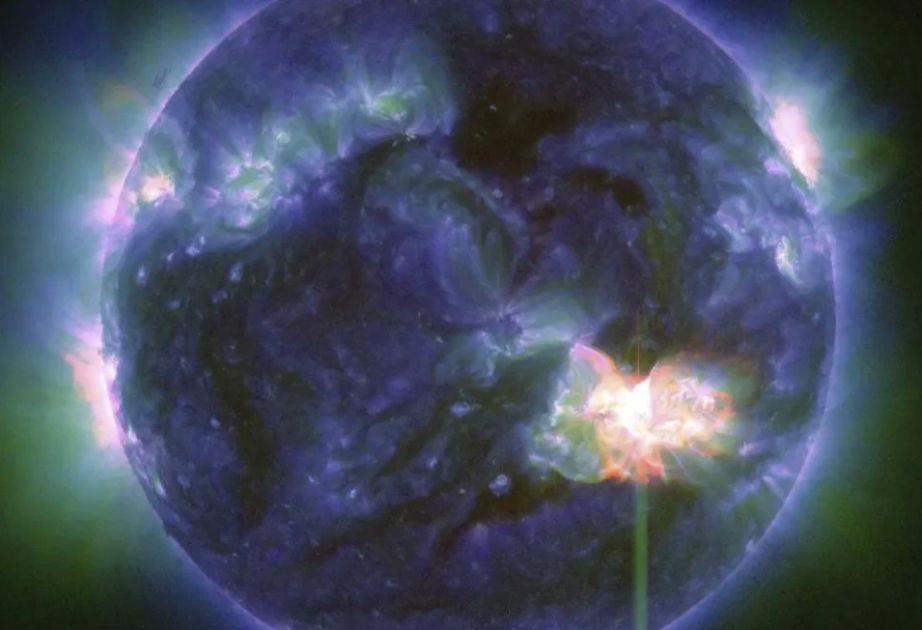
Extreme G5 Geomagnetic Storm Reaches Earth, NOAA Says, Following Unusual Solar Event
(MENAFN- AzerNews) An "extreme" G5 geomagnetic storm reached Earth on Friday,NOAA's Space Weather Prediction Center said, after issuing a watchearlier in the day warning of the potential for a severe impact, Azernews reports, citing CBS News.
The watch followed days of solar activity that sent severalexplosions of plasma and magnetic fields toward Earth.
G5 is the strongest level of geomagnetic storm, on a scale fromG1 to G5.
"Widespread voltage control problems and protective systemproblems can occur," NOAA warns. "Some grid systems may experiencecomplete collapse or blackouts. Transformers may experiencedamage."
Radio transmissions and satellite navigation may also bedisrupted.
The last G5 geomagnetic storm, in October 2003, caused poweroutages in Sweden and damaged transformers in South Africa.
A geomagnetic storm also means aurora borealis, otherwise knownas the northern lights, could be seen as far south as Alabama andin Northern California.
An "extreme" G5 geomagnetic storm reached Earth on Friday,NOAA's Space Weather Prediction Center said, after issuing a watchearlier in the day warning of the potential for a severeimpact.
The watch followed days of solar activity that sent severalexplosions of plasma and magnetic fields toward Earth.
G5 is the strongest level of geomagnetic storm, on a scale fromG1 to G5.
"Widespread voltage control problems and protective systemproblems can occur," NOAA warns. "Some grid systems may experiencecomplete collapse or blackouts. Transformers may experiencedamage."
Radio transmissions and satellite navigation may also bedisrupted.
The last G5 geomagnetic storm, in October 2003, caused poweroutages in Sweden and damaged transformers in South Africa.
A geomagnetic storm also means aurora borealis, otherwise knownas the northern lights, could be seen as far south as Alabama andin Northern California.
Earlier, NOAA had issued its first watch for a potentialG4-level geomagnetic storm in almost 20 years. "If geomagneticstorms were hurricanes, 'severe' would be category 4,"SpaceWeather says.
In a press release on Thursday, NOAA said the most recent seriesof solar events started on May 8, when a large cluster of sunspotsproduced "several moderate to strong solar flares." Solar flaresare bursts of radiation known to be the solar system's largestexplosive events, according to NASA. The area where the flares areoccurring is 16 times the diameter of Earth, the NOAA said, andmore solar activity is expected.
That sunspot is so big you may be able to see it with your owneyes - with your solar eclipse glasses. The spot is known asAR3664, and it was responsible for most of the geomagnetic activityFriday, the NOAA reported. According to Space, it measuresabout 124,000 miles across and is one of the "largest and mostactive sunspots seen this solar cycle."
The NOAA reported that a strong solar flare was observed peakingfrom AR3664 at 9:23 p.m. Eastern Time Friday.
There has also been a series of coronal mass ejections (CMEs),which are explosions of plasma and magnetic fields that come out ofthe sun's corona, the outermost part of the sun's atmosphere. Atleast five CMEs appear directed toward Earth and could arrive asearly as midday on Friday and persist through Sunday, the agencysaid.
"This is an unusual event," NOAA said.
In a call with reporters on Friday, Shawn Dahl, servicecoordinator at the Space Weather Prediction Center, said that someCMEs "are catching up with other ones." He said officials areexpecting a "big shock arrival" when they hit Earth. Dahl said atthe time that while officials weren't predicting a G5 storm - thestrongest of geomagnetic storms - they couldn't discount a "low-endG5 event."
"We're really buckling down here," Brent Gordon, chief of thespace weather services branch, also said on the call.
G4 conditions were detected by Friday afternoon, marking a"major disturbance in Earth's magnetic field," NOAA said, addingthat "the public should stay properly informed of stormprogression."
In a forecast discussion at 12:30 p.m. on Friday, NOAA's SpaceWeather Prediction Center said that solar activity is expected tocontinue at "high to very high levels" through the weekend, withadditional solar flares expected, including X-class flares, themost powerful class of solar flares.
As of Friday afternoon, NOAA said it had observed a moderatesolar radiation storm that could expose people in high-flyingaircraft to "elevated radiation risk" and cause infrequent issueswith satellite operations.
Radio blackouts have also been detected with an R3 designation,meaning that the blackouts were "strong" on a scale from R1 (minor)to R5 (extreme). At this level, wide blackouts of HF radiocommunication is expected, as well as loss of radio contact, forabout an hour on the sunlit side of Earth, as low-frequencynavigation signals decline for roughly an hour.
"Geomagnetic storms can impact infrastructure in near-Earthorbit and on Earth's surface, potentially disruptingcommunications, the electric power grid, navigation, radio andsatellite operations," NOAA said. "[The Space Weather PredictionCenter] has notified the operators of these systems so they cantake protective action."
Dahl agreed Friday that the event is "pretty extraordinary" andsaid that it could impact infrastructure, including high-voltagetransmission lines of the power grid. Dahl said that infrastructureoperators have been notified to adequately prepare.
This is the first time a storm watch has been issued for a G4since January 2005. There is an average of 100 severe geomagneticstorms every solar cycle, but so far, there have only been threeobserved in the most recent cycle that began in December 2019. Themost recent occurred on March 23.

Legal Disclaimer:
MENAFN provides the
information “as is” without warranty of any kind. We do not accept
any responsibility or liability for the accuracy, content, images,
videos, licenses, completeness, legality, or reliability of the information
contained in this article. If you have any complaints or copyright
issues related to this article, kindly contact the provider above.
Most popular stories
Market Research

More Story





Comments
No comment