(MENAFN- AzerNews) By News Center
Not many people remember that Turkiye built the MKE Kırıkkale
1943 tank 80 years ago, in an environment where the Second World
War was still going on. It is not well known that that tank, where
only the engine came from outside and critical components such as
armor plate, gun, track, and drivetrain were produced entirely with
domestic means, made a parade in 1946 at the Republic Day
ceremony.
Unfortunately, like many critical steps that Turkiye took at
that time, tank attempts were left unfinished. After the help of
the USA, reluctance prevailed, and MKE Kırıkkale 1943 was left
alone because MKE did not receive an order. Then the team
disbanded, and the factory was closed.
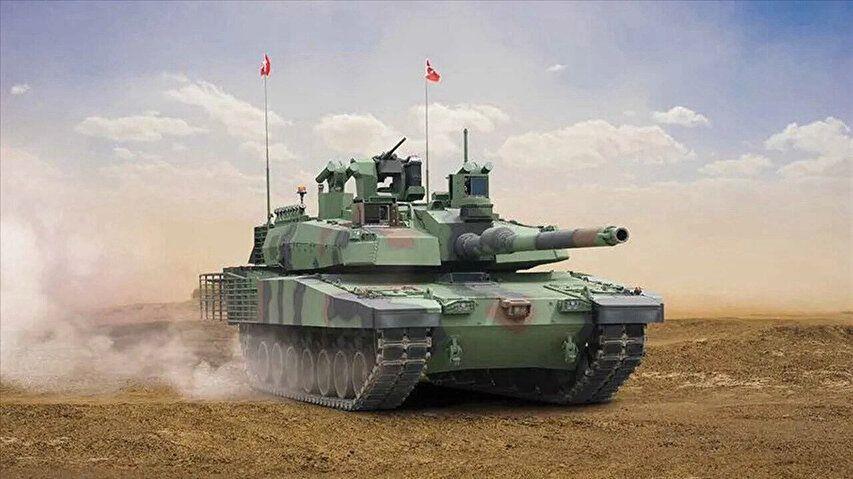
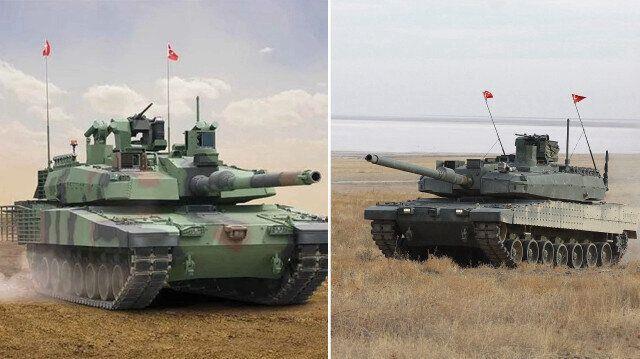
Altay tank: the embodiment of embargoes
When we met with the head of Defense Industry Agency (SSB) Prof.
Dr İsmail Demir at the delivery ceremony of the new generation
Altay tank to the Turkish Armed Forces, we had in mind what
happened in the 1940s. As a matter of fact, even if not exactly the
same, there was a very painful process for the Altay tank, and this
giant platform was perhaps one of Turkiye's most long-term
projects.
According to the news by Sertaç Aksan in TRT News, after the
Altay tanks exhibited some of their capabilities on the test track,
SSB President Demir, one of the architects of the project, made
important statements.
Demir gave a clear answer to our question, "Why did it take so
long?" and said, "The Altay tank is the embodiment of the embargoes
against Turkiye."
Things turned upside down in the mass production
phase
Reminding that everything was smooth at the prototype stage,
Prof. Dr. Demir pointed out that serious problems started to be
experienced with the transition to the mass production phase. He
reminded us that the absence of export permits at some critical
points, especially the power package, also coincided with this
period.
Explaining that Turkiye has moved to a new road map at this
stage and that it has gone out to tender in order to create its own
power group with domestic/national resources, İsmail Demir said
that this time the companies that signed for joint work had to
withdraw due to the pressures of the governments in their own
countries.
“The opposing companies withdrew at the expense of paying
compensation. In fact, if the promises were kept at that time, the
issue of delivering the tank would have become reality after 18
months,” Demir summarized the process.
Work continues on the domestic engine has been mounted
tank
Engine, transmission, and cooling systems are generally handled
together in tanks and this is called a power group. One of the most
curious subjects about the Altay tank is the domestic power group.
It is known that both tanks delivered to the Turkish Armed Forces
for tests have a power group from South Korea.
In this context, we ask about the latest situation in the
domestic power group BATU, whose work continues by BMC Power. Dr.
To İsmail Demir.

Demir reiterates that BATU's tests are still continuing and
"BATU doesn't just work in the test room. This system is already
working in a test tank. We will announce the news that our tank is
running with the domestic power pack," and gives the good news that
new developments are on the way for the new generation Altay tank
in the coming period.
---








Comments
No comment