

Protests in the Gambia highlight tensions over Chinese investment in Africa


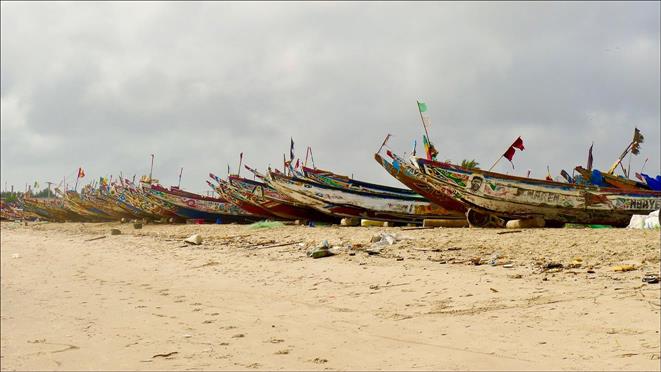
(MENAFN- The Conversation) Gunjur Beach should be a pearl in the crown of the Gambia, a small sliver of a country in West Africa. Long stretches of silver sand are lined with coconut palms, while many generations of fishermen from nearby Senegal have used this beach as a landing point for their colourful and masterfully crafted wooden boats. And in the past 30 years several bars and eco-tourism ventures have moved into the area, serving 'voluntourists' and bird watchers.
I have just returned from Gunjur, where I was researching itshistorical community-based linkwith the town of Marlborough in the UK. During my visit, I met various members of the community to explore the particular development challenges faced there today.
I heard that, for the past few years, the seafront at Gunjur has been at the centre of a tense environmental and social dispute, one that magnifies wider concerns about the nature of Chinese investment in The Gambia.
The dispute is over a factory that producesfishmeal , a product obtained by drying and grinding fish or fish waste. It is usually sold as powder before being added to other foods and fed to poultry, pigs or farmed fish.
In 2016, a Chinese-owned fishmeal manufacturer, Golden Lead, opened a factory and started operations at Gunjur Beach. The factory is flanked by the ocean on one side and on the other theBolong Fenyo– a lagoon with lots of birds that was Gambia's first community wildlife reserve.

Senegal and the Gambia are known for their spectacular bird life.
Agami Photo Agency/Shutterstock
Golden Lead's operational contract was issued by the previous government of Yahya Jammeh, an autocrat who was much reviled forreported corruptionandhuman rights abuses . Some locals worried about its environmental impact but, nonetheless, the factory was initially welcomed. Locals believed Golden Leadpromisedimproved infrastructure, increased employment and training for Gambians. With relatively high wages on offer, around 80 people took up jobs.
However tensions soon surfaced over the factory's use of ocean-caught bonga, a fish that Gunjurians have long relied upon as a cheap and abundant source of protein. Increased pressure on supplies has already pushed up bonga prices.

Bonga and other fish being prepared for transport in the smokehouses near the beach.
Holly Eva Ryan, Author provided
Local residents allege that since the factory arrived in Gunjur, swathes of dead fish and mammals – including whales, turtles, dolphins, eels and rays – have washed up on the beach. Things started to escalate when, in 2017, the Bolong Fenyo suddenly changed colour and fish and birds in the protected reserve started to die. Biomedical scientist Ahmed Manjang tested the local water and found it was unusuallyhigh in phosphates .
Local environmentalists blamed a waste pipe running from the factory building into the ocean (fishmeal factories tend to producelots of wastewater ). However, Golden Lead had previously denied that it had been dumping wastewater products.
The Gambian National Environment Agency (NEA) then got involved, and ordered Golden Lead to treat its wastewater and remove the pipe. However, after months of inaction, local residents and environmental activists gave Golden Lead an ultimatum: move the pipe within seven days or we will. And so, on March 22 2018, that's exactly what they did. Up to 150 young Gunjurians assembled on the beach, where they were met by a large deployment of police. A group of activists armed with shovels physically dug out and removed the pipe.
In spite of the NEA's earlier demands, Golden Lead was soon permitted to reinstall a waste pipe. Local news agency,Gunjur News Onlinesaid the move was politically motivated, with their sources suggesting that the government stepped in due to concerns about discouraging potential investors. Foreign income is much sought after by the Gambian government, which must contend with a largecurrent account deficit and public debt .
At the end of May 2018, a new pipe was installed with a certain amount of theatricality. Golden Lead this time chose a central spot on Gunjur beach to lay the waste pipe and staff members raised a Chinese flag in the process. This act wasperceived as a provocationby members of a community whose entire village was once destroyed during colonial land grabs at the end of the 18th century. As one activist told me:
Local activists continue to allege the plant is responsible for pollution and overfishing, but the government says it is satisfied Golden Lead has cleaned up its act. Golden Lead denied to theGuardian in March 2019that it outcompetes local fish sellers and said it had a zero tolerance approach to pollution. As also reported in the paper, Jojo Huang, the director of the fishmeal plant, has also previously stated that the factory was 'in no way responsible for the dumping of fish in the local area' and that it 'does not pump chemicals into the sea and has followed guidance from the National Environment Agency on waste management'.
However, community members have now filed court cases seeking reparations for environmental degradation, so the story continues to unfold.

The Gunjur fishmeal factory pipe, June 2019.
Holly Eva Ryan, Author provided
Gunjur is the site of one of three Chinese-owned fishmeal plants that have recently set up operations in the Gambia. TheGuardian reportsthat the other factory sites at Kartong and Sanyang have both faced temporary closures due to complaints and protests linked to waste disposal methods.
Together with the Gunjur site, these three factories provide a glimpse of the tensions between the need to economically develop and attract foreign investment, and local environmental and socio-economic issues. And as someone who researches thepolitics of resistance in the global south , what is especially encouraging about events in the Gambia to me is that this local activism represents a rebirth of civil society following the demise of the Jammeh regime.
The Gambia
China Africa relations

Legal Disclaimer:
MENAFN provides the
information “as is” without warranty of any kind. We do not accept any
responsibility or liability for the accuracy, content, images, videos,
licenses, completeness, legality, or reliability of the information
contained in this article. If you have any complaints or copyright issues
related to this article, kindly contact the provider above.
Comments
No comment