




403
Sorry!!
Error! We're sorry, but the page you were looking for doesn't exist.
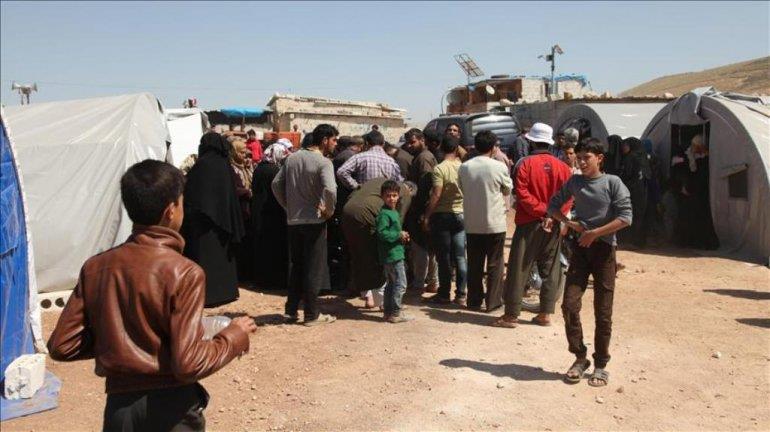
Survivors of Khan Sheikhun chemical attack seek aid
(MENAFN- The Peninsula) IDLIB, Syria: Around 150 Syrian families who have survived the April 4 chemical attack on the Syrian town of Khan Sheikhun are seeking help at Atma refugee camp near the Turkish border.
'There's no available tent. We live in lands. There are only the ground and the sky, Fadil Abu Ahmed, 40, told Anadolu Agency.
Atma refugee camp is located one kilometer (some 0.6 mile) to the Turkish border and on the other side of Turkish province of Hatay.
Mustafa, a 13-year-old Syrian child, said he had lost his family in a previous regime airstrike.
"My brothers, sisters, mother and father were all martyred. I'm the only one left alone," he told Anadolu Agency.
'I started to live with my aunt in Khan Sheikhun, but I was affected there by the gas [attack]. I spent a week at the hospital and then came here, Mustafa said.
'There're no tents. There's nothing to protect us from the sun but shadows of trees. There are scorpions and snakes on the ground. No tent, no toilet, no food. We sleep hungry. He said.
Abu Mahmoud, a father of six, complained of lacking water or food.
'We spend the nights under trees. We can't return to our homes as everything has been affected by chemicals, he said. 'We don't know where to go or what to do.
The use of sarin gas in the April 4 attack, allegedly by the Syrian regime, killed around 100 civilians and injured some 500 in the opposition-held town of Khan Sheikhun.
On April 12, Turkey said a sarin gas metabolite, isopropyl methylphosphonic acid, had been detected in several Syrian victims being treated in Hatay.
The attack led to widespread international outrage, including attempts to pass a UN Security Council resolution condemning it, but the move was blocked by Russia last week.
'There's no available tent. We live in lands. There are only the ground and the sky, Fadil Abu Ahmed, 40, told Anadolu Agency.
Atma refugee camp is located one kilometer (some 0.6 mile) to the Turkish border and on the other side of Turkish province of Hatay.
Mustafa, a 13-year-old Syrian child, said he had lost his family in a previous regime airstrike.
"My brothers, sisters, mother and father were all martyred. I'm the only one left alone," he told Anadolu Agency.
'I started to live with my aunt in Khan Sheikhun, but I was affected there by the gas [attack]. I spent a week at the hospital and then came here, Mustafa said.
'There're no tents. There's nothing to protect us from the sun but shadows of trees. There are scorpions and snakes on the ground. No tent, no toilet, no food. We sleep hungry. He said.
Abu Mahmoud, a father of six, complained of lacking water or food.
'We spend the nights under trees. We can't return to our homes as everything has been affected by chemicals, he said. 'We don't know where to go or what to do.
The use of sarin gas in the April 4 attack, allegedly by the Syrian regime, killed around 100 civilians and injured some 500 in the opposition-held town of Khan Sheikhun.
On April 12, Turkey said a sarin gas metabolite, isopropyl methylphosphonic acid, had been detected in several Syrian victims being treated in Hatay.
The attack led to widespread international outrage, including attempts to pass a UN Security Council resolution condemning it, but the move was blocked by Russia last week.
Legal Disclaimer:
MENAFN provides the
information “as is” without warranty of any kind. We do not accept
any responsibility or liability for the accuracy, content, images,
videos, licenses, completeness, legality, or reliability of the information
contained in this article. If you have any complaints or copyright
issues related to this article, kindly contact the provider above.
Most popular stories
Market Research

More Story


Comments
No comment