




403
Sorry!!
Error! We're sorry, but the page you were looking for doesn't exist.
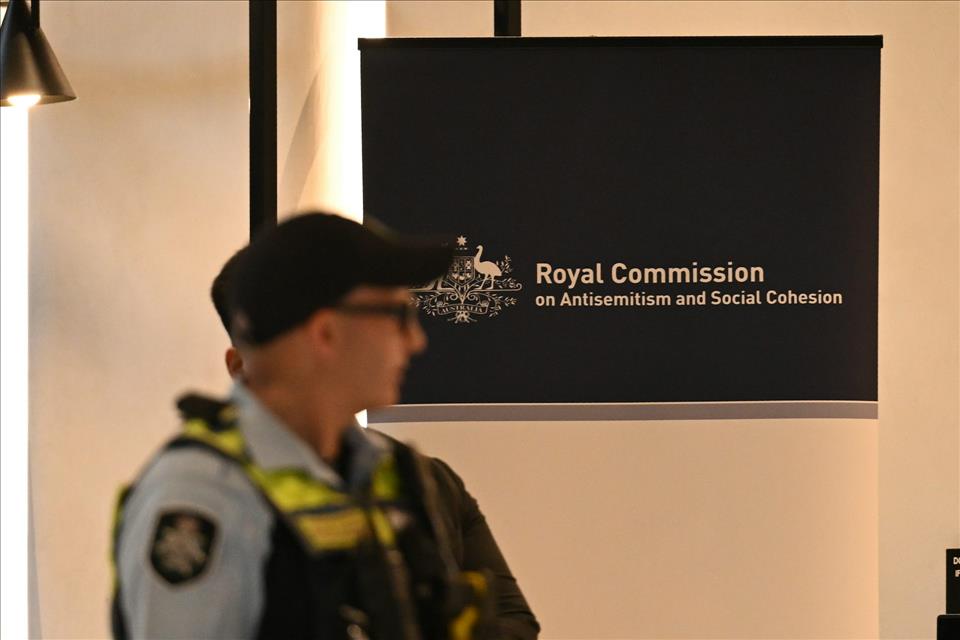
View From The Hill: Antisemitism Royal Commission Soon To Wade Into Tricky Terrorities
Author: Michelle Grattan
(MENAFN- The Conversation) When the Royal Commission on Antisemitism and Social Cohesion holds its remaining blocks of public hearings between late June and the end of August, they are likely to trigger some awkward questions and divisive debates.

The commission will probe social media and the university sector. It is also set to delve into the legacy media and the arts.
In each area, there have been notable failures in dealing with and combating antisemitism. But also, issues of freedom of speech and other rights are integral to them.
It was imperative to have the post-Bondi royal commission, initially resisted by Anthony Albanese. But there is no getting away from the fact the evidence to come will not just highlight but could even exacerbate the strains in our fractured society. Indeed, the danger to cohesion was one of Albanese's objections to having the commission.
At the worst, there is the outside risk it could increase antisemitism. We saw an appalling example of this when Jewish witnesses who recounted their experiences at the earlier hearings found themselves later subjected to abuse on social media. A man has been charged over offensive emails allegedly sent to a witness.
This risk is heightened because, since the royal commission was established, the conflict in the Middle East has widened, with the launch of the United States-Israeli war against Iran.
That has increased local criticisms of Israel, further blurring the crucial distinction between, on the one hand, criticisms of the Israeli government's policy and, on the other, denial of the legitimacy of the Jewish state of Israel.
The Middle East conflict, the spread of hate speech, the months of pro-Palestinian demonstrations in our cities, and (above all) the December 14 Bondi terrorist attack have all changed the goalposts in Australia for free speech and the right to protest, as well as putting key institutions (such as universities) under new scrutiny. Curbs that a few years ago would have seemed unacceptable are now seen as necessary. Our world has transformed.
The challenge of antisemitism in the education sector is already being considered by a taskforce, chaired by David Gonski (of the landmark Gonski 2011 report on schools), that was appointed in December. This was set up as part of the government's response to the plan from its Special Envoy to Combat Antisemitism, Jillian Segal. The remit of this group is to“help the Australian education system prevent, tackle and properly respond to antisemitism”. It is considering the system from preschool right up to university.
The university sector has been in the direct firing line, but antisemitic attitudes have to be tackled in the school system. Kids, or many of them, are intolerant of those perceived as different. An elderly friend of mine recalls, in the days of Australia's rampant Catholic versus Protestant sectarianism, how, as a Protestant at a Catholic school, she was belted by the other kids after being the only one to know the answer to a question in class.
Teaching tolerance has only become harder in the age of social media and identity politics. But promoting tolerance is one of the matters the Gonski taskforce is focused on, giving attention to the Australian curriculum, the information available to teachers, and teacher education.
The taskforce has driven the establishment of a Commonwealth Research Grants Working Group headed by former public servant Peter Shergold, whose brief is to give a framework for aligning decisions on grants with the relevant anti-hate and anti-discrimination laws. At the margins, this raises some challenges.
While some of the main universities left themselves open to serious criticism over the way they handled the fallout from the Middle East conflict, for example by allowing“encampments” and failing to make their campuses feel safe for Jewish staff and students, the Group of Eight, which represents the so-called sandstone universities is seeking to get ahead of the sharp questioning that will come at the commission.
Immediately after Bondi. the group set up an expert panel, chaired by Alan Finkel, former chief scientist and former chancellor of Monash University, to advise on combating antisemitism. Its report is done and set for imminent release.
Dealing with antisemitism in the arts is especially fraught. The line between being offensive and antisemitic (or for that matter, Islamophobic, racist, homophobic, or misogynist) is not necessarily hard and fast.
We can all recognise the obvious cases. But there can be shades of grey, especially when it comes to comedy and satire. Moreover, what would pass with little notice at one time can become more problematic in other circumstances (how is Shakespeare's Merchant of Venice travelling these days?).
Then there's the media, with Jewish and other critics targeting the publicly-funded ABC and SBS, claiming bias in their coverage of the Middle East conflict, and the pro-Palestinians having their own complaints. To a degree“bias” is in the eyes and ears of viewers and listeners. Also, in dealing with a conflict as complicated as this one, with both highly contested information as well as a lack of access to other important information, media outlets can become over-reliant on narrow or one-sided sources.
But, despite such limitations, those running publicly-funded media organisations must be hyper-aware when it comes to accuracy and fair-mindedness, and the need to ensure a range of viewpoints.
Observers of the media will make different judgements, depending on where they are coming from and the prevailing climate. The Australian Press Council this week found a cartoon in the Nine papers encoded antisemitic tropes. In less sensitive circumstances, it might have escaped censure.
Social media will be one of the first cabs off the rank in the coming hearings. It has become a main channel for promoting the worst antisemitism.
The tech companies will say they do what they can, but the critics will point out that these companies are understating their capacity to remove hate speech automatically in real time. Tech companies have a commercial interest in resisting measures that might reduce their traffic, even when the content can potentially be socially harmful.
Meanwhile advocates who give the highest priority to free speech rail at any serious restrictions on social media.
Social media presents the most modern arena where a centuries old scourge must be fought, yet it is perhaps the toughest battleground of all.
Institution:University of Canberra

Legal Disclaimer:
MENAFN provides the
information “as is” without warranty of any kind. We do not accept
any responsibility or liability for the accuracy, content, images,
videos, licenses, completeness, legality, or reliability of the information
contained in this article. If you have any complaints or copyright
issues related to this article, kindly contact the provider above.
Most popular stories
Market Research

More Story



Comments
No comment