







403
Sorry!!
Error! We're sorry, but the page you were looking for doesn't exist.
Jurassic Art-5 Artworks That Bring Dinosaurs Back To Life
(MENAFN- USA Art News)
Dinosaurs, Fossils, and Five Artworks That Recast Prehistory
The dinosaur has never really left the cultural imagination. It still sells movie tickets, still fills museum halls, and now it is showing up with new force in the art market, where fossils and prehistoric imagery are drawing fresh attention. Jurassic Park and Jurassic World have grossed a combined $6.6 billion, and Sotheby's is preparing to sell a giant T. Rex fossil this summer with an estimate of $20 million–$30 million.
That appetite for the ancient extends beyond collecting. Five works from the Artnet Gallery Network show how artists continue to treat dinosaurs as symbols of scale, mystery, humor, and unease. The results range from the spectral to the graphic, from the scientific to the surreal.
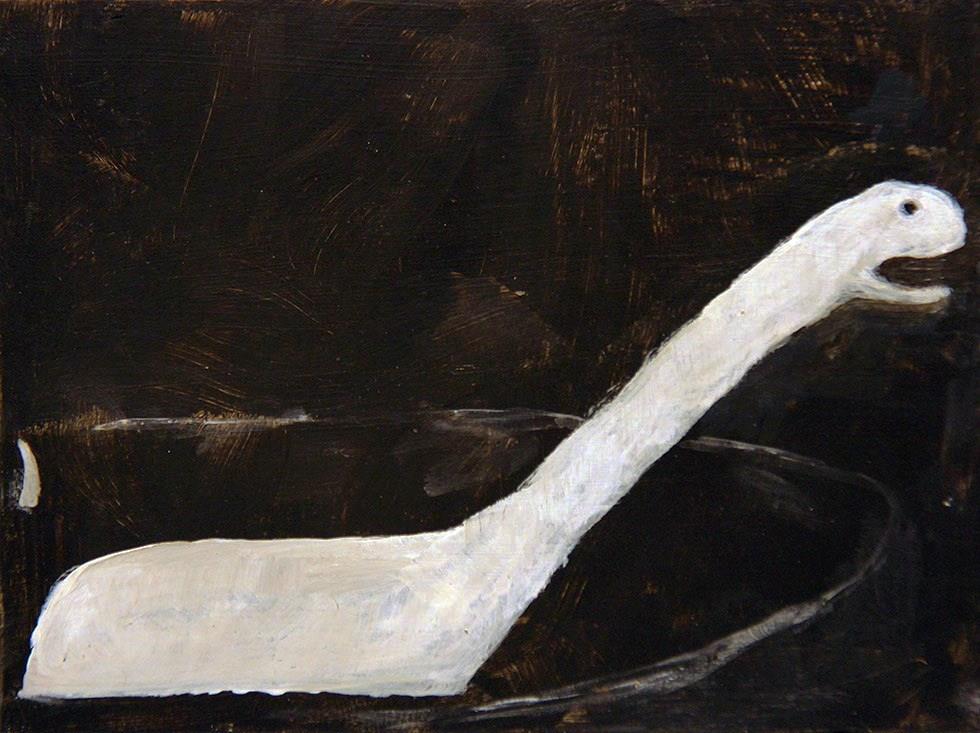
In Scott Daniel Ellison's Dinosaur (2010), a long-necked, sauropod-like animal appears in ghostly white against a dark body of water. Ellison, known for his boldly rendered images of the natural world, gives the creature a flattened, almost icon-like presence that feels both archaic and strangely intimate.
Christian Voigt's UNENLAGIA COMAHUENSIS (2019) takes a different route. The German artist, whose photographs often dwell on architecture and the natural world, captures a bird-like dinosaur in a tense, high-contrast image that feels poised between scientific illustration and staged drama.
The Connor Brothers' Truth is Stranger Than Fiction (2023) leans into irony. The fictional duo of Mike Snelle and James Golding pairs a dinosaur image with the phrase“truth is stranger than fiction,” turning the prehistoric into a wry comment on disbelief itself.
M.C. Escher's Dragon 379 (1952) offers a more cerebral kind of wonder. The Dutch artist's signature visual logic transforms a dragon into an optical puzzle, with forms that seem to fold into and out of one another. The image is orderly at first glance, then quietly destabilizing.
Jean-Michel Basquiat's Pez Dispenser (2022) closes the group with color and swagger. A blue and red T. Rex, crowned in gold, brings together printed board and neon in a composition that is at once playful and unmistakably Basquiat. The work underscores how dinosaurs remain useful to artists precisely because they are so difficult to pin down: they are scientific fact, cultural fantasy, and visual shorthand all at once.
As fossil sales grow more visible and prehistoric imagery continues to circulate across art and entertainment, the dinosaur remains less a relic than a living symbol - one that artists keep returning to whenever they want to test the boundary between knowledge and imagination.

Legal Disclaimer:
MENAFN provides the
information “as is” without warranty of any kind. We do not accept
any responsibility or liability for the accuracy, content, images,
videos, licenses, completeness, legality, or reliability of the information
contained in this article. If you have any complaints or copyright
issues related to this article, kindly contact the provider above.
Most popular stories
Market Research

More Story








Comments
No comment