




403
Sorry!!
Error! We're sorry, but the page you were looking for doesn't exist.
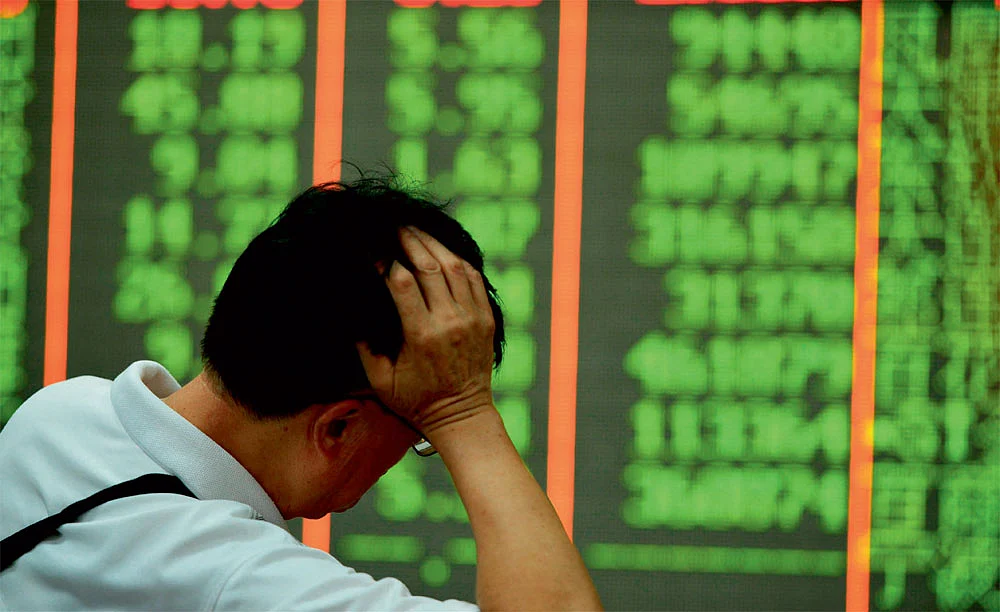
Bitcoin Slumps Below $62,000 As Geopolitical Risks, Investor Exodus Trigger Crypto Rout
(MENAFN- Khaleej Times) Bitcoin suffered one of its sharpest declines this year on Thursday, tumbling more than 7 per cent to below $62,000 and wiping out more than $1.1 billion in leveraged positions, as investors fled riskier assets amid escalating geopolitical tensions and fading institutional appetite for cryptocurrencies.
The world's largest cryptocurrency dropped to its lowest level since February, extending a prolonged correction that has erased more than half of its value from the all-time high of $126,210 reached in October last year.
Recommended For YouAccording to CoinMarketCap data, Bitcoin's market capitalisation has shrunk to about $1.24 trillion, down nearly 50 per cent from its peak valuation of $2.48 trillion. The latest slide has wiped out roughly $64,000 in value per token from last year's record high.
Stay up to date with the latest news. Follow KT on WhatsApp Channels
The sharp sell-off reflects a convergence of several powerful headwinds - growing Middle East tensions, uncertainty over US monetary policy, declining inflows into Bitcoin exchange-traded funds (ETFs), and widespread liquidation of highly leveraged positions.
Market analysts say cryptocurrencies are increasingly behaving like high-risk technology stocks rather than alternative safe-haven assets. As geopolitical tensions intensify and investors brace for potential disruptions to global energy supplies and economic growth, capital has flowed into traditional safe havens such as gold, US Treasury bonds and the dollar, while speculative assets have come under heavy pressure.
Gold has remained near historic highs above $4,500 an ounce this year, while Bitcoin, often promoted as "digital gold", has failed to attract comparable defensive demand. Instead, investors have preferred assets with a longer history of preserving value during periods of uncertainty.
"The current environment is characterised by risk aversion," analysts said. "When uncertainty rises sharply, investors typically reduce exposure to volatile assets first, and cryptocurrencies remain among the most volatile assets in global markets."
The decline was amplified by forced selling in derivatives markets. More than $1.1 billion worth of leveraged crypto positions were liquidated within 24 hours, according to market trackers. Such liquidations occur when traders borrowing funds to amplify their bets are forced to close positions after prices move against them.
These liquidation cascades often intensify market declines as automated selling triggers further price drops, leading to additional liquidations in a self-reinforcing cycle. The latest correction has exposed the risks associated with excessive leverage that built up during Bitcoin's spectacular rally in 2025.
Another factor weighing on Bitcoin is the slowdown in institutional demand. The cryptocurrency's rally to record highs last year was fuelled largely by strong inflows into US spot Bitcoin ETFs, which opened the door for pension funds, wealth managers and institutional investors to gain exposure to digital assets.
However, recent data suggest that ETF inflows have cooled significantly as investors reassess their risk exposure amid economic uncertainty and concerns about slower global growth. Without sustained institutional buying, Bitcoin has struggled to maintain the momentum that propelled it to record levels.
Investors are also closely watching signals from the US Federal Reserve. While markets had expected a more aggressive cycle of interest-rate cuts this year, persistent inflation concerns and resilient economic data have complicated the outlook.
Higher interest rates generally reduce the appeal of non-yielding assets such as Bitcoin by increasing returns available from safer fixed-income investments. Any indication that the Federal Reserve could delay policy easing further is likely to keep pressure on cryptocurrency valuations.
The cryptocurrency market is also facing broader concerns over regulation, cybersecurity risks and the sustainability of speculative trading activity. These issues have become more prominent as market participants grow increasingly cautious in the face of heightened global uncertainty.
Despite the current downturn, many long-term Bitcoin supporters argue that corrections of this magnitude are not unusual. Historically, Bitcoin has experienced multiple declines exceeding 50 per cent during previous bull-market cycles before recovering and eventually reaching new highs.
Yet analysts caution that the near-term outlook remains highly uncertain. Market sentiment has weakened considerably, and prediction markets are assigning lower probabilities to Bitcoin returning to the $80,000-$90,000 range in the coming weeks.
For now, investors are likely to remain focused on three key variables: developments in the Middle East conflict, the direction of US interest rates, and whether institutional investors resume buying through Bitcoin ETFs. Until greater clarity emerges on those fronts, volatility is expected to remain the defining feature of the cryptocurrency market, with Bitcoin caught between its long-term promise and a rapidly deteriorating global risk environment.
ALSO READ- Europe less able than US to contain crypto-bank shocks, UniCredit director says UAE crypto market enters institutional phase as regulation, custody infrastructure drive growth What crypto investors can learn from the golden rule of improv

Legal Disclaimer:
MENAFN provides the
information “as is” without warranty of any kind. We do not accept
any responsibility or liability for the accuracy, content, images,
videos, licenses, completeness, legality, or reliability of the information
contained in this article. If you have any complaints or copyright
issues related to this article, kindly contact the provider above.
Most popular stories
Market Research

More Story








Comments
No comment