







403
Sorry!!
Error! We're sorry, but the page you were looking for doesn't exist.
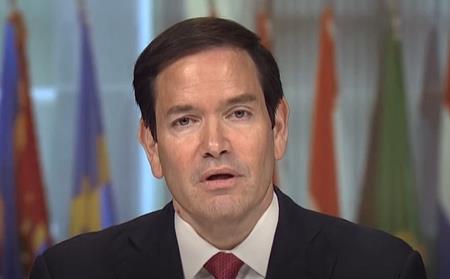
Critical Minerals Now Central To US Diplomacy: Rubio
(MENAFN- IANS) Washington, June 3 (IANS) Critical minerals have become a central pillar of American diplomacy, with US embassies around the world increasingly focused on securing supply chains and reducing dependence on China, Secretary of State Marco Rubio told lawmakers.
Testifying before the House Appropriations Subcommittee on National Security, Department of State and Related Programs, Rubio said the Trump administration has elevated critical minerals to the forefront of its diplomatic agenda as competition with China expands beyond trade and technology into strategic resources.
"In every embassy around the world, critical minerals are a key component of our diplomacy," Rubio said.
The Secretary described critical minerals as essential to the future of advanced manufacturing, artificial intelligence, defence systems, semiconductors and clean energy technologies.
He said the administration is working with partners across multiple regions to develop alternative supply chains that can reduce vulnerabilities created by China's dominance in mining, refining and processing key minerals.
Rubio pointed to recent diplomatic initiatives, including international meetings focused on mineral security and cooperation among allied nations.
"We had three dozen or more countries attend the Critical Minerals Ministerial," he said.
According to Rubio, Washington's strategy extends beyond gaining access to mineral deposits and includes efforts to expand processing and refining capabilities outside China.
"The ability to process those materials into a usable product" has become equally important, he said, describing it as a critical component of economic and national security planning.
The Secretary said American diplomats are now working with governments around the world to identify supply-chain vulnerabilities and connect countries with alternative sources of investment and development.
Rubio argued that many countries seeking infrastructure and industrial development have often been left with few options other than Chinese-backed projects.
"The only people showing up are Chinese companies," he said, describing a challenge faced by many developing nations.
As a result, the United States is seeking to promote American and allied alternatives in sectors ranging from mining and processing to transportation and logistics infrastructure.
Part of that effort involves leveraging financing mechanisms and partnerships with like-minded countries to support strategic projects, particularly in regions rich in mineral resources.
Rubio said concerns over supply-chain security now extend beyond minerals and include other sectors where production has become heavily concentrated.
"We simply have a hyper concentration" in certain industries, he said, warning that dependence on a single supplier creates economic and strategic risks.
The issue has become increasingly important as governments seek to secure materials needed for electric vehicles, battery manufacturing, renewable energy systems and emerging technologies linked to artificial intelligence.

Legal Disclaimer:
MENAFN provides the
information “as is” without warranty of any kind. We do not accept
any responsibility or liability for the accuracy, content, images,
videos, licenses, completeness, legality, or reliability of the information
contained in this article. If you have any complaints or copyright
issues related to this article, kindly contact the provider above.
Most popular stories
Market Research

More Story






Comments
No comment