




403
Sorry!!
Error! We're sorry, but the page you were looking for doesn't exist.
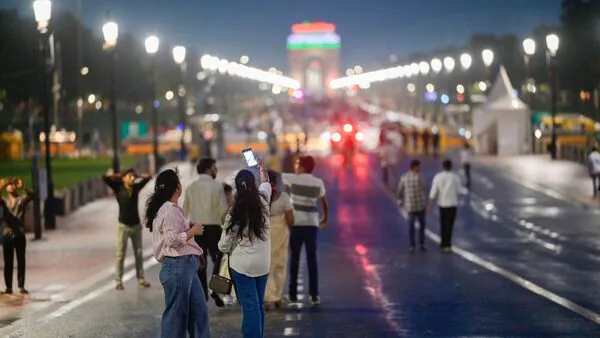
Three-Fourths Of Delhi Faces Heat Stress As Green Cover Shrinks, CSE Study Finds
(MENAFN- Live Mint) About three-fourth or 75.78 per cent area of the national capital remained heat-stressed for six or more years between 2015 and 2024, according to a latest report by the Centre for Science and Environment (CSE), a research and advocacy organisation based in New Delhi. Majority of construction sites, marketplaces and schools were located in areas experiencing recurring extreme heat, the study found.
The report, titled 'Making Delhi Heat-Resilient: A Roadmap with the Focus on Vulnerable Groups', said that 98.72 per cent of Delhi's total area crossed the heat-stress threshold at least once during the decade.
Also Read | Delhi govt gears up for Economic CensusThe report revealed how the extreme heat intensified as the city kept losing its green cover. Delhi's green cover declined from 25.36 per cent in 2014 to 14.14 per cent in 2024, while the footprint of water bodies reduced from 1.25 per cent to 0.99 per cent during the same period.
As a result, Delhi's core area cools 3.8°C less than its peri-urban counterparts, causing heat stress to be retained round-the-clock in its dense, concrete-heavy neighbourhoods, according to the study.
At least 92 per cent of construction projects are located in areas where land surface temperatures crossed the 45 degrees Celsius threshold at least once between 2015 and 2024, while 77 per cent are in areas witnessing recurring extreme heat, it said.
About 84 per cent of the 643 mapped marketplaces, including major mandis, are situated in areas experiencing recurrent heat stress, while 76 per cent of mapped informal settlements housing nearly 1.32 million people are located in heat-stressed localities, it said.
The report also found that 80 per cent of the 1,066 schools mapped in the city are located in heat-stressed areas. It identified 35 wards, including Matiala, Kakraula, Narela and Chandni Chowk, as having "very high" to "high" cumulative vulnerability.
According to the report, 153 of Delhi's 272 wards have more than 75 per cent of their area exposed to recurring heat stress, while 82 wards have more than 90 per cent of their area under heat stress. Seventeen wards have their entire area under heat stress.
The report said Delhi faces a deepening crisis from rising temperatures, with "feels-like" temperatures reaching as high as 52 degrees Celsius in 2025. It noted that 25 heat-related deaths were reported in the city in 2024 by the Union Ministry of Health and Family Welfare, while independent reports put the number at more than 55.
It added that Delhi is shifting towards a "new and warmer normal", with increases observed in both annual average maximum and minimum temperatures over the past four decades.
Which are persistently heat-stressed areas of Delhi?The study found that industrial areas such as Bawana, Mayapuri, Mundka, Anand Parbat and Mongolpuri have emerged as major heat hotspots. Several residential neighbourhoods were also found to be recording land surface temperatures ranging from 44 degrees Celsius to 50 degrees Celsius.
Also Read | UN urges the world to ready for extreme heat risk from El NinoAreas identified as persistently heat-stressed include the walled city and its extensions, Karol Bagh, Kashmere Gate ISBT and its surroundings, Connaught Place (inner circle), Uttam Nagar, Palam, Dabri, Najafgarh, Kanjhawala, Budh Vihar, Bawana and Narela.
Other heat-stressed locations include Samaypur Badli, Bhalswa, Jahangirpuri, Burari, Shahdara, Bhajanpura, Karawal Nagar, Ghazipur industrial area, Badarpur, Madanpur Khadar, Okhla industrial are, Tughlaqabad, Sangam Vihar, Mahipalpur, Aya Nagar, Bhikaji Cama Place, AIIMS, RK Puram, Kotla Mubarakpur, Sarai Kale Khan, parts of Green Park, Greater Kailash, East of Kailash and Lajpat Nagar, according to the report.
The report also identified newly built and redeveloped projects such as Bharat Mandapam, East Kidwai Nagar housing complex, the World Trade Centre in Safdarjung and Netaji Nagar as heat-stressed.
It said land surface temperatures reached as high as 60.77 degrees Celsius during summer months in locations such as the Indira Gandhi International Airport and in areas with unsown agricultural land and barren stretches.
Lutyens' Delhi below heat-stress thresholdSome parts of the city, including Lutyens' Delhi, Civil Lines and Delhi Cantonment, remained below the heat-stress threshold largely due to extensive tree cover and shading over paved surfaces. The Yamuna also continues to provide some cooling relief, with land surface temperatures around it remaining close to 33 degrees Celsius, the report said.
"Delhi is in the grip of an escalating urban heat crisis," the report said, warning that heat-related productivity losses could amount to up to 4.5 per cent of India's GDP, or approximately USD 150-250 billion, by the end of this decade.
Also Read | Extremely Severe Alert on phones: Loud alarm warns of bad weather in Delhi NCRFor the study, CSE analysed Landsat satellite data from 2015 to 2024 to identify areas where land surface temperatures repeatedly exceeded 45 degrees Celsius.
A threshold of 45°C Land Surface Temperatur (LST) was considered: areas which breached this value repeatedly for more than six years were identified as heat-stressed.
Researchers also mapped children, elderly people, women, construction workers, street vendors, homeless people and residents of informal settlements and overlaid their locations with heat-stressed areas to identify the city's most vulnerable neighbourhoods.
Delhi is in the grip of an escalating urban heat crisis.The report called for a heat resilience strategy focused on vulnerable groups, along with measures such as thermally efficient roofs, public cooling centres, climate-responsive urban planning and expansion of green cover across the city.
(With PTI inputs)

Legal Disclaimer:
MENAFN provides the
information “as is” without warranty of any kind. We do not accept
any responsibility or liability for the accuracy, content, images,
videos, licenses, completeness, legality, or reliability of the information
contained in this article. If you have any complaints or copyright
issues related to this article, kindly contact the provider above.
Most popular stories
Market Research

More Story






Comments
No comment