




403
Sorry!!
Error! We're sorry, but the page you were looking for doesn't exist.
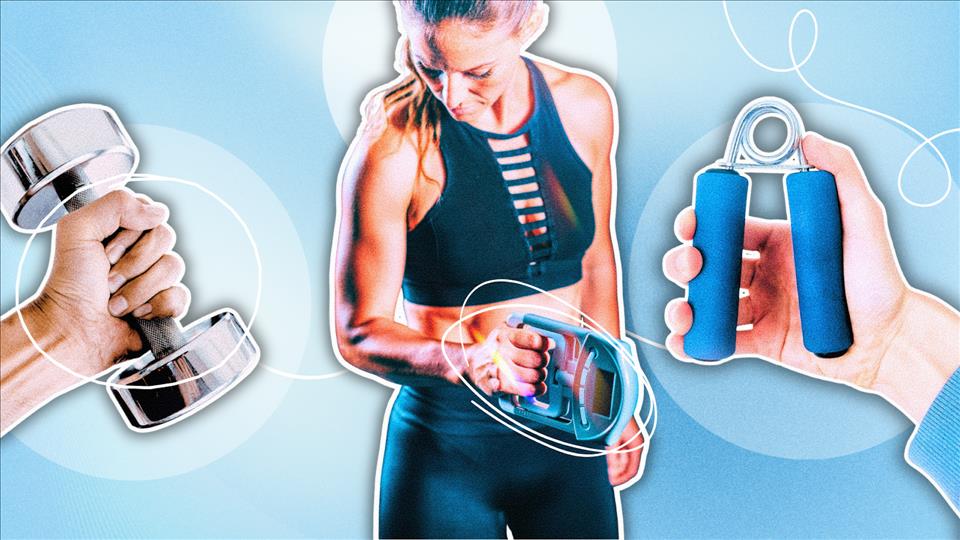
Can 'Grip Strength' Exercises Actually Help You Live Longer?
Author: Hassan Vally
(MENAFN- The Conversation) If you follow wellness channels on social media, you might've come across the claim that your grip strength – or how firmly you can squeeze something with your hands – can predict how long you will live.

This sounds far-fetched. Yet the science supports such a connection.
But as wellness influencers try to monetise this link, what started as something based on scientific evidence starts to get stretched. Now some influencers claim just strengthening your grip strength can help you live longer.
And it's not just social media influencers. Mainstream media often follows some similar patterns, overlooking the complexity and nuance of the science and misrepresenting what it means for individuals.
So many ideas about what makes us sick, or keeps us well, sound plausible. Early studies might sound promising. But then something gets twisted. In this series, we investigate how a grain of truth ends up as a common health myth. And we untangle what went wrong along the way.
What the science saysThe evidence consistently shows a person's grip strength is a good indicator of their overall health and therefore can act as a proxy for how long they might live.
However, grip strength isn't a driver of longevity. The strength of your hands doesn't make your healthier. It indicates how robust the body is, from muscle and nerve function, to the health of your heart and veins, and how your body uses energy.
A typical way researchers have investigated the relationship between grip strength, health and longevity is to measure participants' handgrip strength by getting them to squeeze a hand-held device called a dynamometer. Then they track participants over time, to see if they developed diseases and how old they were when they died.
For example, a study of around half a million British people aged 40–69 years found a 5kg lower grip strength was associated with an approximately 20% greater risk of dying during the follow up period, which was up to ten years.
The researchers also found muscle weakness, which they defined as having a grip strength of less than 26kg for men and 16kg for women, was associated with a higher overall risk of death as well as a higher risk of death from cardiovascular disease (heart attack and stroke), respiratory disease, chronic obstructive pulmonary disease and a number of cancers.
The link is stronger for older peopleWhile the relationship between grip strength and health holds for all age groups, in older people it appears to be a particularly good predictor of death, heart attacks, stroke, falls and fractures.
This is because it seems to be exceptionally good indicator of age-related loss of muscle mass (known as sarcopenia), power and resilience in older people.
Consequently, some researchers suggest grip strength should be considered a“new vital sign” – alongside more traditional indicators of health such as temperature, pulse, respiration and blood pressure.
The reason grip strength is a less powerful predictor of longevity in younger people compared to older age groups is because most young people are near the upper end of physiological performance. Differences in young people's health are relatively small compared to the“noise” introduced by measurement error or random variation.
As people age, however, their health varies much more, while the sources of error remain roughly the same. Consequently, this higher signal-to-noise ratio results in a much stronger relationship between grip strength and health in later life.
So how did this turn into hype?The problem with the way some people communicate this is generally an issue of overreach. Things often get muddled and this association can sometimes be turned into a prescription.
When people conflate correlation with causation, they may claim that just doing exercises to improve your grip strength, without improving your overall health, can help you live longer.
But just because two variables are linked does not mean that one causes the other. Improving grip strength is not a magic path to longevity. Rather, it's a marker or proxy of broader physiological robustness, which influences longevity.
Intriguingly, some reels and articles explain the science clearly and highlight that grip strength is a proxy and not a cause, but then, paradoxically, go on to describe ways of increasing grip strength. This undoubtedly undermines the message that the relationship is not causal.
One of the problems seems to be that influencers and journalists sometimes feel it's not enough to just explain the science: they have to offer actionable health advice or a solution. This can lead to overreach, where advice is given that goes beyond what the evidence says.
In a nutshellWe're all naturally drawn to simple metrics that promise insights into our health and longevity, and grip strength seems to be one of the more useful ones.
Grip strength is a simple and accessible marker that can help predict health and longevity, particularly in the elderly. But improving your grip strength in isolation won't make you healthier or extend your life.
The most effective drivers of health and longevity remain the obvious ones: staying active, eating a balanced diet, sleeping well, maintaining social connections and managing stress.
Read more: How old are you really? Are the latest 'biological age' tests all they're cracked up to be?
Institution:Deakin University

Legal Disclaimer:
MENAFN provides the
information “as is” without warranty of any kind. We do not accept
any responsibility or liability for the accuracy, content, images,
videos, licenses, completeness, legality, or reliability of the information
contained in this article. If you have any complaints or copyright
issues related to this article, kindly contact the provider above.
Most popular stories
Market Research

More Story







Comments
No comment