




403
Sorry!!
Error! We're sorry, but the page you were looking for doesn't exist.
Indigenous Digital Colonisation: How The Internet Is Affecting The Lives Of Indigenous Peoples In The Amazon
Author: Higor Leite
(MENAFN- The Conversation) The colonisation of Brazil, which began in the 16th century with the arrival of the Portuguese, caused profound transformations in the lives of Indigenous peoples. This included the spread of disease, loss of territory and violence.

Today, a comparable process is underway, one we are calling“Indigenous digital colonisation.”
We have been investigating how growing access to the internet and mobile devices is impacting Indigenous communities, causing significant social, cultural and behavioural change.
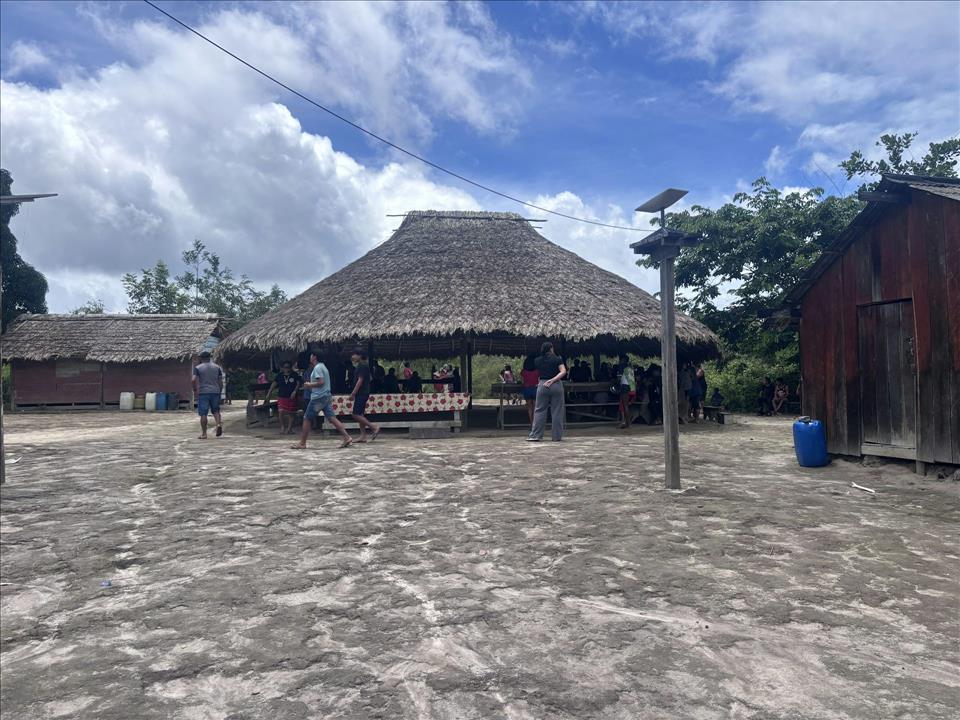
Recently, with support from the Association for Consumer Research, American Marketing Association and Transformative Consumer Research, we had the opportunity to conduct an ethnographic study in a series of remote Amazon tribes accessible only by humanitarian flights, such as those carried out by the “Aliança de Esperança” (“Hope Alliance”) mission.
Higor Leite, one of the co-authors of this piece, spent a week in these communities in the State of Pará, North of Brazil. He observed the residents going about their lives and spoke with them about the impact of the internet on their communities. The experience was both productive and deeply unsettling.
Connecting the disconnectedAs a research team, we have long argued that inclusion is necessary for people experiencing vulnerability, especially when it comes to accessing resources widely available to the rest of society.
In the communities Higor visited, we closely observed the positive effects of initiatives to expand connectivity in the Amazon.
Residents reported meaningful improvements in communication with family members in urban areas and other tribes. Access to essential services has also expanded. In emergencies, the communities can now quickly contact the health system, receive initial guidance, and arrange aerial evacuation when necessary.
In this respect, technology functions as more than a facilitator. It can, in certain cases, save lives.
Beyond health care, internet access opens new pathways to information. Indigenous communities members can now follow and participate in debates far beyond their tribes.
During our visits, we noticed that Starlink antennas paired with solar panels had become part of the local landscapes. What was once a single, communally shared connection is giving way to individualized access, with residents managing their own devices and accounts.
A return to a disconnected Amazon is neither realistic nor, at this point, desirable. At first glance, this represents significant advancement with real potential for inclusion and social transformation.
But during our time in the field, we identified an important and under-examined gap: the limited understanding of the side effects of unequal access to technology.
When inclusion becomes exclusionOur conviction that inclusion is a positive process was directly challenged by what was witnessed in the communities.
To be clear: we continue to believe that digital inclusion is fundamental for supporting people experiencing vulnerability. But this fieldwork made clear that the effects are not uniformly positive. Alongside the gains, technology brings a set of less visible, and often unintended, consequences.
Intensive use of mobile devices is already widely associated with hyperstimulation, increased screen exposure, and behavioural changes, particularly among young people. If these effects are a significant challenge in urban areas, the impacts are likely to be more acute in communities experiencing vulnerability, such as Indigenous populations who have had no gradual acclimation.
As Higor walked around the communities, he witnessed children and adolescents deeply absorbed in their phones. Many times, his presence went entirely unnoticed.
Groups of people gathered together under trees, but remained isolated from one another, focused on online games, with little or no direct interaction.
The impact was intensified at night, when the absence of natural light made the glow of screens all the more visible.
A major health event also occurred in one community during Higor's stay, which allowed for access to chiefs, teachers and leaders from neighbouring communities. They described similar scenes in their communities, where cell phone use had become compulsive, in some cases comparable to alcoholism or substance dependence.
There were reports of residents inverting their sleep cycles, trading daytime activities for night to maximise their time online. Many had withdrawn from traditional practices, such as hunting, fishing and cultural gatherings.
When device use was interrupted, particularly among children and adolescents, many showed signs of withdrawal: heightened aggression, anxiety, verbal abuse and disrupted sleep. In the most serious cases, leaders described instances of suicide ideation or attempts.
This is what we have come to call“Indigenous digital colonisation”. While promoting inclusion, access to technology has also simultaneously caused dependency and put strains on elements of cultural identity that hold communities together.
The parallel to historical colonisation, however, runs deeper than just the metaphor.
Hidden risks of Indigenous digital ColonisationBeyond the intensive screen time, other risks arise from exposure to the broader digital environment.
A recurring pattern involves scams via WhatsApp and Instagram. Indigenous people are being targeted through extortion, pressured into financial transfers under threat of having intimate images exposed.
There were also accounts of recruitment attempts targeting women in particular, with promises of a better life in urban areas.
These episodes point to something beyond the direct risks of connectivity. There is a significant asymmetry in preparedness between these communities and the digital environment they are now navigating.
Distinguishing legitimate content from fraud is a challenge even for people long familiar with the internet. For communities at an early stage of technological adaptation, with social vulnerabilities, communication barriers, and limited digital literacy, exposure to harm is amplified even further.
A connected Indigenous futureOur research is in its early stages, and we expect further layers of complexity to emerge as our analysis continues.
Our central premise remains: the digital inclusion of Indigenous people must be preserved and strengthened, given its potential to expand access to rights, services and opportunities.
But more work is required. The effects of Indigenous digital colonisation must be understood and mitigated to ensure technological inclusion translates into genuine improvements in wellbeing, rather than new and insidious experiences of vulnerability.
Our research agenda is moving toward applied solutions in four areas:
- developing structured protocols for internet access in communities producing educational materials on digital safety and privacy raising awareness of risks associated with excessive screen time and building digital literacy within Indigenous communities.
The challenge is no longer simply whether to connect. How access is shaped, mediated, and supported will matter as much as the connection itself.
These communities deserve better than the version of connectivity that has, so far, largely been delivered to them.
Institution:Adelaide University

Legal Disclaimer:
MENAFN provides the
information “as is” without warranty of any kind. We do not accept
any responsibility or liability for the accuracy, content, images,
videos, licenses, completeness, legality, or reliability of the information
contained in this article. If you have any complaints or copyright
issues related to this article, kindly contact the provider above.
Most popular stories
Market Research

More Story




Comments
No comment