



403
Sorry!!
Error! We're sorry, but the page you were looking for doesn't exist.
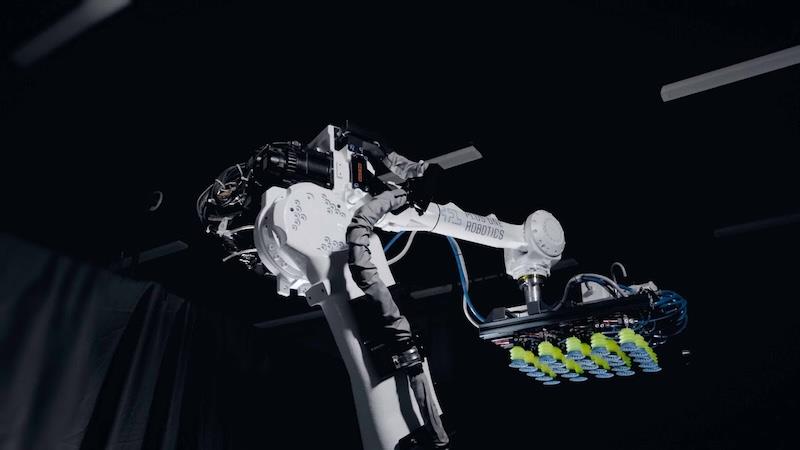
Plus One Robotics: Why Warehouse Automation Succeeds Or Fails At Scale
(MENAFN- Robotics & Automation News) Warehouse automation has entered a new phase. The question is no longer whether robotics can perform individual tasks such as parcel picking, depalletizing, sorting, or palletizing.
The technology has largely proven itself in pilot projects and controlled deployments. The bigger challenge facing the industry today is scale.
As logistics operators expand robotics systems across multiple facilities, they often discover that success depends less on peak performance and more on consistency, reliability, and operational resilience.
A robot that performs flawlessly during a demonstration may face a very different reality when operating continuously across dozens of warehouse sites with different workflows, package types, staffing levels, and operational demands.
Few companies have more experience with these challenges than Plus One Robotics. The company specializes in AI-powered warehouse automation systems and recently surpassed two billion lifetime picks across its deployed robotics fleet.
Its technology is used by logistics operators seeking to automate labor-intensive warehouse tasks while maintaining the flexibility required in modern distribution environments.
In this Q&A, Christina Gomez-Terry, vice president of operations at Plus One Robotics, discusses the practical realities of scaling warehouse automation.
Drawing on years of operational experience, she argues that a robotics company is ultimately judged not by its best day, but by its worst.
Gomez-Terry explains why hardware failures often reveal themselves only after large-scale deployment, why many automation projects struggle when moving beyond the pilot phase, and why maintainability and reliability are frequently more important than headline performance metrics.
She also discusses the long-term role of human-in-the-loop operations, the importance of customer support infrastructure, the influence of ROS and open-source robotics on commercial systems, and why integration may become the next major bottleneck facing warehouse automation.
The conversation offers a candid look at what it takes to make robotics work reliably in real-world logistics operations.
Interview with Christina Gomez-TerryRobotics & Automation News: You've said that a robotics company is only as strong as its“worst day.” What are the most common operational problems that emerge when warehouse robotics systems move from pilot projects to large-scale deployments?
Christina Gomez-Terry: The areas where I see the most issues are around unforeseen hardware failures (and secondly, around software updates to enhance the current product).
For the mechanical components, there are just things you can't predict failing when you're working in an adaptive environment where not every cycle looks identical.
When a hose hits half a million cycles, it ends up tearing and not necessarily in the same place every time, and not in a way you can replicate in the lab, so you have to figure it out“live” in production.
You also need to stock spare parts and keep them readily available for the number of units you have deployed at the new failure rate you just determined.
The design team and support team need to have good communication streams to enable a good feedback loop on issues and improvements.
R&AN: Many warehouse automation demonstrations look impressive in controlled environments, but scaling across multiple facilities is much harder. Why do so many robotics deployments struggle once they leave the pilot phase?
CGT: You can make a Formula 1 race car with the right team and a large budget; similarly, a robotic pilot system can succeed at a pilot acceptance test or in a demonstration with the right team and a good budget.
But moving beyond that phase to something that is not just hitting the one metric everyone cares about (speed for a car, rate or throughput for a robot) and incorporating other metrics that matter in the long run (maintainability and reliability) is difficult to include in the design, after the fact.
So if you didn't design it up front to last at least an hour before requiring human intervention (what is your mean time between failure), then adding features to get you there becomes clunky and patchwork and just makes scaling difficult.
R&AN: Plus One Robotics has now surpassed 2 billion lifetime picks across deployed systems. From an operations perspective, what lessons only become visible after running robots continuously at that scale?
CGT: In our space, everything seems fragile – software is delicate and dependent on hardware that has a limited lifespan. Designing systems that last as long as customers expect, while delivering performance beyond what's been done before, requires carefully balancing why you upgrade, when you upgrade, and what you upgrade.
The computers we utilize for vision processing have GPUs in them with a lifespan of 4 years or less, and these GPUs become incompatible with certain versions of software. Even the USB boards don't last beyond 6 years.
Sometimes you should do an upgrade to improve the system's performance, and sometimes you should keep operations humming along because the system is performing as needed. That decision is complex and requires the customer to understand the risks and rewards before proceeding.
R&AN: Warehouses are highly variable environments, with differences in staffing, workflows, package types, layouts, and peak demand periods. How important is adaptability compared with raw robotic performance?
CGT: It's equally important. You don't get in the door and past certain stage gates without proving a minimum level of performance.
But once you're past that, the real world requires a certain level of adaptability to continue to succeed and get performance that's acceptable for all seasons, layouts, and workflows.
Additionally, you want a really solid/high“happy path” performance so that when things are not so ideal, the system still performs well (even if not optimal).
R&AN: Plus One emphasizes“supervised autonomy” and human-in-the-loop operations. Do you see that as a long-term operating model for logistics robotics, or simply a transitional step toward greater autonomy?
CGT: I see it as a long-term operating model. I think it's a tool towards greater autonomy, but it will be a tool that remains in action for years to come.
So long as humans continue to do many things on their own (in logistics, it would be boxing up your own package, or creating your own pallet of stuff), the world will continue to have packages and pallets coming in every size, shape, and form. The world continues to change in unanticipated ways, and people will always be best at handling man-made situations.
R&AN: As robotics adoption expands across logistics networks, what role does customer support and field service infrastructure play in determining whether automation projects succeed or fail?
CGT: I think good customer support is critical to any organization's long-term success, whether in logistics or elsewhere. We can all remember a support call that went badly, and we all remember a person on the other line who really helped us out.
If you're a company building a product that gets used by people, you need a great support infrastructure to handle the calls that inevitably come in from a frustrated user, just trying to get their widget to work again.
If the support system can answer and resolve 90% of the issues right then and there, that's a win. Bonus points if you can identify an issue outside of your own product scope but within the ecosystem in which your product lives.
R&AN: Many logistics operators are now under pressure to automate quickly because of labor shortages and e-commerce growth. Do you think some companies are deploying robotics before their operational processes are truly ready?
CGT: I would say yes, but also that they have to. Humans are remarkably resilient and creative. They understand the job that needs to be done, and they find a way to do it.
They will cover up an operational process deficiency with no questions asked, whereas the automation could fail every time the operational process fails.
If installing automation in just one of 16 lanes helps a logistics operator identify an issue with a parcel type common across all 16 lanes, and they can resolve it facility-wide to increase throughput across every lane (not just the automated one), that's a win.
If nothing else, logistics operators should be trying more automation just to see where their operational processes have gaps. It's time to move faster and fix things.
R&AN: Plus One Robotics has deep roots in ROS-Industrial and open-source robotics development. How important has that ecosystem been in accelerating commercial warehouse robotics compared with more proprietary approaches?
CGT: The ecosystem has been huge for commercial warehouse robotics and other robotics in general. It has fostered a lot of creativity and development in the robotics and automation space.
The open-source community was a driving factor for a lot of startups and has really seeded a lot of advancement. There is, however, a natural evolution from open-source to proprietary development.
Once an idea becomes more formalized, the requirements get hardened, and the product gets refined. When it comes to delivering a product that meets a specification, proprietary code becomes necessary to ensure repeatable success.
R&AN: Looking ahead, where do you think the next major bottleneck lies for warehouse automation – perception, manipulation, integration, reliability, or something else entirely?
CGT: Integration. There are two bottlenecks around integration: 1) brownfield opportunities outnumber greenfield opportunities for warehousing projects, and 2) with all the AI and RFM work being done now and to be tested live in years (months?) to come, an integrator may be the one taking all the risk.
Integrators are those whom end-users have come to trust to take on a full-scale automation project and deliver on a schedule with certain metrics. There is an established expectation of deliverables that comes with using an integrator.
How the integrator achieves this (via traditional means or new technology) is something that is more open-ended (though typically the customer is aware and has some level of buy-off).
Additionally, the integrator has potentially been working with the customer for years and is well aware of the pitfalls of putting new technology into an existing facility.

Legal Disclaimer:
MENAFN provides the
information “as is” without warranty of any kind. We do not accept
any responsibility or liability for the accuracy, content, images,
videos, licenses, completeness, legality, or reliability of the information
contained in this article. If you have any complaints or copyright
issues related to this article, kindly contact the provider above.
Most popular stories
Market Research

More Story







Comments
No comment