

Four UAE Universities Rise In Global Rankings Amid Stronger Research Performance


- By: Nandini Sircar
The UAE's higher-education secto has strengthened its global standing, with four of its universities improving their positions in the 2026 Global 2000 rankings released by the Center for World University Rankings (CWUR).
The rankings reflect gains driven primarily by stronger research performance.
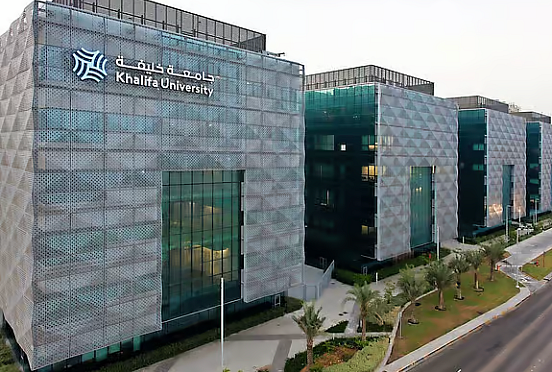
Recommended For You US military disables Gambia-flagged ship attempting to reach Iranian portThe latest edition of the CWUR rankings places Khalifa University at the top among UAE institutions, followed by United Arab Emirates University, University of Sharjah, and New York University Abu Dhabi.
Stay up to date with the latest news. Follow KT on WhatsApp Channels.
Rise in ranking compared to last year
All four universities improved their global standings compared to last year, underscoring what CWUR describes as sustained national investment in higher education and scientific output.
CWUR analysed 81 million outcome-based data points across 21,291 universities in 95 countries, assessing institutions on education, employability, faculty strength, and research performance. Research, which carries the highest weighting at 40 per cent, emerged as the key driver behind the UAE's upward movement.
Khalifa University climbed 51 places to rank 795th globally, placing it in the top 3.8 per cent worldwide. UAE University rose 64 places to 958th, while the University of Sharjah advanced 98 positions to 994th. NYU Abu Dhabi also improved its standing, ranking 1063rd globally.
Commenting on the UAE's performance, CWUR president Dr Nadim Mahassen said the results reflect long-term national priorities in education and innovation.
“The extraordinary rise of UAE universities reflects years of financial backing, and the recognition of science and education as valuable public goods,” he said.
“UAE universities are succeeding in delivering high-quality education, attracting and retaining talent, and producing strong research at scale. This is not just an academic success but a national one, because the strengthening of the UAE's higher education system is central to scientific development, innovation, and the country's long-term future.”
He added that while global higher education remains dominated by the United States at the top, the competition is intensifying further down the rankings, particularly from Asia.
“The results of this year's rankings show that the United States boasts the top universities in the world,” he said.“However, this dominance is increasingly contested further down the league table, as other universities – particularly from China – are catching up.”
UAE strengthens Arab rankings positionThe UAE's progress is also visible within the Arab regional rankings, where its universities have maintained or improved positions amid strong competition from Saudi Arabia and Egypt.
In the 2026 Arab rankings, Khalifa University ranks 10th in the region, making it the highest-ranked institution in the UAE. UAE University follows at 12th, the University of Sharjah at 13th, and NYU Abu Dhabi at 18th.
The UAE's performance places it among the more competitive higher-education systems in the Arab world, though Saudi Arabia continues to dominate the regional top tier, led by institutions such as King Abdullah University of Science and Technology.
Across the Arab world, CWUR data shows incremental gains driven largely by research output improvements, particularly in Gulf universities investing heavily in science, engineering, and technology disciplines.
Global context: shifting academic balanceAt the global level, Harvard University retains the top position for the 15th consecutive year, followed by MIT and Stanford. The United Kingdom's Cambridge and Oxford complete the top five.
CWUR noted continued strong performance from US universities overall but highlighted growing competition from China and parts of Asia, which are steadily improving their research output and global influence.
China now has 360 universities in the Global 2000, the highest representation of any country, reflecting sustained investment in higher education and research infrastructure.
Dr Mahassen said the shifting landscape reflects a broader global rebalancing of academic power.
“The United States boasts the top universities in the world,” he said.“Many years of substantial funding, and the ability to attract talent from around the world, have allowed the leading American universities to set international academic standards and drive innovation across disciplines.”
However, he added that other regions are closing the gap, signalling a more competitive and multipolar academic environment.
Global top ten:
Harvard remains world No. 1 for the 15th year, followed by MIT and Stanford. Cambridge (4th) and Oxford (5th) are the highest-ranked public universities. The rest of the top ten is made up of US private universities: Princeton, Pennsylvania, Columbia, Yale and Chicago.
United States and Canada:
The US dominates the top with eight of the global top ten but faces broader declines. In the Global 2000, 36 US universities improved, 25 held steady, and 252 fell. All Ivy League institutions are in the top 75. Berkeley is the top public university (12th globally), just behind Caltech. The US has 313 institutions (down six), second only to China. Canada has 38, led by the University of Toronto (23rd).
Europe:
Europe has 620 universities in the rankings but shows overall decline amid rising global competition. In the UK, only 20 universities improved, four stayed stable, and 65 fell, despite Cambridge and Oxford leading globally. The UK has 89 institutions in total.
France has 71 universities; PSL remains top at 20th, with five in the top 50. Germany has 69 institutions, led by Munich (51st), but 54 declined. Russia has 42 universities, with Moscow State University (264th) leading.
Europe's top ten: Cambridge, Oxford, UCL, PSL, Imperial, ETH Zurich, Institut Polytechnique de Paris, Paris-Saclay, Copenhagen, and Paris City University.
Asia:
China shows strong gains, with 98% of universities improving. It now leads globally with 360 institutions, up from 346, led by Tsinghua (36th). All C9 League universities improved.
Japan, despite Tokyo ranking 13th globally, saw 92% of its 102 universities decline due to earlier funding cuts. India showed mixed results, with 32 universities rising and 34 falling.
Asia's top ten: Tokyo, Kyoto, Seoul National University, Tsinghua, Peking, University of Chinese Academy of Sciences, Shanghai Jiao Tong, Zhejiang, Fudan, and Hebrew University.
ALSO READ- Canadian University Dubai remains #1 in QS ranking for fifth consecutive year India ranked as Asia's top research hub in QS World University Rankings 2026

Legal Disclaimer:
MENAFN provides the
information “as is” without warranty of any kind. We do not accept any
responsibility or liability for the accuracy, content, images, videos,
licenses, completeness, legality, or reliability of the information
contained in this article. If you have any complaints or copyright issues
related to this article, kindly contact the provider above.
Comments
No comment