




403
Sorry!!
Error! We're sorry, but the page you were looking for doesn't exist.
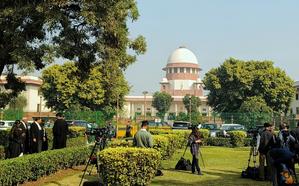
Majority Of NEET Reform Recommendations Already Implemented: Former ISRO Chief To SC
(MENAFN- IANS) New Delhi, May 29 (IANS) Former ISRO Chairman K. Radhakrishnan has informed the Supreme Court that a majority of the recommendations made by the high-level expert committee constituted after the NEET-UG 2024 controversy have either been implemented or are under active execution, with several reforms already operational in the conduct of NEET examinations.
In an affidavit filed before the apex court, Radhakrishnan, who headed both the High-Level Committee of Experts (HLCE) on NTA reforms and the subsequent High-Powered Steering Committee (HPSC) monitoring implementation of its recommendations, said the reforms were aimed at ensuring“transparent, smooth and fair conduct of examinations” by the National Testing Agency (NTA).
The affidavit was filed pursuant to the Supreme Court's May 25 direction asking him to apprise the top court of the status of implementation of the panel's recommendations.
Radhakrishnan said the HLCE, constituted by the Union Ministry of Education in June 2024 following the NEET-UG controversy, held extensive consultations with stakeholders, including state governments, police authorities, technology experts, academicians, student groups and global testing agencies.“The HLCE also consulted stakeholders through the MyGov portal and received 37,144 responses from students, parents/guardians, teachers/academicians, etc.,” the affidavit stated.
According to the affidavit, the committee submitted its report on October 21, 2024, making 101 recommendations covering examination reforms, data security, institutional restructuring of NTA, examination integrity, mental health support and technological safeguards.“The HLCE made a total of 101 recommendations with short-term, medium-term and long-term perspective,” it said.
The affidavit stated that a High-Powered Steering Committee was subsequently constituted on November 14, 2024, to oversee implementation of the recommendations and has been continuously monitoring progress through periodic reviews and presentations by NTA officials.
Highlighting measures already put in place, Radhakrishnan said state governments are now actively involved in the conduct of NEET examinations through State-Level Coordination Committees (SLCCs) and District-Level Coordination Committees (DLCCs).“States are now actively involved in the conduct of NEET(UG) Examination as recommended by the HLCE. State Level Coordination Committees (SLCCs) and District Level Coordination Committees (DLCCs) are functional and played a key role during NEET (UG) 2025 and 2026 Examinations,” the affidavit said.
It added that more than 99.5 per cent of examination centres for NEET-UG 2026 were government institutions and that city coordinators were drawn from government schools and Kendriya Vidyalayas.
On strengthening of the NTA, the affidavit said the government had created 16 new senior-level posts and deployed domain-specific experts from institutions such as IITs, the University Grants Commission (UGC) and Kendriya Vidyalaya Sangathan (KVS).
Radhakrishnan also informed the top court that Aadhaar-based biometric authentication has been introduced for NEET-UG candidates as part of the first phase of the proposed“DIGI-EXAM” system.
“HPSC noted that NTA introduced Aadhaar-based biometric authentication for candidates appearing in NEET(UG) Examination as part of first phase for implementation of DIGI-EXAM system,” the affidavit stated.
It further recorded that a multi-layer frisking mechanism has been introduced, CCTV surveillance has been expanded across examination centres, and mobile jammers have been installed to prevent electronic malpractice.
The affidavit added that data analytics tools are now being used to identify suspicious patterns and anomalies in candidate responses, while the grievance redressal system is being strengthened through artificial intelligence and machine learning-based functionalities.
On the issue of examination format, Radhakrishnan said the expert committee had recommended a gradual transition of NEET-UG from pen-and-paper mode to a computer-based testing (CBT) format, along with multi-session and multi-stage testing.
“On the structure of NEET-UG, the HLCE had recommended a transition from Pen-and-Paper to Computer-Based Testing,” the affidavit stated. However, it clarified that such recommendations would have to be implemented in consultation with the Union Ministry of Health and Family Welfare, which is the nodal ministry for NEET-UG.
The affidavit also said that several long-term reforms, including educational testing research, information security upgrades, AI-based monitoring systems and harmonisation of entrance examinations, are being implemented in a phased manner under the committee's supervision.
The affidavit comes in the backdrop of petitions seeking sweeping reforms in the conduct of NEET-UG following the 2026 paper leak controversy.

Legal Disclaimer:
MENAFN provides the
information “as is” without warranty of any kind. We do not accept
any responsibility or liability for the accuracy, content, images,
videos, licenses, completeness, legality, or reliability of the information
contained in this article. If you have any complaints or copyright
issues related to this article, kindly contact the provider above.
Most popular stories
Market Research

More Story







Comments
No comment