




403
Sorry!!
Error! We're sorry, but the page you were looking for doesn't exist.
The Leakage And Lies Keeping Indonesia's Rupiah Weak
(MENAFN- Asia Times)
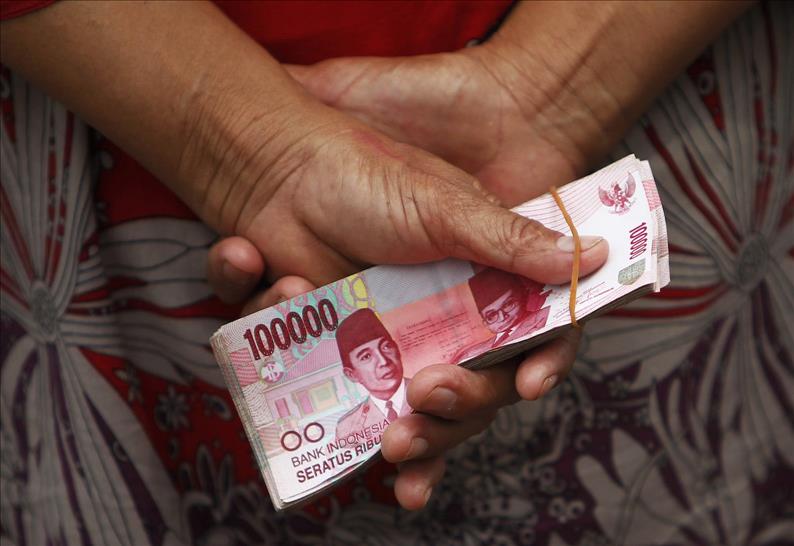
Indonesia embodies one of the strangest paradoxes in emerging-market economics. Every time global commodity prices, from coal to crude palm oil (CPO), surge, the country posts impressive trade surpluses. Yet the glow of those export windfalls rarely translates into a stronger rupiah, which remains chronically vulnerable to depreciation pressures.
Behind the headline export figures lies a quieter but far more damaging reality, a persistent stream of capital flight systematically draining the nation's financial wealth. This is not merely a technical flaw in market mechanisms. It is a form of organized economic predation sustained through transaction manipulation by entrenched corporate oligarchies.
The primary instruments behind this exodus are export under-invoicing and aggressive transfer pricing. Through under-invoicing, domestic exporters deliberately report export prices, shipment volumes, or commodity quality far below their actual market value.
Aggressive transfer pricing works differently but toward the same end, shifting taxable profits out of Indonesia into intermediary subsidiaries located in tax havens or low-tax trading hubs. Such affiliated transactions violate the arm's length principle, thereby transforming real profits at home into artificial losses to evade taxes and mining royalties.
The consequences for national development are profound. Estimates presented in Indonesia's macroeconomic policy briefings suggest cumulative losses from under-invoicing strategic commodities reached US$908 billion, equivalent to around15,400 trillion rupiah, between 1991 and 2024. Empirical findings from the research organization Global Financial Integrity point in the same direction.
In 2016 alone, Indonesia potentially lost $6.5 billion in state revenue due to export-import trade manipulation. Fiscal losses on such a scale represent foregone investments in essential public services such as education and healthcare, sacrificed instead to inflate offshore bank accounts owned by rogue exporters.
Confronted with these chronic leakages, the Indonesian government has finally opted for what can only be described as economic shock therapy. Sweeping reforms have been launched through tighter rules governing export proceeds (DHE) and the establishment of a single state-controlled commodity export agency, PT Danantara Sumberdaya Indonesia (DSI).
Together, these measures mark a new chapter in Indonesia's resource nationalism, one that seeks full state oversight over every dollar generated from the country's natural wealth. But before examining these rescue instruments, it is important to understand how the schemes operate in practice and why the country's domestic oversight system has long been left dangerously hollow.
Profit manipulationThe mechanics of trade manipulation are remarkably sophisticated because they hide behind otherwise legitimate international trade documents. One of Indonesia's largest palm oil tax scandals, involving Asian Agri Group (AAG) between 2002 and 2005, became the blueprint for many of these schemes.
The case unraveled after whistleblower Vincentius Amin Sutanto, the group's financial controller, exposed transaction irregularities worth 2.62 trillion rupiah (US$160 million).
AAG allegedly inflated fictitious operational expenses by 1.5 trillion rupiah, engineered hedging losses worth 232 billion rupiah, and understated real export sales by 889 billion rupiah.

Legal Disclaimer:
MENAFN provides the
information “as is” without warranty of any kind. We do not accept
any responsibility or liability for the accuracy, content, images,
videos, licenses, completeness, legality, or reliability of the information
contained in this article. If you have any complaints or copyright
issues related to this article, kindly contact the provider above.
Most popular stories
Market Research

More Story







Comments
No comment