




403
Sorry!!
Error! We're sorry, but the page you were looking for doesn't exist.
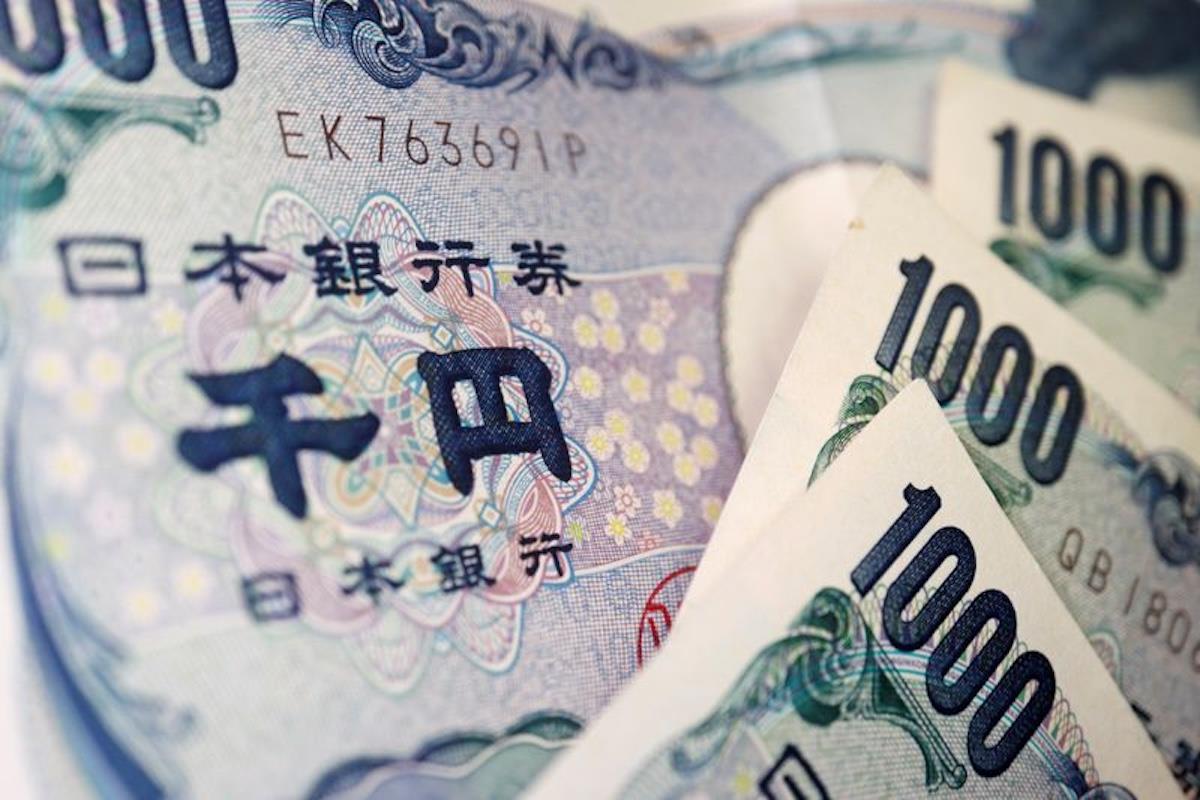
Bank Of Japan Squeezed By Takaichi, Trump And Iran War Inflation
(MENAFN- Asia Times)
Speaking on Wednesday (May 27), Bank of Japan Governor Kazuo Ueda cautioned that central banks must prevent this year's oil‐driven inflation surge from hardening into a lasting global problem.
“If inflation expectations are already high and wages are accelerating, the risk of second‐round effects is large,” he said, adding that the line between temporary and persistent inflation“is not mechanical.”
In other words, a June 16 BOJ rate hike isn't just likely - it could mark the start of a broader tightening cycle that finally puts Tokyo's normalization back on track. That shift would almost certainly push the yen higher, a development welcomed by US Treasury Secretary Scott Bessent and President Donald Trump.
Prime Minister Sanae Takaichi would see it very differently, though. Before taking office last October, she laid out an economic strategy built on maintaining a weak yen - a stance that depends on the BOJ keeping rate hikes to a minimum. On the campaign trail, she even dismissed the idea of raising rates as“stupid.”
So far in 2026, Team Ueda has stayed on the sidelines. When the BOJ lifted its benchmark rate to 0.75% in December - a 30‐year high - policymakers fully expected to follow it with more hikes.
By now, Ueda was supposed to have secured his legacy as the governor who finally buried Japan's deflation‐era zero‐rate regime. If he's going to claim that legacy, he'll have to push past Takaichi and the Liberal Democratic Party.
For nearly three decades, the LDP has pressed the BOJ to cut rates - or at least avoid raising them - and largely gotten its way. Since 1999, when the BOJ became the first Group of Seven central bank to cut rates to zero, government after government has shamed policymakers into leaving them there. Or to go even further with quantitative easing (QE).
The BOJ came closest to escaping zero rates and quantitative easing two decades ago under Governor Toshihiko Fukui, who served from 2003 to 2008. By 2006–2007, his team had unwound QE and lifted the benchmark rate to 0.5%. But one mild recession - and then the“Lehman shock” - sent the BOJ straight back to zero.
When a new governor arrived in 2008, the first move was to restart QE. Japan's monetary ATM was back online. And in 2013, Governor Haruhiko Kuroda built an even bigger free‐money machine and cranked the settings to maximum.
The decade before Ueda took over saw the BOJ dominate Japan's government‐bond market so completely that some issues didn't trade at all on certain days. It also became the single largest owner of Tokyo stocks. By 2018, the BOJ's balance sheet had ballooned past the size of Japan's $4.2 trillion economy - a first for any G7 nation.
Latest stories China's chip champion rewrites the rules of scaling Trump's push to expand Abraham accords destined to fail A credible and safe path to Chinese financial liberalizationUeda arguably waited too long to lift rates in 2023 and 2024, or to shift QE decisively toward QT, or quantitative tightening. By the time US President Donald Trump's trade war hit in 2025, the window for meaningful tightening had already narrowed.
Then came Takaichi, a protege of former leader Shinzo Abe. She quickly revived his“Abenomics” playbook of aggressive easing and a weak yen, sharply limiting Ueda's room to push rates to 1% or higher.
Yet it's also put Tokyo in Trump World's crosshairs a bit. When he was in Tokyo earlier this month, Bessent characterized the yen as undervalued and prodded the BOJ to press forward with rate hikes.
“I believe the fundamentals of the Japanese economy are strong and resilient, and that will be reflected in the exchange rate,” Bessent said. He added that“we both believe that excess volatility is undesirable, and we have been in close contact with the Ministry of Finance, and we will stay in close contact with them,” comments that suggest the US might be willing to engage in joint currency intervention.
The strategy behind Bessent's moves on Trump's behalf isn't hard to read. The White House has made little headway pressuring the US Federal Reserve to ease. Former Chair Jerome Powell resisted despite Trump's threats to fire him and prosecutors' attempts to constrain him.
New Fed Chair Kevin Warsh is already boxed in by April's 3.8% year‐on‐year inflation - the highest level in three years. If Trump and Bessent can't get the Fed to loosen policy, nudging the BOJ to tighten becomes the next‐best lever.
If that's the plan, there's a case for the yen snapping higher once Iran‐war chaos fades and the Strait of Hormuz reopens. One reason: the BOJ looks poised to tighten ahead of the Fed. Another: traditional currency relationships have been breaking down.
In earlier eras, any outbreak of conflict in the Middle East would send the yen surging. Not in 2026. This year, the currency has instead flirted with the psychologically important 160 yen-per‐dollar level. The move has irritated Trump World, which is hypersensitive to any hint that Asia might be seeking a trade edge through artificially low exchange rates.
That sets the stage for a potential clash between the BOJ and Takaichi's government. It may not be as loud or chaotic as Trump versus Powell, but things could get tense if Ueda chooses to do his job rather than defer to the government.
Yes, the BOJ has been formally independent since 1998. But it slashed rates to zero soon after - and kept them there for more than 25 years. It also remains the financial stabilizer beneath both the government‐bond and stock markets. Now the QT process is at risk as Takaichi's team pushes for more BOJ support, not less.
This tension could easily rattle global markets and put a hedge fund or two in the line of fire. It also carries unpredictable consequences for Japan's 125 million people and its corporate establishment.
After decades of ultra‐easy money, banks, companies, pension funds, endowments, and a government saddled with the developed world's heaviest debt load are in for a shock if Ueda pulls away the punchbowl.
In short, Ueda will have to shut out the noise - at home and abroad - and barrel ahead if he wants to get Japan Inc. clean and sober. Whether he has the resolve is something only Ueda knows.
Japan's fixation with a weak yen is long overdue for retirement. A softer currency now risks backfiring badly: it could import even more inflation at a moment when prices are above the BOJ's 2% target. It could also provoke Team Trump and trigger even steeper tariffs.
But the bigger danger is that it fuels yet another round of complacency. Only now are many MOF officials and CEOs waking up to the damage done by 25 years of engineering a cheaper yen.
Yes, a weak currency occasionally lifted GDP and padded corporate profits. But mostly it dulled the urgency for lawmakers to level the playing field and for executives to innovate, restructure, disrupt, and raise productivity.
As the International Monetary Fund points out,“Japan's total factor productivity growth has been slowing for a decade and has fallen further behind the United States. A steady decline in allocative efficiency since the early 2000s has been a drag on productivity, and likely reflects an increase in market frictions.”
What's more, the IMF notes,“Japan's ultra-low interest rates may have allowed low-productivity firms to survive longer than they otherwise would have, delaying necessary economic restructuring. Reforms aimed at improving labor mobility across firms would help improve Japan's allocative efficiency and boost productivity.”
Sign up for one of our free newsletters-
The Daily Report
Start your day right with Asia Times' top stories
AT Weekly Report
A weekly roundup of Asia Times' most-read stories
Japan deserves better than another round of weak‐yen economics. Takaichi's revival of Abenomics is simply more of the same - and it's a big reason Japan is struggling in the Chinese era.
Since 2015, when President Xi Jinping launched“Made in China,” Beijing poured vast resources into artificial intelligence, robotics, biotech, electric vehicles, renewable energy, semiconductors, and other frontier technologies.
Japan, by contrast, spent the decade investing in mediocrity. With the MOF intervening in currency markets and the BOJ hoarding bonds and stocks, Tokyo made it easy for bureaucrats and CEOs to dodge reform. Where is Japan's DeepSeek‐style AI breakthrough? Its BYD‐like EV disruptor?
Japanese real wages just fell for the fourth straight year in fiscal 2025, which ended in March.
“The lack of real wage growth is the main drag,” says Stefan Angrick, economist at Moody's Analytics.“Slowing inflation and steady nominal pay gains were supposed to lift real incomes in 2026, but the prospect of a fresh jump in inflation pushes that scenario into the distance.”
Angrick adds that“modest fiscal support for households, defence and strategic investment should keep the economy from derailing, but the growing list of headwinds points to a difficult year.”
That could be made worse if Takaichi pushes on with her fiscal plans, sending Japanese government bond yields to multi-decade highs.
Robin Brooks, economist at the Brookings Institution, notes that“Japan has been in a slow-motion blow-up of exactly this kind for two years.” He notes that“the bottom line is that 'Liz Truss ' bond market selloffs are becoming more common across the G10 as debt levels rise and institutional integrity declines.”
In this sense, Bessent's Treasury Department should be careful about what it wishes for. As history shows, few events are more disruptive to global markets than sudden yen moves – in either direction.
Follow William Pesek on X at @WilliamPesek
Sign up here to comment on Asia Times stories OrThank you for registering!
-
Share on X (Opens in new window)
Share on LinkedIn (Opens in new window)
LinkedI
Share on Facebook (Opens in new window)
Faceboo
Share on WhatsApp (Opens in new window)
WhatsAp
Share on Reddit (Opens in new window)
Reddi
Email a link to a friend (Opens in new window)
Emai
Print (Opens in new window)
Prin

Legal Disclaimer:
MENAFN provides the
information “as is” without warranty of any kind. We do not accept
any responsibility or liability for the accuracy, content, images,
videos, licenses, completeness, legality, or reliability of the information
contained in this article. If you have any complaints or copyright
issues related to this article, kindly contact the provider above.
Most popular stories
Market Research

More Story








Comments
No comment