




403
Sorry!!
Error! We're sorry, but the page you were looking for doesn't exist.
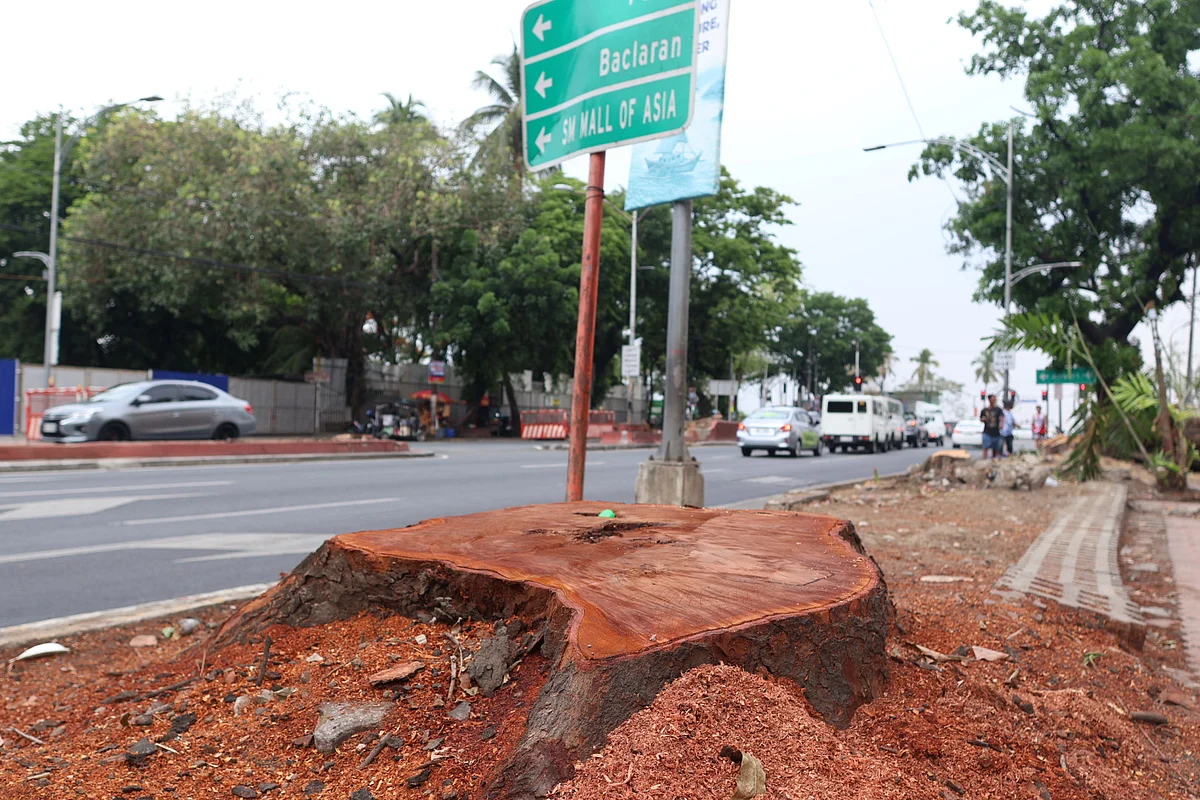
Philippine Activists Force Halt To Manila Tree-Cutting For Superhighway Amid Summer Heatwave
(MENAFN- Khaleej Times) A new elevated superhighway is to be built in Manila's old district of Ermita, and 200 old trees have been cut in preparation for its construction. Thanks to Filipino environmental activists who stood their ground, the government suspended the removal of the remaining 600 or more decades-old trees.
The activists underscored that, with the daytime heat index nearing 50 degrees, the sweltering Philippine capital needs more trees than roads. Private developers and the government, however, contend that the new infrastructure would ease traffic on Manila's notoriously gridlocked roads..
Recommended For YouThe road being built will connect old Manila to access points leading out of the metropolis. The Southern Access Link Expressway (SALEX) is a 40.65-km network proposed by the country's busiest road builder, San Miguel Corporation (SMC), to link Roxas Boulevard and Road-10 with the proposed Shoreline Expressway, another planned highway.
Stay up to date with the latest news. Follow KT on WhatsApp Channels.
The proponents describe the project as designed to accommodate up to 300,000 vehicles daily, mirroring that of the capacity of SMC's Skyway that earns about P65 million (Dh3.87 million) in daily toll revenues.
The company said the project's goal is to ease future traffic in Metro Manila and Central Luzon, boost economic development in the region, and give motorists direct access to the New Manila International Airport, known as the Bulacan Airport, which is currently under construction.
Aside from Skyway's four stages, SMC operates three other expressways and planning four others. The mega-company was also forced to suspend its planned expressway over the length of Pasig River and reports indicate that it is withdrawing from its planned bridge connective famed tourist destination Boracay Island to mainland Panay Island.
SMC's Infrastructure Division recorded P14.8 billion (Dh880 million) in net income and P40.2 billion (Dh2.4 billion) in total revenues in 2025 alone, a true giant.
SMC's Construction of the 3.97-km SALEX's Quirino Avenue segment is underway where nearly a thousand trees have suddenly become inconvenient.
Government justificationThe Department of Environment and Natural Resources (DENR) issued the tree-cutting permit, justifying its decision by saying not all tree-cutting activities are forbidden.
DENR secretary Juan Miguel Cuna himself said the felling of hundreds of mature, full-canopy trees is an "inevitable trade-off" for the convenience the connecting road would bring. The tree-cutting permit required a replacement ratio of 100 seedlings for every mature tree cut, he added.
The agency also said earth-balling or transplanting the trees is impractical and cutting the trees is the only way for infrastructure projects to continue.
"We assure the public that the DENR is closely supervising every phase of the activity and enforcing all safeguards. We assure the public that the DENR is closely supervising every phase of the activity and enforcing all safeguards," the agency said in a statement.
But the tree-cutting activities suffered significant local backlash, forcing the DENR and SMC to temporarily stop chopping the remaining trees standing.
Act of ecological violenceVarious environmental groups have held nearly daily protest actions to condemn what they say is a DENR-SMC collusion to deprive Manila of one of its last major tree-lined roads. Even Catholic Church leaders have joined the fray, lending their formidable institutional voice on the side of caution.
Bishop Gerardo Alminaza, president of Caritas Philippines, condemned the cutting of decades-old trees as“an act of ecological violence” against the people of Manila.“The mass cutting of decades-old trees along Quirino Avenue is an act of ecological violence against the people of Manila, a direct assault on the poor who have been enduring the daily penance of extreme heat, poisoned air, and sudden floods,” Alminaza said.
The Catholic bishop pointed out the trees had provided shade, cleaner air, and flood protection for generations of commuters and residents in the area. The felling of the trees have reduced the trees to“bleeding stumps to make way for another expressway under the disguise of progress.”
Stop tree-cuttingEnvironmental network Kalikasan People's Network for the Environment (Kalikasan PNE) welcomed the suspension but questioned why authorities intervened only after hundreds of trees had already been cut.“Why only now? Why was it suspended and reviewed only after more than 200 trees had already been cut?” Kalikasan spokesperson Cathleen de Guzman said.
The only way for the DENR to redeem itself is to permanently stop more tree-cutting and to instigate restitution for the felled ones.“A suspension is not enough. Projects that destroy the environment and people's livelihoods must be permanently stopped,” the group said.
Greenpeace Philippines also criticized the project, saying the destruction of mature urban trees during a worsening climate crisis would intensify heat, flooding, and environmental vulnerability, especially among low-income communities in Metro Manila.
ALSO READ- Frequent landfill disasters in Philippines expose weak oversight, government inaction Philippines cuts Metro Manila water allocation as El Niño threatens supply in weeks Earth Day: Philippines must do more than beach clean-up to reduce marine plastic pollution

Legal Disclaimer:
MENAFN provides the
information “as is” without warranty of any kind. We do not accept
any responsibility or liability for the accuracy, content, images,
videos, licenses, completeness, legality, or reliability of the information
contained in this article. If you have any complaints or copyright
issues related to this article, kindly contact the provider above.
Most popular stories
Market Research

More Story






Comments
No comment