




403
Sorry!!
Error! We're sorry, but the page you were looking for doesn't exist.
Is The Gulf Losing Its Grip On The Oil World?
(MENAFN- Asia Times)
One of the most striking features of the Iran war has been the resilience of the global oil market. Despite the disruption of flows through the Strait of Hormuz, the world's most important oil transit chokepoint, prices have generally hovered around US$100 per barrel – a lower level than many observers had expected.
A key reason for this resilience is the growing importance of oil production in the Americas. Even before the war, the International Energy Agency predicted that virtually all global oil demand growth in 2026 could be met by rising supply from North and South American countries such as the US, Canada, Brazil, Guyana and Argentina.
At that time, the OPEC oil producers' cartel was also preparing to increase output, raising expectations of a period of oversupply and weak prices. The war changed that picture dramatically. The closure of Hormuz has removed up to 14 million barrels a day from the market, propelling prices higher and triggering large global stock draws instead of the expected stock builds.
Yet high prices are often the best cure for shortages. Oil producers across the Americas have responded to the disruption by increasing output and exports. In the US, crude exports rose to a record 6.44 million barrels a day in April. It is also adding new export infrastructure, with nearly 800,000 barrels a day of additional dock capacity due to come online in 2026.
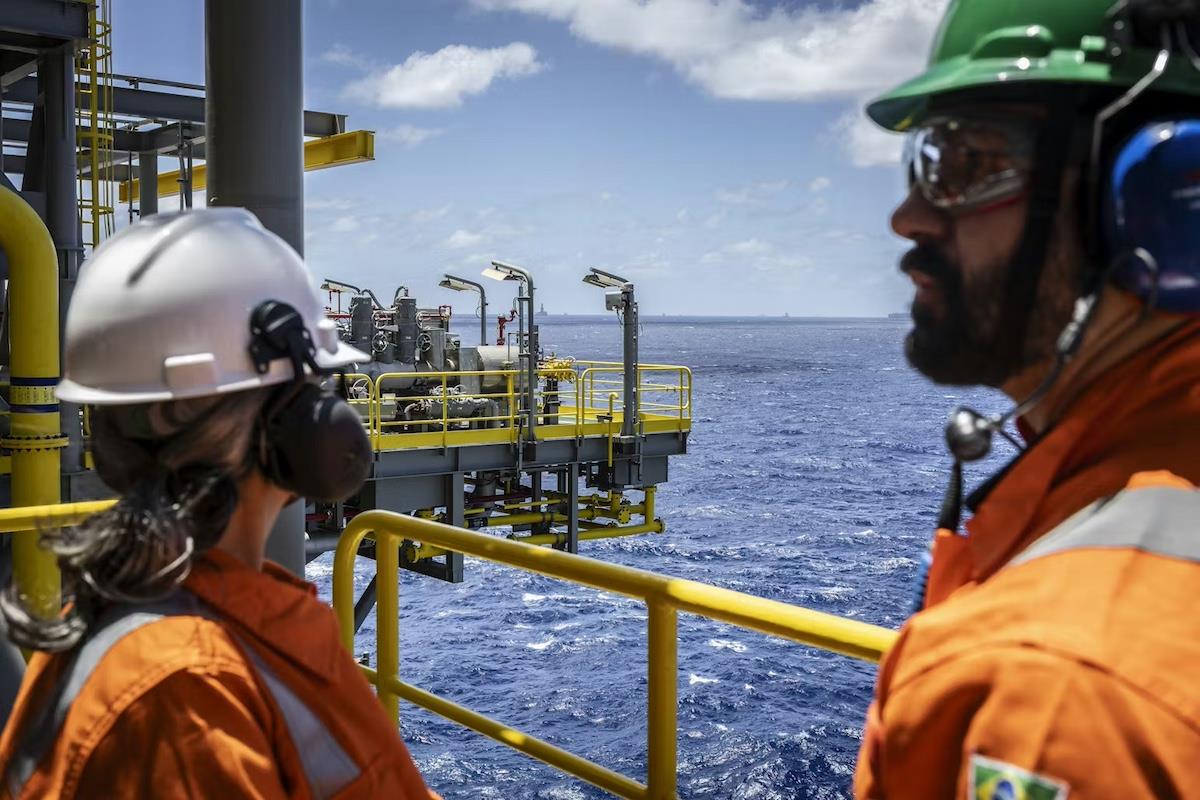
Meanwhile, Brazil has added eight new offshore floating oil production vessels in recent years, with a combined capacity approaching 1.5 million barrels a day. Its oil production is also expected to rise sharply again in 2026.
Latest stories Compliance wall: China rewriting world's agriculture trade rules Anyone else tired of the Trump era yet? Myanmar bleeds while ASEAN vacillatesPetrobras, Brazil's state oil company, recently started a new production project at one of these vessels in the Búzios field off the coast of Rio de Janeiro. Production began five months ahead of schedule, partly to take advantage of elevated global prices.
Elsewhere in South America, Guyana has emerged as one of the world's fastest-growing oil producers. Guyanese oil output has already reached around 900,000 barrels a day and could almost double by the end of the decade. Even Venezuela, long associated with declining oil production and economic crisis, has substantially increased exports in response to higher prices.
Taken together, the Americas are expected to produce around 30 million barrels of oil per day later in 2026, approaching pre-war OPEC production levels. The US alone remains the world's largest producer, with its total production of liquid hydrocarbons reaching almost 22 million barrels a day in April.
OPEC helped create this boomThis rise in Western Hemisphere production did not happen in isolation. Ironically, it was helped by OPEC itself. For years, OPEC's de facto leader, Saudi Arabia and its partners restricted oil output to support higher prices. Those elevated prices helped make more expensive projects in the Americas commercially viable, especially US shale production.
Saudi Arabia's strategy of“higher for longer” prices was partly driven by domestic economic ambitions. To finance projects linked to its economic diversification plans, including the vast new Neom city development, the Saudis need oil prices of at least $90 a barrel. The result has been a powerful incentive for producers outside OPEC to expand.
Yet, despite this momentum, declaring a permanent shift in oil's center of gravity away from the Middle East would be premature. The economics of production still strongly favor Gulf producers, with oil extraction costs in the Persian Gulf remaining among the lowest in the world.
In some fields, Saudi Arabia and neighboring producers can extract oil for less than $10 a barrel. Across the Gulf region more broadly, average production costs are estimated at roughly $27 a barrel. By contrast, much of North American shale production requires prices closer to between $50 and $65 a barrel to remain profitable.
That difference matters enormously during periods of lower prices. If markets weaken again, higher-cost producers in the Americas would come under pressure first. Gulf producers, with vast reserves and extremely low costs, would probably be able to outlast them.
Geography also favours the Middle East in many key markets. For growing Asian economies such as India, Pakistan and Bangladesh, importing oil from the nearby Gulf remains the cheapest option.
Many Asian refineries were designed specifically to process Middle Eastern crude grades, which are rich in middle distillates such as diesel and jet fuel – the hydrocarbons that typically drive economic development. Much of the shale oil exported from the US is lighter and less suitable as a direct replacement.
Sign up for one of our free newsletters-
The Daily Report
Start your day right with Asia Times' top stories
AT Weekly Report
A weekly roundup of Asia Times' most-read stories
At the same time, Gulf producers are investing heavily to protect their long-term role in global energy markets. The United Arab Emirates is expanding pipeline infrastructure that bypasses the Strait of Hormuz, including upgrading its Habshan-Fujairah pipeline.
And Saudi Arabia already operates its vast East-West Pipeline, which is capable of transporting 7 million barrels per day of oil to the Red Sea. These projects are designed to reduce vulnerability to regional instability and secure export routes for decades to come.
The Americas are unquestionably transforming the global oil market. The region is now effectively what is known as a swing producer, providing some flexibility during supply crises and geopolitical shocks.
But long-term dominance in oil markets is determined not only by production volumes. Cost, geography, infrastructure and reserve size matter too. On those measures, the Middle East still holds a formidable advantage.
For as long as the world continues to consume large volumes of oil, the Gulf is likely to remain the industry's core production and export hub – even if the Americas are becoming an increasingly important source of crude oil.
Adi Imsirovic is lecturer in energy systems, University of Oxford
This article is republished from The Conversation under a Creative Commons license. Read the original article.
Sign up here to comment on Asia Times stories OrThank you for registering!
-
Share on X (Opens in new window)
Share on LinkedIn (Opens in new window)
LinkedI
Share on Facebook (Opens in new window)
Faceboo
Share on WhatsApp (Opens in new window)
WhatsAp
Share on Reddit (Opens in new window)
Reddi
Email a link to a friend (Opens in new window)
Emai
Print (Opens in new window)
Prin

Legal Disclaimer:
MENAFN provides the
information “as is” without warranty of any kind. We do not accept
any responsibility or liability for the accuracy, content, images,
videos, licenses, completeness, legality, or reliability of the information
contained in this article. If you have any complaints or copyright
issues related to this article, kindly contact the provider above.
Most popular stories
Market Research

More Story








Comments
No comment