

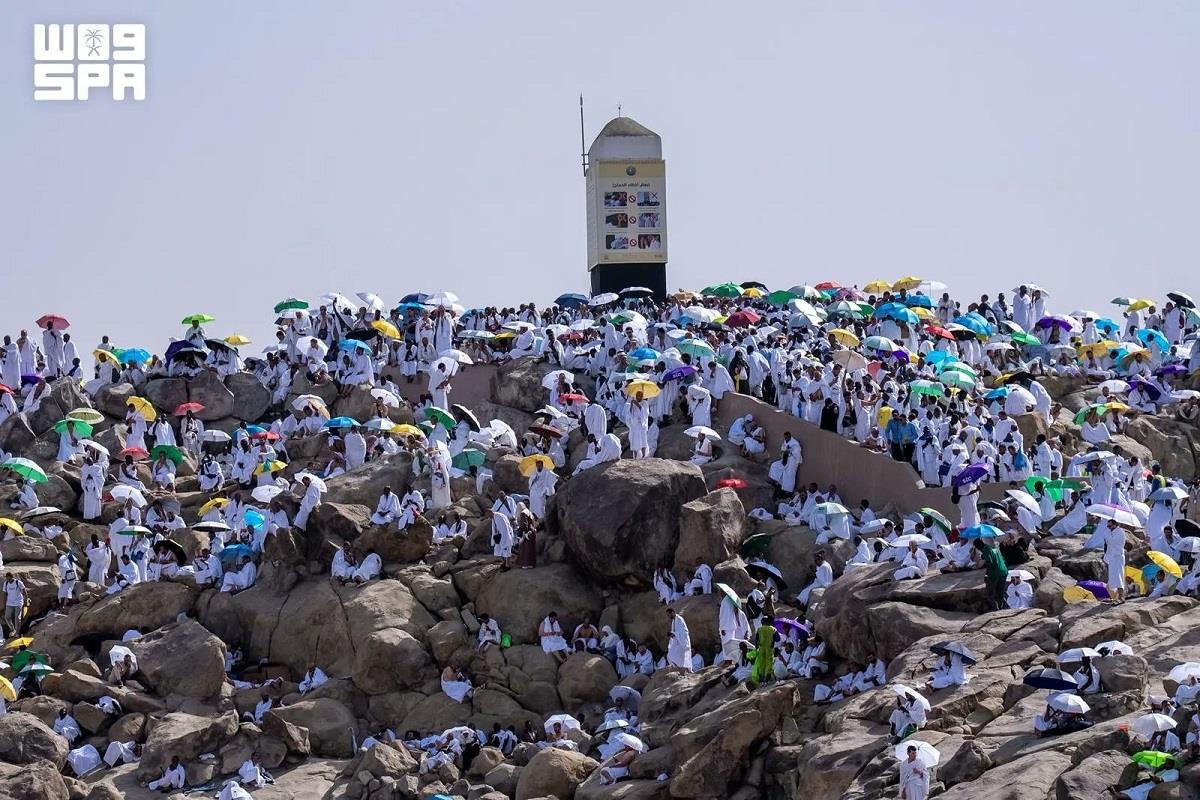
At Hajj's High Point, Millions Gather At Arafat


Despite the sweltering heat, the pilgrims gathered on a rocky hill and the surrounding plains for intense prayers that often mark a spiritual peak. Typically, they fervently murmur prayers and pour their hearts out in supplications, asking God for forgiveness, mercy, blessings and good health. It is common for many pilgrims on that day to raise their hands in worship, with tears streaming down their faces.
ADVERTISEMENT
Hajj, one of the Five Pillars of Islam, is required once in a lifetime for every Muslim who can afford it and is physically able to perform it.
For pilgrims, the Hajj, performed over several days, can be a deeply moving spiritual experience and a chance to seek God's forgiveness and the erasure of past sins. As they brave the intense heat to perform religious rituals, many pilgrims have been using umbrellas for shade.
A Saudi official said on Friday that more than 1.5 million pilgrims have arrived in Saudi Arabia from outside the country.
This year, Muslims have been pouring into Saudi Arabia for the Hajj against the backdrop of a tenuous ceasefire in the Iran war and related uncertainty in the region.
For many, performing the Hajj can be a realisation of a lifelong dream as they spend years hoping and praying to one day be able to undertake the pilgrimage or saving up money and waiting for a permit to embark on the trip.
“This happens once in a lifetime,” Mohammad Asal, an Egyptian pilgrim, said.“People here have prepared their prayers, hoping that God will respond to them, because we know that... the most important ritual of the Hajj is being in Arafat.”
Hajj brings together large numbers of Muslims of diverse races, ethnicities, languages and economic classes, creating a sense of unity for many. It's a mass, communal experience, with Muslims performing rituals together. But it is also deeply personal, as every pilgrim brings their own yearnings and experiences.
On the sidelines of the Hajj rituals, a large number of Iranian pilgrims held a ceremony of Bira'at min-al-mushrikeen (disavowal of disbelievers), denouncing Israel and the US for leading what they called 'global arrogance' and its warmongering actions against Muslims.
ADVERTISEMENTThe disavowal of disbelievers is a Qur'anic principle expressing rejection of polytheism and hostility towards perceived enemies of humanity and believers.
During the ceremony, the message of the newly elected Supreme Leader Seyyed Mojtaba Khamenei was read out.
The message described Hajj as a continuous path of devotion, rejection of false powers, self-purification, and defence of truth and justice.
Read Also The Spiritual Lesson I Brought Back From Mecca Iran Leader Calls for New Regional Order, Declares US Era OverThe message also emphasised the concept of“bara'ah”, or disavowal of enemies and oppressors, saying the principle extends beyond Hajj rituals into the political and social life of Muslims worldwide.

Legal Disclaimer:
MENAFN provides the
information “as is” without warranty of any kind. We do not accept any
responsibility or liability for the accuracy, content, images, videos,
licenses, completeness, legality, or reliability of the information
contained in this article. If you have any complaints or copyright issues
related to this article, kindly contact the provider above.
Comments
No comment