




403
Sorry!!
Error! We're sorry, but the page you were looking for doesn't exist.
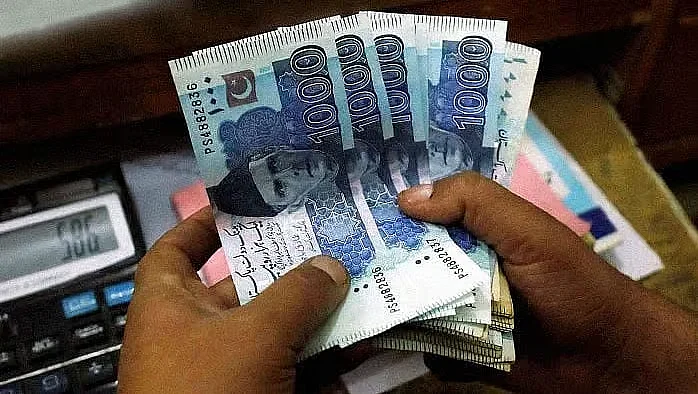
Will Pakistani Rupee Rise Further After Hitting Nearly Two-Year High Against Dollar And Dirham?
(MENAFN- Khaleej Times) Oil prices, high inflation, progress in the IMF support programme, current account surpluses, and remittances will influence the South Asian currency in 2026
- By: Waheed Abbas
The Pakistani rupee is likely to remain broadly stable this year, supported by an improved external position and revived access to global funding, even as growth stays soft and oil prices pose the biggest risk.
However, if the US and Iran reach a peace deal and oil prices drop, this will provide further support to the rupee, as the South Asian country's import bill will decline further.
Recommended For You UAE's Eid Al Adha 2026 prayer timings: What you need to knowBrent was trading at $99.5 a barrel on Tuesday evening, up 3.5 per cent, while WTI was down 2.9 per cent at $93.8 a barrel.
Stay up to date with the latest news. Follow KT on WhatsApp Channels.
According to Vijay Valecha, chief investment officer at Century Financial, the South Asian currency has held up in recent months despite regional tensions, aided by a current account surplus in the March quarter that eased pressure on foreign exchange reserves during a period of higher oil prices and geopolitical risk. Additional support from Saudi Arabia and Pakistan's return to the Eurobond market after more than four years have bolstered investor confidence and reduced near‐term funding concerns.
“The rupee's resilience reflects better external dynamics rather than a strong domestic recovery,” Valecha noted, cautioning that Pakistan remains reliant on imported energy, remittances, IMF-linked confidence, and steady external inflows.
The rupee slipped on Tuesday after reaching nearly two-year high on Monday, trading at 75.8 against UAE dirham and 278.3 against US dollar on Tuesday evening.
Factors to watchLooking ahead, Valecha expects the rupee to trade steadily provided oil does not spike and external funding stays on track.“A big rally looks unlikely; the base case is a steady rupee with limited room for further appreciation,” he added.
Some of the other key drivers to which will be critical to sentiments around South Asian currency include high inflation and continued Saudi support, bond market access, IMF support programme progress, current account surpluses, and remittances..
The rupee reached nearly two-year high earlier this week, hitting 75.5 against Emirati currency and US dollar.
Valecha added that the rupee's advance to a two-year high of 75.5 against the UAE dirham could extend modestly, though much of the good news such as stronger external financing, the March-quarter surplus, Saudi support, and the Eurobond return is already in the price.
“Further appreciation below 75 per dirham is possible if oil eases, reserves improve, remittances stay strong, and external funding remains smooth,” he said.“But a larger rally would likely require a stronger trade position and a more durable build-up in reserves.”
A breakdown in the US‐Iran ceasefire or persistently high crude could lift Pakistan's import bill and reintroduce depreciation pressures, while ongoing regional stress could weigh on exports and remittances.
ALSO READ- Pakistani rupee strengthens to nearly 20-month high against UAE dirham, dollar Pakistani rupee likely to stay stable as remittances set to reach $29.8 billion in 2024-25 Pakistan: Crackdown against illegal currency market eliminates black-market rate

Legal Disclaimer:
MENAFN provides the
information “as is” without warranty of any kind. We do not accept
any responsibility or liability for the accuracy, content, images,
videos, licenses, completeness, legality, or reliability of the information
contained in this article. If you have any complaints or copyright
issues related to this article, kindly contact the provider above.
Most popular stories
Market Research

More Story








Comments
No comment