




403
Sorry!!
Error! We're sorry, but the page you were looking for doesn't exist.
Provoke EMEA Summit 2026: This Is The Corporate Affairs Opportunity Of Our Time
(MENAFN- PRovoke)
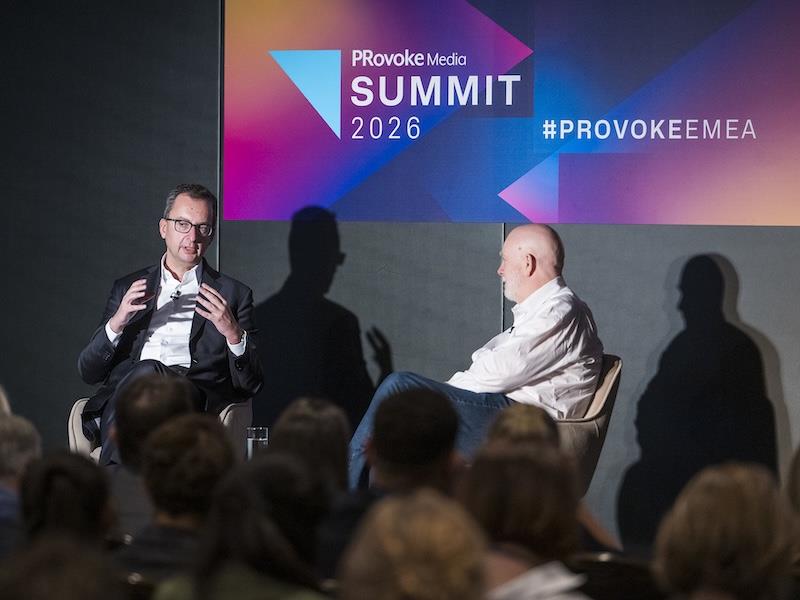
LONDON - As geopolitical instability, regulatory divergence and shifting economic alliances redraw the global business landscape, corporate affairs leaders operating across EMEA face what Paolo Zanetto described as both“the opportunity of our time” and a profound test of strategic complexity.
Speaking on stage at the PRovoke EMEA Summit in London last week, Zanetto – CEO of Italian corporate affairs advisory group Excellera – argued that the changing relationship between Europe and the US, combined with the growing influence of the Middle East, was creating a powerful new regional dynamic that businesses could no longer afford to treat as secondary.
Excellera itself was created three years ago with the ambition of building what Zanetto called“a Euro champion in corporate affairs,” bringing together expertise spanning financial communications, corporate reputation, public affairs and regulatory affairs under one integrated model. Since launching in Italy, the group has expanded rapidly across continental Europe, the UK and the Middle East.
In conversation with PRovoke Media CEO Paul Holmes, Zanetto suggested that Europe's recent political and economic shocks had accelerated a broader realisation that the region needed greater strategic self-reliance:“I see the opportunity of our time for this region. The shifting geopolitical focus in the US – which I don't think is just about this president, I think it's here to stay – will become something extremely central in terms of future strategy.”
Rather than framing the shift as anti-American, however, Zanetto described it as a growing understanding of EMEA's own collective strengths:“It's not about being adversarial, but about awareness that EMEA is something incredible if we can bring together the industrial power, population, GDP and cultural capital from across Europe, alongside the incredibly central role the UK still has globally when it comes to finance, capital markets, law and media, blended with Middle East energy, demographics and ambition. It's now one of the most powerful and exciting regions of the world.”
He said this shift requires companies to fundamentally rethink how they approach corporate affairs across the region:“We have spent too many years thinking the world is flat. What we can see now is a much more nuanced approach.”
Part of that evolution is the emergence of a distinctly European or MENA approach to corporate affairs:“There has been an Anglo-American model, which tends to be pretty adversarial, fast and campaign-based, as opposed to a European style that is much more diplomatic, where businesses have a role in business diplomacy."
At the same time, Zanetto stressed that EMEA remained deeply fragmented, creating significant complexity for multinational organisations attempting to communicate consistently across dozens of markets:“There is still no such thing as one Europe. We still have the problem of bridging together a fragmented region.”
That complexity, he argued, means organisations need what he described as a“glocal” approach: combining globally coherent messaging with deep local understanding of political, cultural and stakeholder dynamics.
“Businesses really need to understand they need to adjust key messages to the local situation,” Zanetto said.“You fully understand the local stakeholder temperature, but at the same time bring the global message into the local situation.”
Regulation, unsurprisingly, emerged as a major theme of the discussion, particularly as European policymaking increasingly diverges from the US.“The US can innovate and sometimes all Europe can do is regulate,” Zanetto said.“I think that is bad, businesses need their voices to be heard in Europe, but that strong regulatory approach is here to stay, and if you want to do business in Europe, you have to do it the European way.”
Holmes noted that many CEOs currently feel trapped in a cycle of constant reaction, responding to successive geopolitical, regulatory and reputational crises rather than pursuing a proactive agenda. Zanetto argued that the only viable response was earlier and deeper stakeholder engagement:“Corporate affairs is about engaging well before you need to ask for a change or adapt to something you didn't plan."
He said engagement must extend far beyond media relations alone:“Engaging with business leaders, government leaders, policymakers, regulators, investors, media and capital markets, those stakeholders have a sophisticated view of what's going on. You need to listen as much as you speak.”
One of the core functions of modern corporate affairs teams, Zanetto said, is turning those conversations into actionable intelligence:“Providing tremendously valuable intelligence to companies in a way where non-market strategies can help market strategy succeed.”
Asked by Holmes how corporate affairs functions themselves needed to evolve to manage rising complexity, Zanetto was unequivocal about where the discipline belongs inside organisations:“Corporate affairs necessarily needs to sit next to the CEO and the board. The stakeholders who will decide where the world is going are at that level.”
He also highlighted the growing importance of intelligence, data and analytics in managing sprawling multi-market operations, particularly in the AI era:“In the age of AI, we still need to focus on the data. Understanding what happens in 50 countries is a lot of data points. Managing complexity is one of the top priorities for our clients.”
But Holmes also pushed back on the idea that data alone could solve corporate affairs challenges, pointing to the importance of trusted political relationships and local expertise.“What about the stuff you can't do with data?” Holmes asked.“The human stuff? For instance, someone who knows Labour, Reform and the Tories in the UK; someone who knows how to sit down with [Péter] Magyar now [Viktor] Orbán is gone in Hungary?"
Zanetto agreed:“Data without relationships is useless,” he said.“In the age of AI, relationships matter more than ever.”
He said genuine human engagement remained irreplaceable, particularly when dealing with senior decision-makers and influential stakeholders:“Only when human beings sit down and have a proper, live conversation, that's when you get real data, and much more precious than open-source signals.”
Zanetto suggested that as stakeholders face growing demands on their attention, the value of trusted relationships only increases further:“Actual decision-makers and influencers are actually a pretty limited number of people,” he said.“The value of relationships increases when stakeholders are subject to even more demands.”
The conversation also touched on the increasingly difficult balancing act companies face when communicating consistently across multiple stakeholder groups and political environments:“You probably have one message and one hundred ways to express it,” Zanetto said, noting that investors, regulators and policymakers each require different framing and different language.
He pointed to evolving corporate approaches to ESG and DEI communications, especially as those topics become more politically contested in some markets:“What we see is a shift in what we recommend, moving away from an ideological approach, which is nothing but virtue signalling,” he said.“But if you can tell a real story about how sustainability is a key part of the business, that's a story worth telling.”
Ultimately, Zanetto argued that companies operating across EMEA must resist the temptation to dilute their messaging into bland consensus.“You need courage and conviction,” he said.“Otherwise you end up with empty words.”
Instead, he urged communicators to develop powerful, carefully framed narratives that can resonate across different political and cultural contexts without losing clarity or ambition:“We need powerful messages to inspire people, business leaders, politicians and journalists. Human beings are always looking for the next big thing.”
And, in a line that neatly captured the broader theme of the conversation, he concluded:“Have something powerful to say, then shut up.”
Speaking on stage at the PRovoke EMEA Summit in London last week, Zanetto – CEO of Italian corporate affairs advisory group Excellera – argued that the changing relationship between Europe and the US, combined with the growing influence of the Middle East, was creating a powerful new regional dynamic that businesses could no longer afford to treat as secondary.
Excellera itself was created three years ago with the ambition of building what Zanetto called“a Euro champion in corporate affairs,” bringing together expertise spanning financial communications, corporate reputation, public affairs and regulatory affairs under one integrated model. Since launching in Italy, the group has expanded rapidly across continental Europe, the UK and the Middle East.
In conversation with PRovoke Media CEO Paul Holmes, Zanetto suggested that Europe's recent political and economic shocks had accelerated a broader realisation that the region needed greater strategic self-reliance:“I see the opportunity of our time for this region. The shifting geopolitical focus in the US – which I don't think is just about this president, I think it's here to stay – will become something extremely central in terms of future strategy.”
Rather than framing the shift as anti-American, however, Zanetto described it as a growing understanding of EMEA's own collective strengths:“It's not about being adversarial, but about awareness that EMEA is something incredible if we can bring together the industrial power, population, GDP and cultural capital from across Europe, alongside the incredibly central role the UK still has globally when it comes to finance, capital markets, law and media, blended with Middle East energy, demographics and ambition. It's now one of the most powerful and exciting regions of the world.”
He said this shift requires companies to fundamentally rethink how they approach corporate affairs across the region:“We have spent too many years thinking the world is flat. What we can see now is a much more nuanced approach.”
Part of that evolution is the emergence of a distinctly European or MENA approach to corporate affairs:“There has been an Anglo-American model, which tends to be pretty adversarial, fast and campaign-based, as opposed to a European style that is much more diplomatic, where businesses have a role in business diplomacy."
At the same time, Zanetto stressed that EMEA remained deeply fragmented, creating significant complexity for multinational organisations attempting to communicate consistently across dozens of markets:“There is still no such thing as one Europe. We still have the problem of bridging together a fragmented region.”
That complexity, he argued, means organisations need what he described as a“glocal” approach: combining globally coherent messaging with deep local understanding of political, cultural and stakeholder dynamics.
“Businesses really need to understand they need to adjust key messages to the local situation,” Zanetto said.“You fully understand the local stakeholder temperature, but at the same time bring the global message into the local situation.”
Regulation, unsurprisingly, emerged as a major theme of the discussion, particularly as European policymaking increasingly diverges from the US.“The US can innovate and sometimes all Europe can do is regulate,” Zanetto said.“I think that is bad, businesses need their voices to be heard in Europe, but that strong regulatory approach is here to stay, and if you want to do business in Europe, you have to do it the European way.”
Holmes noted that many CEOs currently feel trapped in a cycle of constant reaction, responding to successive geopolitical, regulatory and reputational crises rather than pursuing a proactive agenda. Zanetto argued that the only viable response was earlier and deeper stakeholder engagement:“Corporate affairs is about engaging well before you need to ask for a change or adapt to something you didn't plan."
He said engagement must extend far beyond media relations alone:“Engaging with business leaders, government leaders, policymakers, regulators, investors, media and capital markets, those stakeholders have a sophisticated view of what's going on. You need to listen as much as you speak.”
One of the core functions of modern corporate affairs teams, Zanetto said, is turning those conversations into actionable intelligence:“Providing tremendously valuable intelligence to companies in a way where non-market strategies can help market strategy succeed.”
Asked by Holmes how corporate affairs functions themselves needed to evolve to manage rising complexity, Zanetto was unequivocal about where the discipline belongs inside organisations:“Corporate affairs necessarily needs to sit next to the CEO and the board. The stakeholders who will decide where the world is going are at that level.”
He also highlighted the growing importance of intelligence, data and analytics in managing sprawling multi-market operations, particularly in the AI era:“In the age of AI, we still need to focus on the data. Understanding what happens in 50 countries is a lot of data points. Managing complexity is one of the top priorities for our clients.”
But Holmes also pushed back on the idea that data alone could solve corporate affairs challenges, pointing to the importance of trusted political relationships and local expertise.“What about the stuff you can't do with data?” Holmes asked.“The human stuff? For instance, someone who knows Labour, Reform and the Tories in the UK; someone who knows how to sit down with [Péter] Magyar now [Viktor] Orbán is gone in Hungary?"
Zanetto agreed:“Data without relationships is useless,” he said.“In the age of AI, relationships matter more than ever.”
He said genuine human engagement remained irreplaceable, particularly when dealing with senior decision-makers and influential stakeholders:“Only when human beings sit down and have a proper, live conversation, that's when you get real data, and much more precious than open-source signals.”
Zanetto suggested that as stakeholders face growing demands on their attention, the value of trusted relationships only increases further:“Actual decision-makers and influencers are actually a pretty limited number of people,” he said.“The value of relationships increases when stakeholders are subject to even more demands.”
The conversation also touched on the increasingly difficult balancing act companies face when communicating consistently across multiple stakeholder groups and political environments:“You probably have one message and one hundred ways to express it,” Zanetto said, noting that investors, regulators and policymakers each require different framing and different language.
He pointed to evolving corporate approaches to ESG and DEI communications, especially as those topics become more politically contested in some markets:“What we see is a shift in what we recommend, moving away from an ideological approach, which is nothing but virtue signalling,” he said.“But if you can tell a real story about how sustainability is a key part of the business, that's a story worth telling.”
Ultimately, Zanetto argued that companies operating across EMEA must resist the temptation to dilute their messaging into bland consensus.“You need courage and conviction,” he said.“Otherwise you end up with empty words.”
Instead, he urged communicators to develop powerful, carefully framed narratives that can resonate across different political and cultural contexts without losing clarity or ambition:“We need powerful messages to inspire people, business leaders, politicians and journalists. Human beings are always looking for the next big thing.”
And, in a line that neatly captured the broader theme of the conversation, he concluded:“Have something powerful to say, then shut up.”

Legal Disclaimer:
MENAFN provides the
information “as is” without warranty of any kind. We do not accept
any responsibility or liability for the accuracy, content, images,
videos, licenses, completeness, legality, or reliability of the information
contained in this article. If you have any complaints or copyright
issues related to this article, kindly contact the provider above.
Most popular stories
Market Research

More Story







Comments
No comment