



403
Sorry!!
Error! We're sorry, but the page you were looking for doesn't exist.
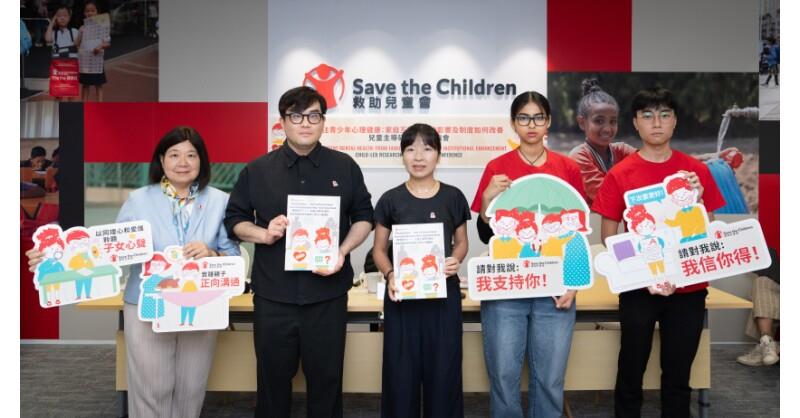
Save The Children Hong Kong Releases Hearing Children Child-Led Research Report: How Family Interactions Affect Youth Mental Health
|
Most Hurtful Remarks
(Top Five) |
Most Resented Behaviours
(Top Five) |
Most Desired Encouragement (Top Five)
|
|
" Look at other people"
|
"(Parents) Losing their temper"
|
"You did a great job"
|
|
" You are so disappointing"
|
"Snooping on my phone"
|
"I support you"
|
|
"I said no means no"
|
"Having to make every decision"
|
"I believe you can do it"
|
|
"You aren't as good as others"
|
"Entering my room without knocking"
|
"Your happiness is what matters most"
|
|
"I'm only doing this for your own good"
|
"Moving or touching my belongings"
|
"I know you've done your best"
|
Avoiding Adults: A Widening Gap in Mental Health Support for Children
Another alarming phenomenon is the significant gap emerging in Hong Kong's mental health safety net for children and adolescents. Unlike physical trauma, psychological distress is difficult to identify and often relies on the victims seeking help themselves. However, the study found that when children and young people feel distressed, their help-seeking behaviour tends to "avoid adults". A vast majority of respondents (86.3%) prioritise speaking to friends or venting on social media (78.7%). Conversely, the overwhelming majority "rarely or never" seek help from teachers (96.8%), social workers (97.5%), or parents (73.3%).
Nearly half of the respondents (49.6%) tend to internalise and handle their problems alone. Beyond the habit of self-reliance ( 47.3% ), key reasons for this include a feeling that "no one truly understands or can help" ( 45.3% ), a desire not to become a burden to others ( 29.9% ), and a fear of being judged, misunderstood, or getting into trouble after seeking help ( 18.4% ).
Ms. Wong Shek Hung expressed concern that current child protection systems-such as school-based social workers and helplines-may become ineffective if children actively avoid adult assistance, thereby limiting opportunities for timely intervention. She warned that if stress and emotions continue to accumulate without an outlet, the consequences could be severe.
Invisible Wounds: The Link Between Mental Stress and Psychosomatic Symptoms
Whilst psychological stress leaves no visible scars, its latent harm can be more enduring and profound. The study reveals that when adolescents are under mental pressure, their physical health is equally affected. When facing conflicts or difficulties at home, over a third of respondents ( 37.1% ) reported "sometimes" experiencing insomnia, stomach aches, or headaches. Similarly, over a third ( 38.1% ) indicated they "sometimes" experience acute anxiety reactions, such as nervous tension, trembling, or a racing heart.
Dr. Phyllis Chan Kwok-ling, Adviser of Save the Children Hong Kong and Psychiatrist, noted that psychological trauma is difficult to detect, which may lead to more severe cumulative consequences. "This is especially true if children and adolescents conceal their trauma or lack the self-awareness to address it. As trauma accumulates, it may become a root cause of emotional problems and increase the risk of developing conditions such as depression." Dr Chan explained. She also expressed concern that the study found neither parents nor teachers are seen as confidants. "When adolescents face difficulties, they need adults to listen and share experiences. If they turn only to social media or peers, the lack of adult guidance may amplify their distress. Furthermore, relying solely on peers carries the risk of an 'echo chamber' effect; mutual validation amongst friends may deepen their sense of hurt and intensify wariness or hostility towards parents."
Ms. Wong Shek Hung added that adolescents may not know how to articulate their inner needs, leading them to remain silent or cope in isolation. "In reality, as long as both parties are willing to take the first step towards better communication and empathy, a warm and intimate parent-child relationship can be maintained."
Strengthening Systemic Support and Empowering Children with Emotional Regulation Skills
Beyond the family unit, society bears a responsibility to provide support across schools, communities, and institutional levels. We must systematically foster emotional management skills in children and assist parents in adopting positive communication and parenting techniques. To this end, the organisation proposes the following recommendations:
Mainstream "Social and Emotional Learning" (SEL): Integrate SEL into the regular school curriculum to strengthen students' ability to manage and articulate their emotions. Promote "Positive Parenting" through Home-School Cooperation: Implement comprehensive Positive Parenting initiatives to develop disciplinary communication skills and foster empathy within parent-child interactions. Enhance Mandatory Reporting Training: In relation to the Mandatory Reporting of Child Abuse Ordinance, training for professionals should be strengthened to include content on "identifying psychological abuse", supported by real-life case studies to help frontline staff clarify reporting criteria and enable timely intervention. (For detailed information on these recommendations, please refer to the full report.)
Ms. Wong Shek Hung emphasised that family dynamics cannot be addressed with a "one-size-fits-all" legislative framework, nor is punishing parents an ideal way to manage family relationships. "The law provides only the most basic safety net. As previously mentioned, most parents care deeply for their children; the gap lies in communication and mutual understanding, as well as in adopting positive ways of interaction. Beyond legislation, we hope to improve parent-child relationships in the long term through support services and public education."
--br->YouTube:


Legal Disclaimer:
MENAFN provides the
information “as is” without warranty of any kind. We do not accept
any responsibility or liability for the accuracy, content, images,
videos, licenses, completeness, legality, or reliability of the information
contained in this article. If you have any complaints or copyright
issues related to this article, kindly contact the provider above.
Most popular stories
Market Research

More Story







Comments
No comment