







403
Sorry!!
Error! We're sorry, but the page you were looking for doesn't exist.
Was Auckland The Cradle Of The Kiwi Accent? An Old Theory Gets A New Hearing
Author: Brooke Ross
(MENAFN- The Conversation) If you're a New Zealander who has spent time overseas, you've probably had someone comment on the way you speak: that swallowed e and flat i, the whole fush and chups thing... the rest of the world thinks we pronounce our vowels a bit funny.

Even as a researcher of the Kiwi accent, it took me a while to wrap my head around the fact that“here” and“hair” aren't supposed to rhyme.
So where did this local form of spoken English originate, and how did we come to pronounce our vowels in such a unique way?
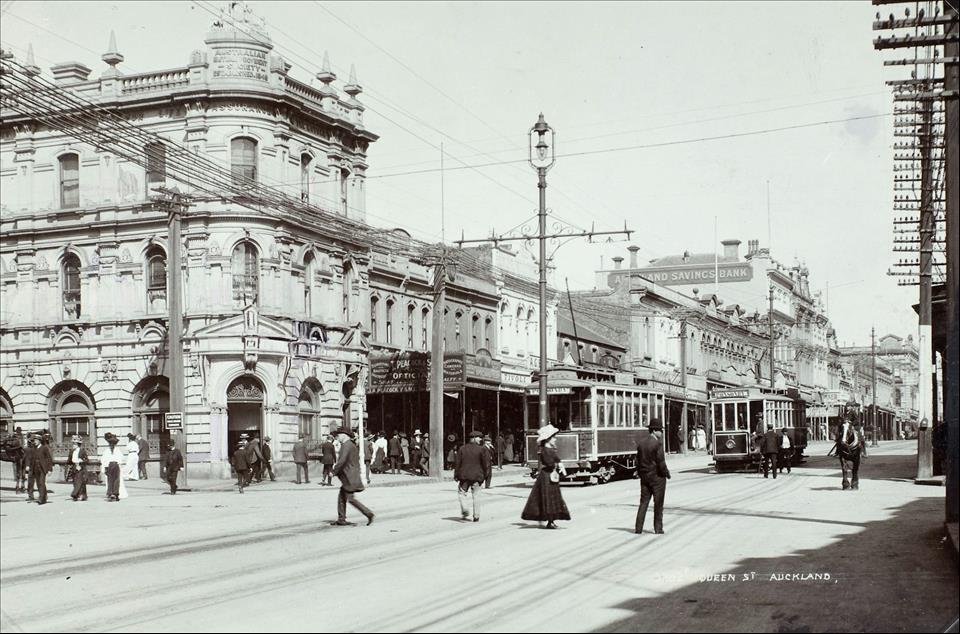
It's clearly a question many people have asked, given the interest in my public talk on the subject in Auckland this week, part of a project using oral history recordings of Aucklanders born around the turn of the 20th century.
These recordings, now housed in the Auckland Libraries sound archives, let us listen back in time. When we compare them with modern recordings, we can trace how our accent has developed across generations.
This means going back to when large numbers of English-speaking settlers arrived in Aotearoa New Zealand from the mid-19th century. Because they came from different parts of Britain – largely the South of England, Scotland and Ireland – they didn't all speak the same kind of English and brought their regional accents with them.
Despite the protests of educational authorities and elocution teachers of the time, what followed wasn't the adoption of a single“correct” way of speaking the“Queen's English”.
Instead, these various accents came into contact, mixed together and gradually levelled out to something new – not quite British, not quite anything else. New Zealand linguists have known this part of the story for a while. What we don't know are some of the specifics.
Why, for example, does our accent have relatively little regional variation (other than Southlanders and their rolled Rs), despite many early centres such as Christchurch and Dunedin having distinct cultural identities?
We also don't know if the accent developed fastest in certain places. Often, accents change quickly in cities and then spread. But so far, most of our historical research comes from recordings of speakers born in small towns.
A former professor of linguistics discusses the origins of the New Zealand accent. RNZ 6.11 MB (download) A rediscovered theoryThis is where a piece of information that was almost lost provided some surprising inspiration.
In 1921, a professor at Otago University, George Edward Thompson, completed a thesis on the emerging New Zealand accent. This work was only rediscovered in the Hocken Collections by one of our team members in 2022.
Thompson's work provides one of the earliest and most comprehensive first hand descriptions of how early New Zealanders spoke. One of the things that stood out was a suggestion the accent was developing most strongly in the North Island, particularly in Auckland.
This got us thinking, because Auckland's history looks quite different to many of New Zealand's early districts.
For one, the city has always been comparatively cosmopolitan, with people arriving from all over Britain rather than one dominant region. Secondly, its population grew steadily over time, unlike many other districts which saw booms and stagnation. Both these factors make a good environment for an accent to develop.
We still need to do the proper technical analysis to test whether Thompson was right, which is where the Auckland Libraries recordings are useful. They come from Aucklanders who would have been teenagers and young adults around the time Thompson was writing.
When you listen to these recordings, the voices sound familiar – recognisably New Zealand but not quite how we speak today. Sometimes there's a slight British or Australian quality, and speakers often shift between pronunciations.
But the features of the New Zealand accent we know are all there – maybe more than we expected.
Auckland EnglishIf our hunch is correct, we may not only solve some mysteries about the accent, but also challenge ideas about how it was formed and who contributed.
For example, past research has often treated similarities between the Australian and New Zealand accents as coincidental, and assumed Māori had little influence on vowel pronunciation. This was largely because the research focused on the South Island where contact with Māori and Australia was more limited.
But that's not necessarily true for Auckland, which had close trade connections with both Australia and local Māori from its inception. If Auckland was integral to the formation of our accent, those influences may need to be reconsidered.
Like all accents, New Zealand English continues to evolve, and Auckland is at the forefront of changes to the modern accent. Young Aucklanders are keeping their iconic“fush and chups” vowels, but may have an easier time buying“seven eggs” as they aim to be better understood in an increasingly linguistically diverse city.
Combined with Thompson's historical commentary, this raises a big question: how long has Auckland been shaping the way New Zealanders sound? If Thompson was right, it might have been longer than we thought.
Institution:University of Auckland, Waipapa Taumata Rau

Legal Disclaimer:
MENAFN provides the
information “as is” without warranty of any kind. We do not accept
any responsibility or liability for the accuracy, content, images,
videos, licenses, completeness, legality, or reliability of the information
contained in this article. If you have any complaints or copyright
issues related to this article, kindly contact the provider above.
Most popular stories
Market Research

More Story






Comments
No comment