




403
Sorry!!
Error! We're sorry, but the page you were looking for doesn't exist.
Karan Nagar IVF Boom Fuels Debate On Kashmir's Falling Birth Rate
(MENAFN- Kashmir Observer) By Nawaz Manzoor
ADVERTISEMENT
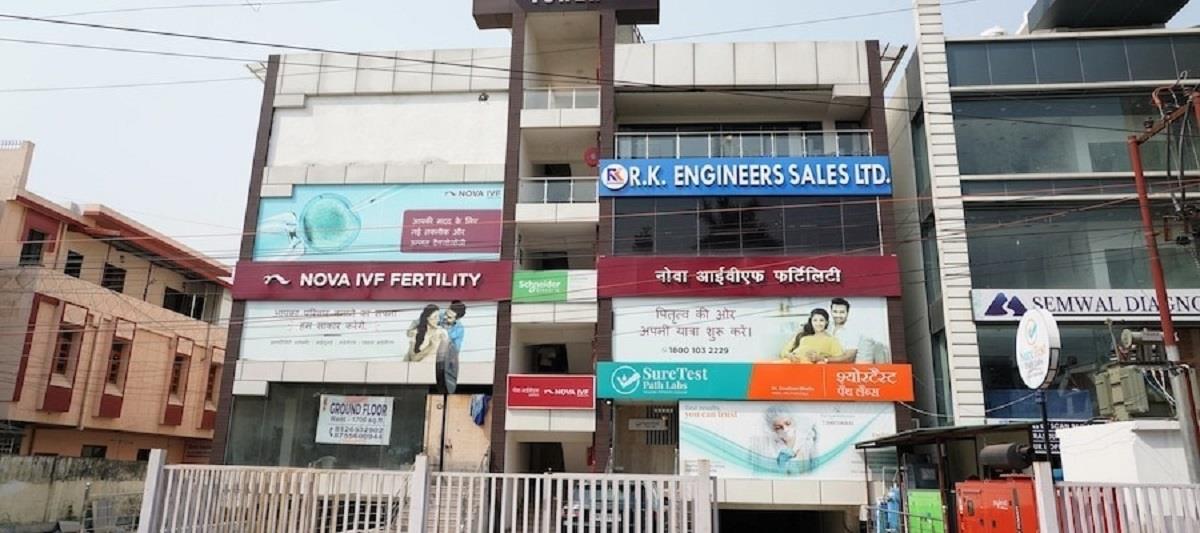
A young couple stepped out of a taxi near Karan Nagar on a cold spring morning this month and walked toward a fertility clinic tucked between a pharmacy and a diagnostic laboratory.
ADVERTISEMENT
The husband held a file thick with blood reports and scan results. His wife kept her eyes fixed on the entrance as patients moved through the narrow lane lined with signboards advertising IVF treatment, reproductive medicine and hormonal therapy.
Karan Nagar, once known mainly for hospitals and homes, has turned into Kashmir's fertility corridor. Several reproductive health centers have opened in the neighbourhood during recent years as growing numbers of couples seek medical help to conceive.
Doctors describe packed waiting rooms filled with newly married professionals, couples in their late thirties and families exhausted after years of failed treatments.
The rise of these clinics depicts a deeper demographic turn unfolding in Kashmir, where childbirth has fallen at a pace that now places the region among India's lowest-fertility populations.
Government data shows Jammu and Kashmir's Total Fertility Rate, or TFR, dropped from 2.4 children per woman in 2005-06 to 1.4 in 2019-21, according to the National Family Health Survey.
Read Also Video: Kashmir Records Sharp Decline In Fertility Rate Infertility Was Not Her Fault: A Kashmiri Woman's Story of Self-discoveryDemographers define 2.1 as the replacement level needed to maintain stable population levels without migration.
That fall of one child per woman within fifteen years ranks among the sharpest declines recorded in India.
Sample Registration System data released by the Registrar General of India confirms the trend. Jammu and Kashmir recorded a fertility rate of 2.4 in 2005. The figure reached 1.5 by 2019 and remained there in 2020, marking a historic low.
ADVERTISEMENTBirth figures released in 2023 stood at 14.4 per thousand people, while urban areas recorded 12.2.
Only Sikkim, Ladakh, Goa, Chandigarh and Lakshadweep now stand near or below Kashmir in fertility figures.
Doctors, economists and population experts see the decline unfolding through changes visible inside homes, schools and hospitals.
Marriage comes later for many young Kashmiris. Women pursue higher education and professional work in greater numbers. Men spend longer years searching for stable employment in a region struggling with weak private industry and limited government recruitment.
Fertility specialists in Srinagar say couples increasingly begin planning children during their thirties, a stage when reproductive complications rise sharply.
Dr. Nusrat Khan, a Srinagar-based gynaecologist, identifies delayed marriages and growing obesity as major contributors to infertility in the valley.
Economic pressure has also transformed family planning.
Periodic Labour Force Survey data released in 2024 placed unemployment in Jammu and Kashmir near 30 percent. Young couples in Srinagar and Jammu describe careful budgeting shaped by rent, education costs, transport expenses and healthcare bills.
Large households that once defined Kashmiri family life have gradually given way to compact apartments and nuclear families.
Urban fertility has fallen harder than rural fertility. NFHS-5 placed urban TFR at 1.2 and rural TFR at 1.5.
Several couples in Srinagar said they chose one child or delayed second pregnancies because raising children in the city demanded far greater spending than previous generations faced.
School admissions, coaching classes and rising property prices dominate household calculations.
Extended family support has also weakened with urban expansion. Grandparents often remain in villages while younger couples settle in cities for work and education. Childcare responsibilities now fall heavily on working parents living inside smaller homes with limited support systems.
Government health officials describe the falling fertility numbers as evidence of successful family welfare programs. Public health campaigns expanded access to contraception, maternal healthcare and reproductive counseling during the past two decades.
NFHS-5 recorded high contraceptive use and a growing preference among women for delayed second births.
District-level figures reveal how deeply the demographic shift has spread. Srinagar and Jammu districts now report fertility levels near 1.1, while several rural districts remain closer to 1.6.
None of Jammu and Kashmir's districts remain above replacement level.
Population researchers say the transition now mirrors demographic patterns seen in aging societies such as Japan and Italy, though Kashmir entered the phase at a far lower level of industrial and economic development.
Another factor shadows the fertility debate in Kashmir: rising drug addiction among young adults.
Psychiatrists and reproductive specialists say narcotics abuse increasingly affects reproductive health through hormonal disruption, poor sperm quality, irregular menstrual cycles and nutritional decline.
Substance abuse has expanded sharply during recent years, particularly among unemployed youth struggling with economic insecurity and social stress.
Doctors say addiction frequently overlaps with depression, unstable relationships and deteriorating physical health, all of which affect fertility outcomes.
The demographic decline has major implications for Kashmir's future workforce and economy. Fewer births eventually reduce school enrollments and shrink the pool of working-age adults.
Economists warn that population aging could place heavier pressure on healthcare systems and social support structures during coming decades.
Several experts still frame the transition as a sign of social progress tied to literacy, healthcare access and women's empowerment. Smaller families often allow greater spending on education and health for children. Women exercise stronger control over reproductive choices than previous generations possessed.
Still, many researchers see the speed of Kashmir's fertility decline as a defining shift that could alter the region's social structure within a single generation.
By late afternoon, traffic thickens near Karan Nagar's fertility centers as patients emerge carrying medical reports and future appointments. Pharmacies fill prescriptions for hormone therapy while laboratory workers sort blood samples behind glass counters.
A neighbourhood built around healing now highlights a changing Kashmir, where parenthood increasingly depends on medicine, money and timing.
The valley once measured prosperity through crowded homes and large families. Young couples now weigh childbirth against economic uncertainty, unstable careers and the cost of building a future in one of India's fastest-changing regions.
- The author is a student of Political Science at Aligarh Muslim University. He can be reached at [email protected].

Legal Disclaimer:
MENAFN provides the
information “as is” without warranty of any kind. We do not accept
any responsibility or liability for the accuracy, content, images,
videos, licenses, completeness, legality, or reliability of the information
contained in this article. If you have any complaints or copyright
issues related to this article, kindly contact the provider above.
Most popular stories
Market Research

More Story





Comments
No comment