



403
Sorry!!
Error! We're sorry, but the page you were looking for doesn't exist.
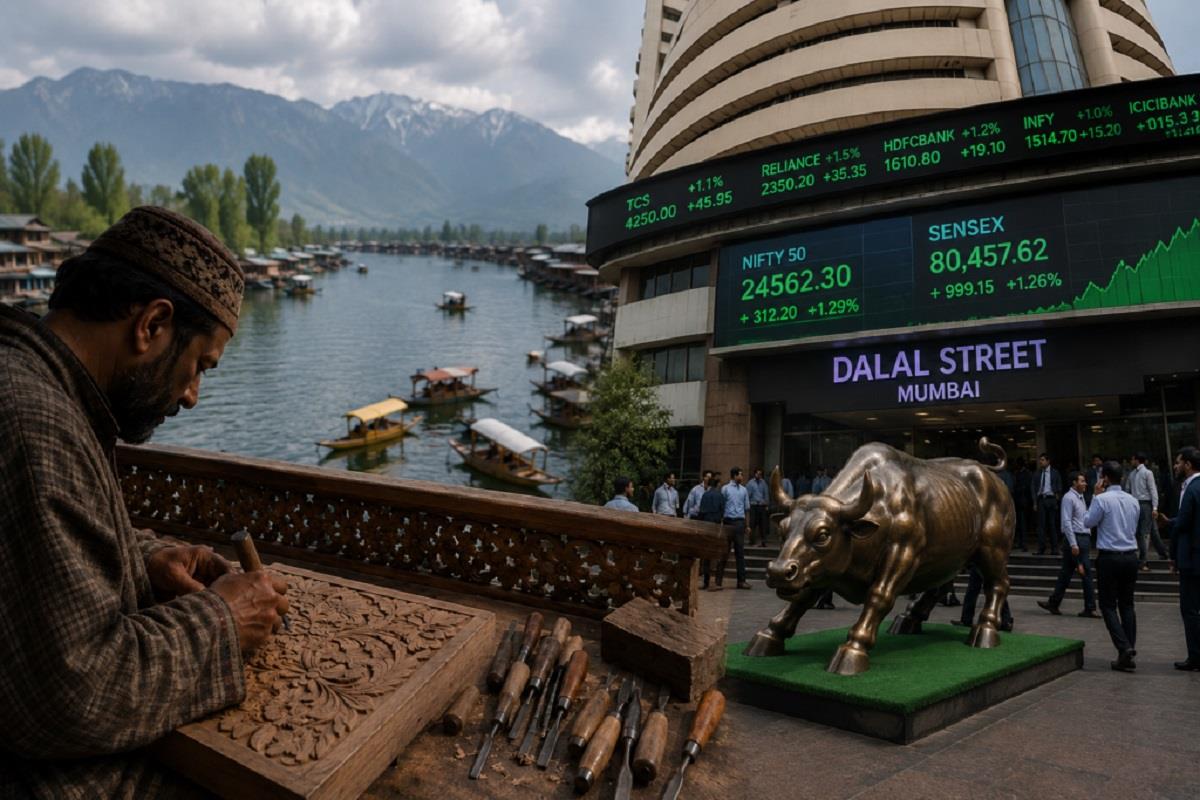
Why Kashmir's Businesses Rarely Reach Dalal Street
(MENAFN- Kashmir Observer) When investors gathered in Mumbai in recent months to discuss India's booming SME listings, Kashmir barely entered the discussion.
ADVERTISEMENT
A region filled with established business families, profitable enterprises and widely recognized local brands still has almost no presence on India's stock exchanges.
ADVERTISEMENT
The Jammu & Kashmir Bank Limited remains the valley's best-known listed corporate institution on the National Stock Exchange and the Bombay Stock Exchange. Another breakthrough came in 2018, when Sarveshwar Foods became the first company from Jammu and Kashmir to list on NSE Emerge, the exchange platform designed for small and medium enterprises.
That limited representation reveals how differently Kashmir's business culture evolved from India's expanding corporate ecosystem.
Businesses in the valley traditionally grew through tightly controlled family structures built on personal trust, local reputation and informal management systems. Traders, hoteliers, healthcare operators, transport firms and handicraft exporters built commercially successful enterprises without public shareholders, institutional investors or complex governance frameworks.
Read Also J&K Govt, National Stock Exchange Sign Pact to Create Awareness Equity Markets Trade Higher In Early Trade On Buying In IT StocksStock markets demand far more than commercial success.
A company seeking public capital must maintain audited financial statements, legal compliance, tax discipline, transparent disclosures and governance systems capable of surviving regulatory scrutiny. Promoters must explain business risks, ownership structures, related-party transactions and intended use of investor money before exchanges approve listing.
“Many businesses remain profitable and respected locally, though public markets require institutional discipline,” said a Srinagar-based chartered accountant who advises companies on restructuring and compliance.“Listing readiness depends on systems, documentation and governance quality.”
India's securities market functions under the supervision of Securities and Exchange Board of India, widely known as SEBI. The regulator oversees investor protection, disclosure standards, public issue norms and market intermediaries. Companies cannot simply raise money from the public through reputation or commercial standing. The process requires due diligence, approvals, filings and continuing compliance after listing.
Public-market scrutiny intensified further after regulators detected concerns in parts of the SME segment involving inflated revenues, diversion of issue proceeds and manipulative trading practices resembling pump-and-dump schemes. SEBI subsequently tightened oversight of disclosures, related-party transactions and fund utilization.
ADVERTISEMENTThat environment presents a difficult transition for many regional firms.
A Mumbai-based investment banker who advises mid-sized Indian companies said promoter-led businesses often struggle while adapting to institutional systems.
“Family-managed companies frequently depend on informal decision-making,” he said.“Public investors expect audited processes, independent oversight and transparent reporting quarter after quarter.”
Smaller companies generally pursue listing through SME platforms such as NSE Emerge. Published eligibility conditions include incorporation under the Companies Act, a three-year operating track record, positive net worth and operating profit of at least Rs. 1 crore during any two of the previous three financial years. Companies also need positive free cash flow to equity during at least two of those years, while post-issue paid-up capital must remain within prescribed limits.
Financial advisers in Kashmir say several sectors possess stronger listing potential if firms maintain proper governance and accounting standards. Food processing companies, healthcare providers, logistics operators, retail businesses, agribusiness ventures and technology-enabled service firms increasingly maintain structured financial systems suitable for institutional funding.
A food-processing entrepreneur in Pulwama recently spent months preparing internal records while exploring SME listing possibilities with auditors and legal consultants. Contracts underwent review, tax filings received closer examination, and inventory systems shifted toward standardized reporting.
“The business starts functioning differently once public capital becomes a possibility,” he said.“Documentation enters daily operations.”
Companies raise public money by issuing shares through an IPO or SME public issue. Investors purchase ownership stakes in exchange for capital, giving businesses access to expansion funds without fixed-interest repayment obligations attached to bank loans. Companies can then use proceeds for machinery, technology upgrades, working capital, marketing campaigns, new branches or expansion projects disclosed in issue documents.
SME rules also place restrictions on misuse of proceeds, including repayment of loans linked to promoters, promoter-group entities or related parties.
The listing process unfolds through several structured stages. Businesses first formalize corporate records under the Companies Act and organize audits, tax records, legal filings and internal controls. Merchant bankers, legal advisers and auditors then prepare detailed offer documents explaining financial statements, promoter background, business risks and intended use of funds. Exchanges review those filings before approving the public issue and subsequent trading.
Before approaching investors, companies effectively pass three broad examinations.
The business itself must demonstrate credible operations, visible market demand and a sustainable model. Financial eligibility requires audited statements, positive net worth, profitability and positive free cash flow conditions under SME norms. Governance standards examine promoter credibility, tax compliance, legal discipline and transparency.
Promoters gain several advantages through listing. Public capital supports expansion without fixed interest burdens. Listed status often improves visibility, credibility and institutional image while creating future fundraising opportunities.
Public markets also bring permanent scrutiny.
Quarterly disclosures expose financial performance and business decisions to shareholders, analysts and regulators. Compliance expenses continue long after listing, ownership dilution reduces promoter control, and weak governance can trigger regulatory action and reputational damage.
Retail investors face risks as well, as SME counters often witness sharp price fluctuations and thinner liquidity than larger listed companies. Promotional hype and speculative activity can disconnect valuations from business fundamentals.
Financial planners in Srinagar nevertheless believe wider equity participation could gradually diversify investment patterns in Kashmir, where land, gold and bank deposits dominate household savings.
Kashmir's absence from India's listed-company landscape therefore reflects more than a shortage of entrepreneurship.
The valley possesses established businesses, ambitious promoters and commercially successful brands. But public markets demand another layer entirely, built through audited discipline, transparent governance and institutional credibility strong enough to withstand the glare of public investors.

Legal Disclaimer:
MENAFN provides the
information “as is” without warranty of any kind. We do not accept
any responsibility or liability for the accuracy, content, images,
videos, licenses, completeness, legality, or reliability of the information
contained in this article. If you have any complaints or copyright
issues related to this article, kindly contact the provider above.
Most popular stories
Market Research









Comments
No comment