




403
Sorry!!
Error! We're sorry, but the page you were looking for doesn't exist.
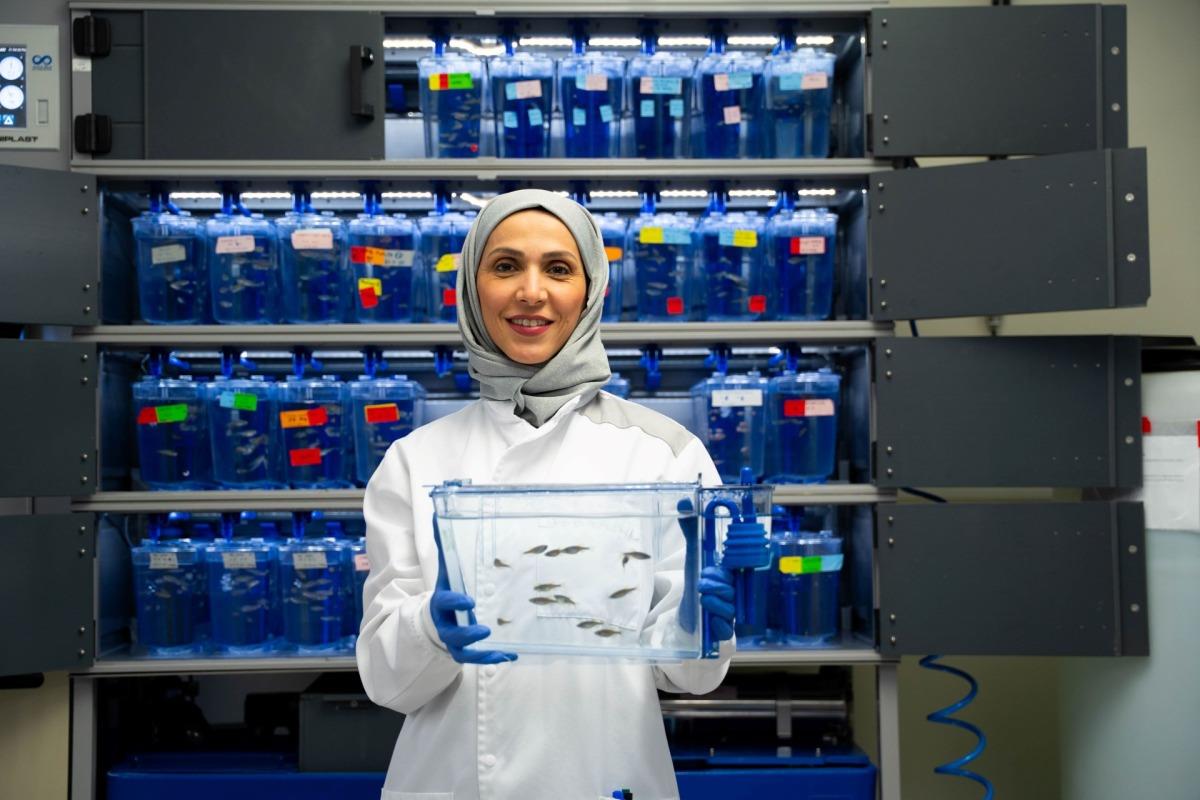
Zebrafish Research At Sidra Medicine Set To Transform Personalised Medicine
(MENAFN- The Peninsula)
Fazeena Saleem
|
The Peninsula
Doha, Qatar: Advances in zebrafish research at Sidra Medicine are set to play a transformative role in shaping personalised medicine in Qatar, helping researchers bridge the gap between genetic discoveries and clinical care.
Speaking to The Peninsula Research Manager, Zebrafish Facility at Sidra Medicine, Dr. Sahar Isa Da'as said that zebrafish models are becoming an essential tool in understanding how patient-specific genetic mutations contribute to disease, while also accelerating the search for targeted therapies.
“Zebrafish research will play a key role in shaping personalised medicine in Qatar,” Dr. Da'as said.“By linking genetic data to functional outcomes, we can better predict disease risk, tailor treatments, and identify new therapeutic targets.”
Read Also-
Education Ministry expands pre-K services and enhances digital registration system
GCC railway linkage project exceeds 50% completion: Official
Old Doha Port Fishing Competition 2026 postponed, new date to be announced
Researchers at Sidra Medicine are using zebrafish models and advanced genome-editing technologies to accelerate the diagnosis and understanding of rare pediatric diseases, helping families receive answers in weeks instead of years.
Dr. Da'as said the Zebrafish Functional Genomics Core at Sidra Medicine is playing a growing role in translating genetic discoveries into clinical insights and precision medicine approaches and that as Qatar's national genomic initiatives continue to expand, zebrafish research will remain a critical component in translating genetic findings into clinically meaningful outcomes.
“At Sidra Medicine, the Zebrafish Functional Genomics Core advances human disease research through in vivo disease modeling and precision medicine approaches,” she said.“Using zebrafish, a vertebrate model with strong genetic similarity to humans, we investigate how patient-derived genetic variants contribute to neurodevelopment, cardiovascular, and cancer diseases.”
Dr. Da'as explained that researchers use CRISPR-based genome editing to introduce patient-specific variants into zebrafish embryos, enabling scientists to directly observe how mutations affect organ development, structure and function in a living system.
Combined with high-resolution imaging and functional assays, the platform helps researchers study conditions including hypotonia, seizures, arrhythmia, structural defects and cardiomyopathies.
“Our platform also supports drug screening and therapeutic testing, accelerating the translation of genomic discoveries into clinical insights and targeted, personalized treatments for patients in Qatar and beyond,” she said.
According to Dr. Da'as, the facility has significantly contributed to reducing the“diagnostic odyssey” often faced by families of children with rare diseases.“Our zebrafish research is an important step in translating rare genetic discoveries into real-world disease models,” she said.“Zebrafish allow us to functionally validate genetic variants identified in patients. This means we can determine whether a specific mutation is truly disease-causing, helping clinicians move from uncertain genetic findings to clearer diagnoses.” She said that traditional laboratory methods do not always capture the complexity of neurodevelopmental disorders, while zebrafish provide a dynamic and accurate system to study disease mechanisms and evaluate potential treatments tailored to individual genetic profiles.
“Instead of years of uncertainty, zebrafish models can provide functional answers within weeks to months, helping families receive more timely and accurate genetic diagnoses,” she added. Over the past few years, Sidra Medicine has successfully modeled a range of disorders using zebrafish, including neurodevelopmental conditions such as neuropathy, autism, seizures, brain abnormalities and hypotonia, as well as cardiovascular diseases including arrhythmias, cardiomyopathies and vascular defects.
The research has also extended to rare congenital syndromes and cancer studies through xenograft models for hemophilia and colorectal, breast and lung cancers.
“By introducing the patients' variant into the zebrafish embryos, we were able to demonstrate their impact on early brain development and neuronal function, confirming that the variants were neuropathy-causing,” she said.“This functional evidence helped support a definitive diagnosis for affected patients and provided clinicians with greater confidence in prognosis and care planning.”
Sidra Medicine has also developed a zebrafish autism model to investigate a rare mutation linked to both autism and epilepsy in triplets.
“The zebrafish model enabled us to better understand how the specific genetic mutation affects brain development and neurological function,” Dr. Da'as said.“While it may not immediately translate into a direct treatment, it provides critical biological insight that supports clinical management and guides future therapeutic exploration.”
Collaboration with local institutions has been central to the research effort, she said, noting that partnerships with Qatar Biomedical Research Institute, Hamad Bin Khalifa University and Qatar University help integrate genomic data, clinical information and functional modeling.
“Together with collaborators, this creates a powerful ecosystem that bridges genomics, human disease models, and clinical care, helping move discoveries from the lab to real impact for patients,” she said.
Dr. Da'as stressed that ethical oversight remains central to all research activities. She said patient genetic data is handled confidentially and in accordance with Qatar's regulatory frameworks, while animal research undergoes strict review processes through institutional ethics committees, the Institutional Animal Care and Use Committee and the Institutional Biosafety Committee. Sidra Medicine is also expanding its international collaborations in rare disease research. Dr. Da'as said the institution is participating in European rare disease initiatives investigating genes such as DCAF15 and IQSEC2, where zebrafish models are being used to better understand disease mechanisms and pathogenic variants.
So far, the programme has supported the functional validation of around 25 patient-derived variants, contributing to diagnosis and research insights in complex and previously unsolved cases.

Legal Disclaimer:
MENAFN provides the
information “as is” without warranty of any kind. We do not accept
any responsibility or liability for the accuracy, content, images,
videos, licenses, completeness, legality, or reliability of the information
contained in this article. If you have any complaints or copyright
issues related to this article, kindly contact the provider above.
Most popular stories
Market Research

More Story








Comments
No comment