




403
Sorry!!
Error! We're sorry, but the page you were looking for doesn't exist.
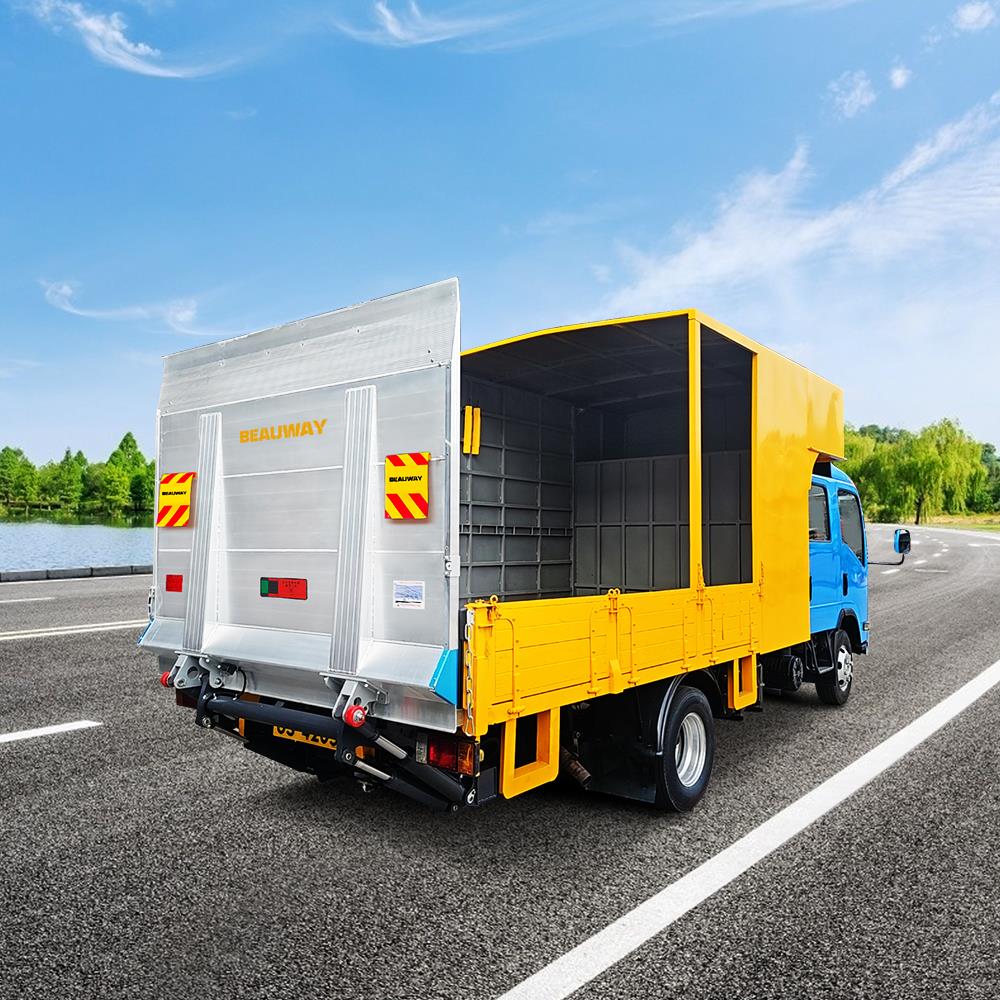
How to Import Tail Lifts from China: 2026 Complete Guide
(MENAFN- MENAFNEditorial) Importing industrial equipment from China has become standard practice for fleet operators, logistics companies, and equipment distributors worldwide. Hydraulic tail lifts are no exception. With manufacturing costs typically 30-50% below European or North American alternatives, Chinese suppliers have captured significant market share in the commercial vehicle equipment sector.
This guide walks through the complete import process for hydraulic tail lifts—from supplier selection to final installation—with practical insights drawn from 17 years of manufacturing and export experience.
Why Import Tail Lifts from China?
Cost Structure
A folding tail lift rated for 1,000 kg capacity typically costs $1,000-$1,600 from Chinese manufacturers. Comparable European units run $2,500-$4,000. This gap persists even after accounting for shipping, import duties, and local installation.
The cost difference stems from several factors: lower labor costs, integrated supply chains for hydraulic components, and high-volume production lines optimized for export markets.
Manufacturing Capability
China's tail lift industry has matured significantly. Major manufacturing clusters in Jiangsu, Zhejiang, and Guangdong provinces now produce units meeting EN 1756, ISO 9001, and region-specific certification requirements. Component quality—hydraulic cylinders, power units, control valves—has improved to the point where many Chinese suppliers serve as OEM manufacturers for European brands.
Customization Flexibility
Chinese manufacturers typically offer shorter lead times for custom specifications. Platform dimensions, capacity ratings, paint finishes, and voltage configurations can be adjusted with 4-6 week production cycles rather than the 12-16 weeks common with established European suppliers.
Step-by-Step Import Process
Step 1: Supplier Identification and Verification
Start with 3-5 potential suppliers. Request business license and export registration, ISO 9001 certification, product test reports such as CE or EN 1756-1 compliance, video factory tour or third-party audit report, and customer references in your target market. Red flags include reluctance to provide documentation, pressure for large upfront deposits, or pricing significantly below market rates which often indicates corner-cutting on hydraulic components.
Step 2: Technical Specification Confirmation
Tail lifts are not commodity products. Confirm these details in writing: vehicle compatibility including chassis type, axle load limits and mounting point dimensions; capacity requirements including rated load plus a 15-20% safety margin; platform configuration such as folding, cantilever, concealed or vertical type; hydraulic specifications including power unit voltage (12V or 24V), pump flow rate and cylinder bore size; control system such as push-button, remote or integrated vehicle controls; surface treatment such as galvanized, painted or chrome-plated finish; certification requirements including CE marking for Europe, VSB6 for Australia or local homologation for South America.
Step 3: Quotation and Contract
A complete quotation should include unit price under FOB, CIF or DAP terms, packaging specifications such as plywood crate, steel frame or container loading, production timeline typically 30-45 days, payment terms such as 30% deposit and 70% before shipment, and warranty terms usually 12 months for hydraulic components. It is advisable to request samples of critical components such as hydraulic power unit, control valve and seal kits before placing bulk orders.
Step 4: Production Monitoring
For orders above $10,000, arrange third-party inspection. Pre-production inspection verifies materials and component sourcing. During production inspection checks weld quality and hydraulic pressure testing. Pre-shipment inspection includes full function testing, dimensional checks and surface finish inspection. Inspection costs typically range from $300 to $600 but can prevent costly disputes over quality deviations.
Step 5: Shipping and Logistics
Tail lifts usually ship either as LCL (Less than Container Load) for 1-3 units packed individually in crates with higher per-unit shipping cost, or as FCL (Full Container Load) where a 20-foot container holds 6-8 units and a 40-foot container holds 12-16 units, making it the most cost-effective option for bulk orders.
Typical 2026 shipping rates from Shanghai to major ports include Bangkok, Thailand at approximately $800-$1,200 per 20-foot container, Callao, Peru at $1,500-$2,200 per 20-foot container, and Valparaíso, Chile at $1,600-$2,400 per 20-foot container. Transit times are generally 15-25 days to Southeast Asia and 30-40 days to South America.
Step 6: Import Clearance and Duties
Import duties vary by destination. Thailand typically charges 0-5% duty with 7% VAT due to the ASEAN-China FTA. Peru generally has 0% duty with 18% VAT due to the China-Peru FTA. Chile typically applies about 6% duty and 19% VAT with partial FTA coverage. Importers should engage a licensed customs broker. Required documentation generally includes commercial invoice, packing list, bill of lading, certificate of origin and product compliance certificates.
Step 7: Installation and Commissioning
Chinese tail lifts require local installation. Standard folding or cantilever types typically cost $400-$800 per unit to install. Concealed or built-in types may cost $1,500-$2,500 per unit because chassis modification is required. Installers should understand hydraulic system bleeding procedures, electrical integration with vehicle systems and local safety compliance verification.
Common Import Mistakes
Mistake 1: Ignoring Voltage and Standards
A 380V three-phase power unit shipped to a country with 220V single-phase supply becomes unusable. Electrical specifications must match local infrastructure.
Mistake 2: Skipping Pre-Shipment Inspection
Photos and supplier assurances cannot replace independent inspection. Quality issues discovered after delivery are expensive to resolve.
Mistake 3: Underestimating Total Landed Cost
The unit price usually represents only 60-70% of the total cost. Buyers should include shipping, insurance, duties, VAT or GST, customs clearance and installation when evaluating supplier pricing.
Mistake 4: Neglecting Spare Parts Strategy
Hydraulic seals, control valves and motors are wear components. Buyers should confirm spare parts availability and pricing before purchase because long lead times for replacement components can disrupt operations.
Verifying a Reliable Manufacturer
Documentation checklist should include business license with export rights, ISO 9001 quality management certification, product test reports such as CE or EN 1756-1, factory audit report from organizations such as SGS or Bureau Veritas, and a customer reference list with contact details.
Factory tour red flags include welding performed without certified operators, skipped or incomplete hydraulic testing, absence of incoming material inspection processes and inability to explain component sourcing.
Quality indicators include in-house hydraulic testing benches, CNC machining capability for custom brackets, partnerships with established hydraulic component suppliers such as Bosch Rexroth or Parker or equivalent Chinese brands, and documented traceability for steel and hydraulic fluid batches.
2026 Market Update
Shipping costs have stabilized after the disruptions of 2021-2022 but remain about 20-30% higher than pre-pandemic levels. Lead times from major Chinese ports are generally 15-25 days to Southeast Asia and 30-40 days to South America.
Currency fluctuations between USD and CNY have introduced approximately 3-5% pricing volatility, so fixing exchange rates in contracts can reduce risk for large orders.
Several Chinese manufacturers now provide localized support through distributor partnerships in markets such as Thailand, Peru and Chile, which reduces installation and service complexity for importers.
Importing tail lifts from China requires careful attention at every stage of the process, but the cost advantages and customization flexibility remain significant for buyers who manage supplier verification, logistics planning and technical specifications properly.
Beauway is a manufacturer specializing in industrial vehicle loading and unloading equipment, including hydraulic tail lifts, folding tail lifts, and related logistics handling solutions. Its products are widely used in trucks, logistics transportation, and warehouse loading operations, with a focus on structural strength, hydraulic system stability, and reliable performance under real working conditions.
This guide walks through the complete import process for hydraulic tail lifts—from supplier selection to final installation—with practical insights drawn from 17 years of manufacturing and export experience.
Why Import Tail Lifts from China?
Cost Structure
A folding tail lift rated for 1,000 kg capacity typically costs $1,000-$1,600 from Chinese manufacturers. Comparable European units run $2,500-$4,000. This gap persists even after accounting for shipping, import duties, and local installation.
The cost difference stems from several factors: lower labor costs, integrated supply chains for hydraulic components, and high-volume production lines optimized for export markets.
Manufacturing Capability
China's tail lift industry has matured significantly. Major manufacturing clusters in Jiangsu, Zhejiang, and Guangdong provinces now produce units meeting EN 1756, ISO 9001, and region-specific certification requirements. Component quality—hydraulic cylinders, power units, control valves—has improved to the point where many Chinese suppliers serve as OEM manufacturers for European brands.
Customization Flexibility
Chinese manufacturers typically offer shorter lead times for custom specifications. Platform dimensions, capacity ratings, paint finishes, and voltage configurations can be adjusted with 4-6 week production cycles rather than the 12-16 weeks common with established European suppliers.
Step-by-Step Import Process
Step 1: Supplier Identification and Verification
Start with 3-5 potential suppliers. Request business license and export registration, ISO 9001 certification, product test reports such as CE or EN 1756-1 compliance, video factory tour or third-party audit report, and customer references in your target market. Red flags include reluctance to provide documentation, pressure for large upfront deposits, or pricing significantly below market rates which often indicates corner-cutting on hydraulic components.
Step 2: Technical Specification Confirmation
Tail lifts are not commodity products. Confirm these details in writing: vehicle compatibility including chassis type, axle load limits and mounting point dimensions; capacity requirements including rated load plus a 15-20% safety margin; platform configuration such as folding, cantilever, concealed or vertical type; hydraulic specifications including power unit voltage (12V or 24V), pump flow rate and cylinder bore size; control system such as push-button, remote or integrated vehicle controls; surface treatment such as galvanized, painted or chrome-plated finish; certification requirements including CE marking for Europe, VSB6 for Australia or local homologation for South America.
Step 3: Quotation and Contract
A complete quotation should include unit price under FOB, CIF or DAP terms, packaging specifications such as plywood crate, steel frame or container loading, production timeline typically 30-45 days, payment terms such as 30% deposit and 70% before shipment, and warranty terms usually 12 months for hydraulic components. It is advisable to request samples of critical components such as hydraulic power unit, control valve and seal kits before placing bulk orders.
Step 4: Production Monitoring
For orders above $10,000, arrange third-party inspection. Pre-production inspection verifies materials and component sourcing. During production inspection checks weld quality and hydraulic pressure testing. Pre-shipment inspection includes full function testing, dimensional checks and surface finish inspection. Inspection costs typically range from $300 to $600 but can prevent costly disputes over quality deviations.
Step 5: Shipping and Logistics
Tail lifts usually ship either as LCL (Less than Container Load) for 1-3 units packed individually in crates with higher per-unit shipping cost, or as FCL (Full Container Load) where a 20-foot container holds 6-8 units and a 40-foot container holds 12-16 units, making it the most cost-effective option for bulk orders.
Typical 2026 shipping rates from Shanghai to major ports include Bangkok, Thailand at approximately $800-$1,200 per 20-foot container, Callao, Peru at $1,500-$2,200 per 20-foot container, and Valparaíso, Chile at $1,600-$2,400 per 20-foot container. Transit times are generally 15-25 days to Southeast Asia and 30-40 days to South America.
Step 6: Import Clearance and Duties
Import duties vary by destination. Thailand typically charges 0-5% duty with 7% VAT due to the ASEAN-China FTA. Peru generally has 0% duty with 18% VAT due to the China-Peru FTA. Chile typically applies about 6% duty and 19% VAT with partial FTA coverage. Importers should engage a licensed customs broker. Required documentation generally includes commercial invoice, packing list, bill of lading, certificate of origin and product compliance certificates.
Step 7: Installation and Commissioning
Chinese tail lifts require local installation. Standard folding or cantilever types typically cost $400-$800 per unit to install. Concealed or built-in types may cost $1,500-$2,500 per unit because chassis modification is required. Installers should understand hydraulic system bleeding procedures, electrical integration with vehicle systems and local safety compliance verification.
Common Import Mistakes
Mistake 1: Ignoring Voltage and Standards
A 380V three-phase power unit shipped to a country with 220V single-phase supply becomes unusable. Electrical specifications must match local infrastructure.
Mistake 2: Skipping Pre-Shipment Inspection
Photos and supplier assurances cannot replace independent inspection. Quality issues discovered after delivery are expensive to resolve.
Mistake 3: Underestimating Total Landed Cost
The unit price usually represents only 60-70% of the total cost. Buyers should include shipping, insurance, duties, VAT or GST, customs clearance and installation when evaluating supplier pricing.
Mistake 4: Neglecting Spare Parts Strategy
Hydraulic seals, control valves and motors are wear components. Buyers should confirm spare parts availability and pricing before purchase because long lead times for replacement components can disrupt operations.
Verifying a Reliable Manufacturer
Documentation checklist should include business license with export rights, ISO 9001 quality management certification, product test reports such as CE or EN 1756-1, factory audit report from organizations such as SGS or Bureau Veritas, and a customer reference list with contact details.
Factory tour red flags include welding performed without certified operators, skipped or incomplete hydraulic testing, absence of incoming material inspection processes and inability to explain component sourcing.
Quality indicators include in-house hydraulic testing benches, CNC machining capability for custom brackets, partnerships with established hydraulic component suppliers such as Bosch Rexroth or Parker or equivalent Chinese brands, and documented traceability for steel and hydraulic fluid batches.
2026 Market Update
Shipping costs have stabilized after the disruptions of 2021-2022 but remain about 20-30% higher than pre-pandemic levels. Lead times from major Chinese ports are generally 15-25 days to Southeast Asia and 30-40 days to South America.
Currency fluctuations between USD and CNY have introduced approximately 3-5% pricing volatility, so fixing exchange rates in contracts can reduce risk for large orders.
Several Chinese manufacturers now provide localized support through distributor partnerships in markets such as Thailand, Peru and Chile, which reduces installation and service complexity for importers.
Importing tail lifts from China requires careful attention at every stage of the process, but the cost advantages and customization flexibility remain significant for buyers who manage supplier verification, logistics planning and technical specifications properly.
Beauway is a manufacturer specializing in industrial vehicle loading and unloading equipment, including hydraulic tail lifts, folding tail lifts, and related logistics handling solutions. Its products are widely used in trucks, logistics transportation, and warehouse loading operations, with a focus on structural strength, hydraulic system stability, and reliable performance under real working conditions.

Legal Disclaimer:
MENAFN provides the
information “as is” without warranty of any kind. We do not accept
any responsibility or liability for the accuracy, content, images,
videos, licenses, completeness, legality, or reliability of the information
contained in this article. If you have any complaints or copyright
issues related to this article, kindly contact the provider above.
Most popular stories
Market Research

More Story








Comments
No comment