



403
Sorry!!
Error! We're sorry, but the page you were looking for doesn't exist.
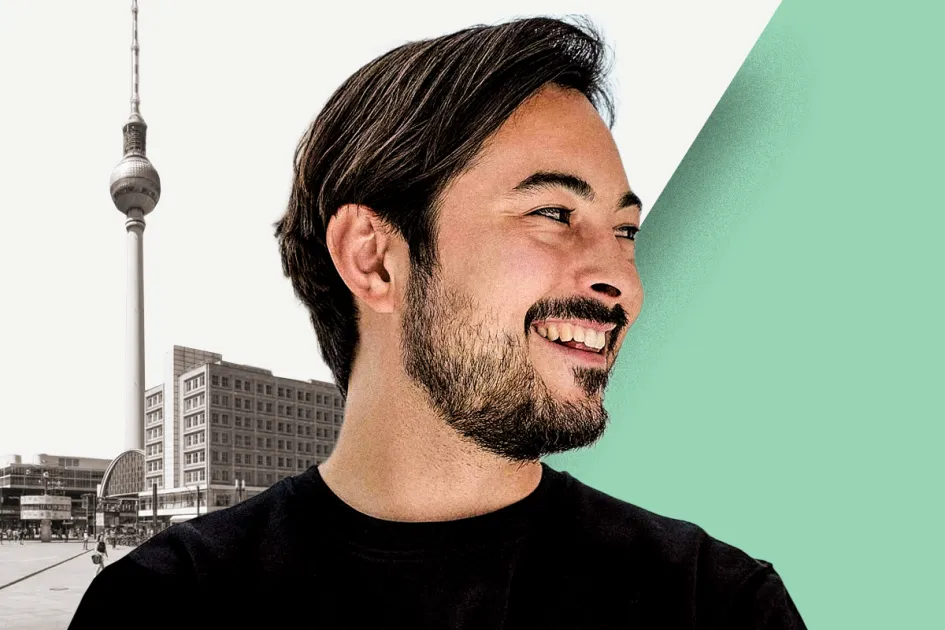
Formo Founder Wanted To Make Gruyère Cheese, But Without Cows
(MENAFN- Swissinfo)
Swiss entrepreneur Raffael Wohlgensinger wants to shake up the vegan cheese market in Germany. However, the slow EU approval process is making him look to greener pastures such as the US.
Select your language
-
More from this aut
The son of a Swiss father and a Brazilian mother, Wohlgensinger grew up in a village in the Winterthur area, northeastern Switzerland, and loves cheese. He missed it when he became vegan a decade ago after nudging from his wife.
The dairy-free cheese substitutes on the market simply couldn't match the flavour of the original. It was on a hike in Switzerland in 2016 that he decided to produce vegan cheese that tasted as good as traditional Swiss cheese.
Our series profiles Swiss men and women founding and building businesses abroad. Through their personal stories, we explore why they choose to pursue their projects beyond Switzerland's borders, the working conditions they encounter there, and the challenges and opportunities.
Through their life stories, this series also showcases how the Swiss Abroad community contributes to Switzerland's economic, cultural and political influence.
The idea for Formo was born but first had to mature like a good Gruyère. Wohlgensinger left nothing to chance and planned his start-up journey carefully. In the summer of 2018, he moved to Berlin and initially did internships with venture capital companies.
“That was extremely important,” he says.“If you want to get money from the venture capital market, you have to understand how it works and thinks.”
He also picked up practical tips like how to raise capital and build teams. It helped that he had studied business administration in St Gallen. But he had to familiarise himself with the finer details of alternative cheese production. Wohlgensinger learnt from founders in the food sector and picked up the basics of biotechnology through six months of distance learning.
The big question was could he make his concept work. Could he produce a cheese that didn't taste like nuts or substitute ingredients but like real Cheddar and Gruyère and also had the right consistency?
Leaving nothing to chanceWohlgensinger spoke to food scientists at universities and gathered input on both the economic and biotechnological aspects.
“I already had feedback from many experts before the start. Where are the weak points, where are the potential problems?” he says.
What Wohlgensinger heard gave him confidence. In 2019 he founded the food start-up FormoExternal link in Berlin together with Britta Winterberg, who holds a doctorate in microbiology, under the name LegenDairy Foods at the time.
There were many arguments in favour of Berlin as the place to found the company.
“At the time, Berlin was clearly the start-up hub of Europe and much more international than Zurich. The ecosystem was super-interesting. There were exciting and creative people and alternative approaches to life,” says Wohlgensinger.
Access to investors was also easier. He was also drawn to Berlin for personal reasons. It was already one of the most vegan-friendly cities in Europe.
“I found Berlin extremely liveable. I still do, although not to the same extent as back then,” he says.
While Berlin has an excellent ecosystem for founders it comes at the price of extremely complex regulations. Many start-ups complain about what Wohlgensinger experienced in Berlin.
“If I had known in 2018 how bureaucratic the process was, I would have reconsidered coming to Berlin,” he says.
A lot of things are extremely cumbersome and inefficient, from financing rounds and employee contributions to the registration of new employees, he says. The mills of bureaucracy also grind slowly when it comes to procedures and product authorisations. In the area of food authorisations, this is also due to complicated EU regulations. After all, the authorisations then apply EU-wide for a large market and for a growing target group.
According to a YouGov survey, only 1% of the German population aged 61-79 follow a vegan diet. Among Gen Z (13- to 28-year-olds) one in ten already abstains from animal products for reasons of animal welfare but also to combat climate change, as cows release greenhouse gas methane. In Switzerland, the proportion is lower.
Formo's first step was to produce cheese based on koji mushroom cultures. This was a way to enter the market quickly. The legal barriers were low and consumer acceptance was high, as no genetic engineering is used in this process. Formo's koji-based cream cheese has already made it onto the German market.
More More The challenges of being a vegan cheesemaker in SwitzerlandThis content was published on Mar 11, 2024 Despite using the same time-tested cheesemaking techniques, Swiss vegan cheesemaker New Roots has faced an uphill battle winning over consumers and peers.
Read more: The challenges of being a vegan cheesemaker in Switze
Legal Disclaimer:
MENAFN provides the
information “as is” without warranty of any kind. We do not accept
any responsibility or liability for the accuracy, content, images,
videos, licenses, completeness, legality, or reliability of the information
contained in this article. If you have any complaints or copyright
issues related to this article, kindly contact the provider above.
Most popular stories
Market Research

More Story







Comments
No comment