





403
Sorry!!
Error! We're sorry, but the page you were looking for doesn't exist.
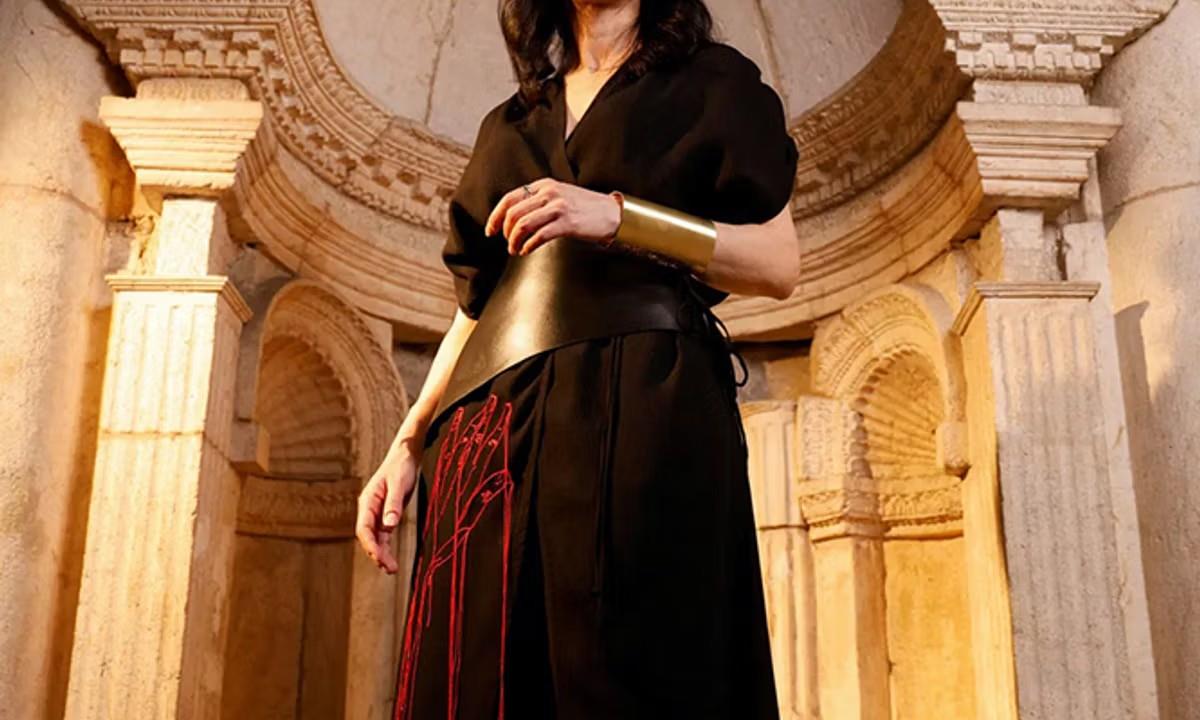
'This Is An Opportunity That Will Never Happen Again': Syrian Artist Sara Shamma On Rebuilding Her Country The Art Newspaper International Art News And Events
(MENAFN- USA Art News)
Syria's Venice Biennale Pavilion Turns to Sara Shamma for 2026
Syria will return to the Venice Biennale in 2026 with a notable change in strategy: for the first time, its national pavilion will be built around a single artist. The choice of Sara Shamma, one of the country's leading contemporary artists, signals a cultural reset as Syria enters a post-war phase.
Shamma's own life has moved in step with that shift. She returned to Syria in September 2024 after eight years of living between London and Damascus, only to see the Assad regime fall within months. She now describes herself as living through the country's rebirth, and says that walking the streets has renewed her sense of belonging.
Her pavilion project, The Tower Tomb of Palmyra, is curated by Yuko Hasegawa and commissioned by Syria's ministry of culture. Conceived as an immersive installation, it will combine painting, architecture, light, sound, and scent. The work is expected to center on a large-scale architectural structure containing 18 new paintings, inviting visitors to move through the space rather than simply view it from a distance.
The project draws on the ancient funerary towers of Palmyra, which were destroyed by Islamic State in 2015, and also addresses the widespread looting of Syrian artefacts during the war. For Shamma, the gesture is both commemorative and forward-looking.“All these [funerary] towers have been destroyed, so I decided to create one,” she says.
The work has been in development since around 2019, when it was first conceived for a planned exhibition at the Fitzwilliam Museum in Cambridge, UK. That presentation was postponed during the pandemic. When the opportunity to represent Syria at the Biennale emerged, Shamma revived the project, calling it a natural fit for Venice.
Known for psychologically charged figurative paintings, Shamma often begins with self-portraits and close observation of the body, from gestures to the smallest movements of the eye. She says the Venice installation will extend that practice through new colors and techniques developed over nearly five months of work. Her aim is not simply to depict Syria, but to reach beneath the image and alter the viewer's state of mind.
“I want to shed light on the good parts of Syria,” she says.“This is an opportunity that will never happen again.” In Venice, that conviction will be tested in public, where memory, loss, and reconstruction will share the same room.

Legal Disclaimer:
MENAFN provides the
information “as is” without warranty of any kind. We do not accept
any responsibility or liability for the accuracy, content, images,
videos, licenses, completeness, legality, or reliability of the information
contained in this article. If you have any complaints or copyright
issues related to this article, kindly contact the provider above.
Most popular stories
Market Research

More Story





Comments
No comment