

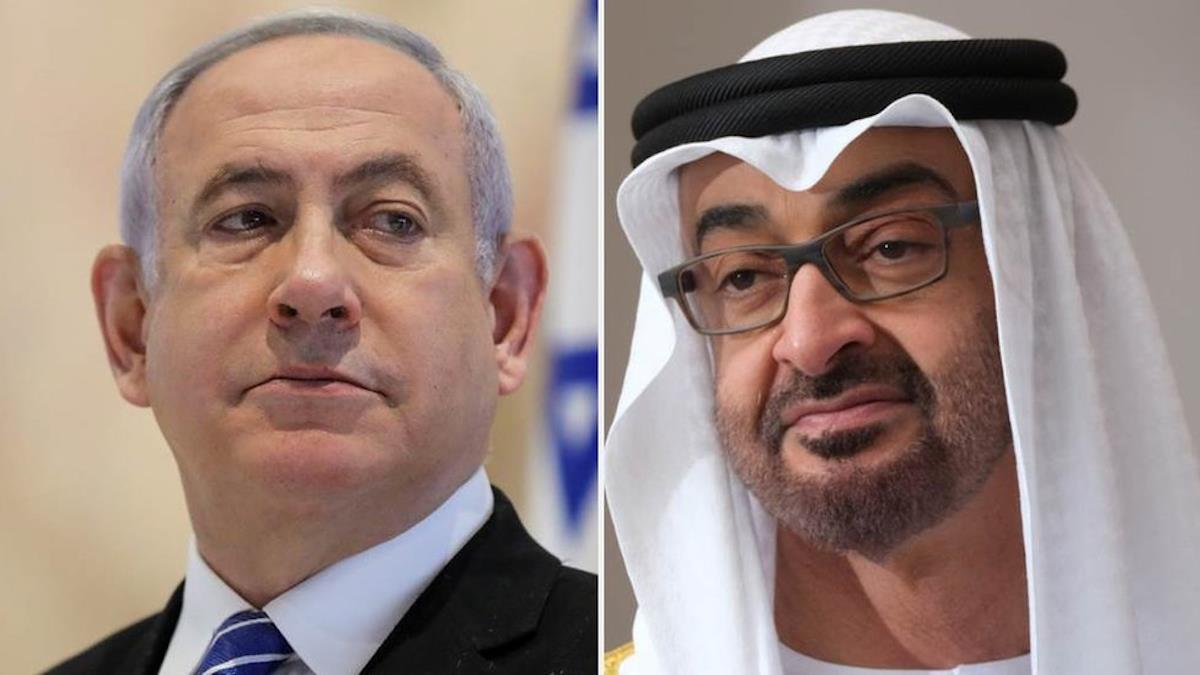
UAE-Israel Ties Useful But Nowhere Near A Middle East Reset


The agreement between Israel and the United Arab Emirates was significant. It was not, however, the dawn of a new Middle East, and the ensuing years, punctuated by the October 7 catastrophe, a punishing war in Gaza, an Israeli strike on Hamas leaders in Doha and, most recently, the twelve-day Iran war that placed an Israeli Iron Dome battery on Emirati soil, have made the original Washington narrative all the more difficult to sustain.
The question now being asked in think tanks and Israeli policy seminars, whether the UAE-Israel partnership can transform the regional balance of power, is itself the wrong question.
It contains the same conceptual flaw that has bedeviled American Middle East policy since at least the Carter administration: the assumption that bilateral ties between two Washington-aligned states can substitute for the harder work of regional order-building, and that diplomatic choreography can stand in for the underlying distribution of power.
Let us begin with what is real. The economic relationship is no fiction. Bilateral trade reached US$3.2 billion in 2024 and continues to grow. Israeli technology firms have set up shop in Abu Dhabi Global Market; Emirati capital flows into Israeli high tech.
Defense cooperation has matured beyond the merely symbolic, with the Edge Group's procurement of Elbit's Hermes 900 drone signaling, for the first time, a meaningful industrial partnership rather than an exchange of communiqués.
During the Iran war earlier this year, Israeli operators on Emirati territory manning an Iron Dome battery represented something genuinely novel: an Israeli forward defense posture in the Gulf, made possible only by the strategic alignment the Accords created.
But these are tactical achievements, not strategic transformations. To imagine that they can reorder the Middle East is to misunderstand both the constraints binding the UAE and the structural realities that no bilateral relationship can wish away.
Begin with the UAE itself. It is a small federation of seven emirates whose population is overwhelmingly composed of expatriate workers, and whose ultimate security still rests on American extended deterrence.
Latest stories
US vs China: two armies, two theories of the body

Price wars, tech wars: China's auto bloodbath rages on

Don't mistake Suu Kyi's house arrest for Myanmar's freedom
Its rulers, having concluded that Washington is an increasingly unreliable patron, have spent the better part of a decade hedging - toward Beijing, Moscow, New Delhi and, most tellingly, toward a quiet tactical reconciliation with Tehran. The decision to embrace Israel was an attempt to secure a useful junior partnership against Iranian encroachment while extracting maximum economic benefit.
It was not, despite the language of the press releases and the hopeful prose of the Negev Forum communiques, a decision to subordinate Emirati strategy to Jerusalem's. When Mohammed bin Zayed flew to Doha within hours of the Israeli strike on Hamas's leadership there, he was not betraying the Accords.
He was demonstrating that the Accords had never been the sole organizing principle of his foreign policy, and that no rational Gulf monarch was ever going to allow them to become so.
This points to the second structural reality. The Arab Gulf states are not, and have never aspired to be, junior partners in an Israeli-led regional order. The ideological project of an“Abraham Alliance”, articulated by Netanyahu and embraced by certain American neoconservatives who never met a Middle Eastern alignment they were unwilling to anoint as transformative, assumes a level of Emirati deference to Israeli strategic preferences that the rulers of Abu Dhabi have never granted.
The Emiratis condemned October 7 promptly and unambiguously. They also kept open their humanitarian corridor into Gaza, denounced what they have publicly described as Israeli violations of international norms, canceled Israeli participation at the Dubai Airshow, and warned that annexation of the West Bank would constitute a red line.
These are not the gestures of a satellite. They are the gestures of a small state hedging carefully in a turbulent neighborhood, exactly as small states have always done.
Third, there is the matter of Saudi Arabia. Without Riyadh, the Accords remain a useful but limited diplomatic accomplishment. With Riyadh, they would represent a genuine reordering. But the Saudi position - that recognition requires a credible path to a Palestinian state - has hardened, not softened, over the course of the Gaza war.
The current Israeli coalition, dependent on partners whose maximalist views on the West Bank are a matter of public record and proud declaration, cannot deliver the political deliverables Riyadh requires. This is not a problem that diplomatic technique can solve.
It is not even a problem of personalities, though Netanyahu's personal credibility in the Gulf is by all accounts in a state of advanced decay. It is a problem of incompatible strategic objectives, and one that the second Trump administration, for all its dealmaking instincts, will discover to be more intractable than the first.
Finally, the broader regional environment has not been transformed in the directions the original architects of the Accords anticipated. Iran, weakened though it is after the collapse of its so-called Axis of Resistance and the American strikes on its nuclear program, remains a regional power that cannot simply be wished out of existence.
Turkey has expanded its influence in post-Assad Syria. Qatar, whose ties to Hamas the Israeli leadership has long sought to punish, has emerged from the Gaza war with its diplomatic stature enhanced rather than diminished, hosting the American negotiations and the Doha summits that have, at various points, set the parameters of conflict resolution.
The much-discussed regional realignment, in other words, has produced a more crowded and more complicated regional system, not a simpler or more pro-Western one.
What, then, can the UAE-Israel partnership actually do? Quite a bit, provided it is judged by realistic standards. It can serve as a platform for technology transfer, intelligence sharing, and joint commercial development. It can offer Israel a degree of regional integration that, twenty years ago, would have seemed unattainable.

Sign up for one of our free newsletters
-
The Daily Report
Start your day right with Asia Times' top stories
AT Weekly Report
A weekly roundup of Asia Times' most-read stories
It can help the UAE diversify its economy and modernize its defense industrial base. It can act as a hedge against Iranian assertiveness without requiring either party to enter a formal alliance whose costs neither is willing to bear. These are not small accomplishments. For two pragmatic states navigating a difficult neighborhood, they are real gains.
But they are not a transformation of the regional balance of power. They are, instead, an adaptation by two pragmatic states to a multipolar Middle East in which American hegemony has receded, the underlying disputes over Palestinian self-determination remain unresolved, and regional actors are increasingly responsible for managing their own neighborhoods. Such adaptations matter.
They should be welcomed. But they should not be confused with the grand strategic realignments they have so often been described as. History, as the realist tradition has always insisted, does not bend easily to the press conferences of great powers.
The Middle East's underlying fault lines, including the Palestinian question, the role of Iran, the Sunni-Shia split, the unresolved status of Saudi-Israeli relations and the slow rebalancing of American commitments, will determine the regional order far more than any bilateral partnership, however valuable.
To expect otherwise is to mistake the choreography of diplomacy for the substance of geopolitics. It is a mistake Washington has made before. There is no obvious reason it should make it again.
This article was originally published on Leon Hadar's Global Zeitgeist and is republished with kind permission. Become a subscriber here.
Thank you for registering!
-
Share on X (Opens in new window)
Share on LinkedIn (Opens in new window)
LinkedI
Share on Facebook (Opens in new window)
Faceboo
Share on WhatsApp (Opens in new window)
WhatsAp
Share on Reddit (Opens in new window)
Reddi
Email a link to a friend (Opens in new window)
Emai
Print (Opens in new window)
Prin

Legal Disclaimer:
MENAFN provides the
information “as is” without warranty of any kind. We do not accept any
responsibility or liability for the accuracy, content, images, videos,
licenses, completeness, legality, or reliability of the information
contained in this article. If you have any complaints or copyright issues
related to this article, kindly contact the provider above.
Comments
No comment