




403
Sorry!!
Error! We're sorry, but the page you were looking for doesn't exist.
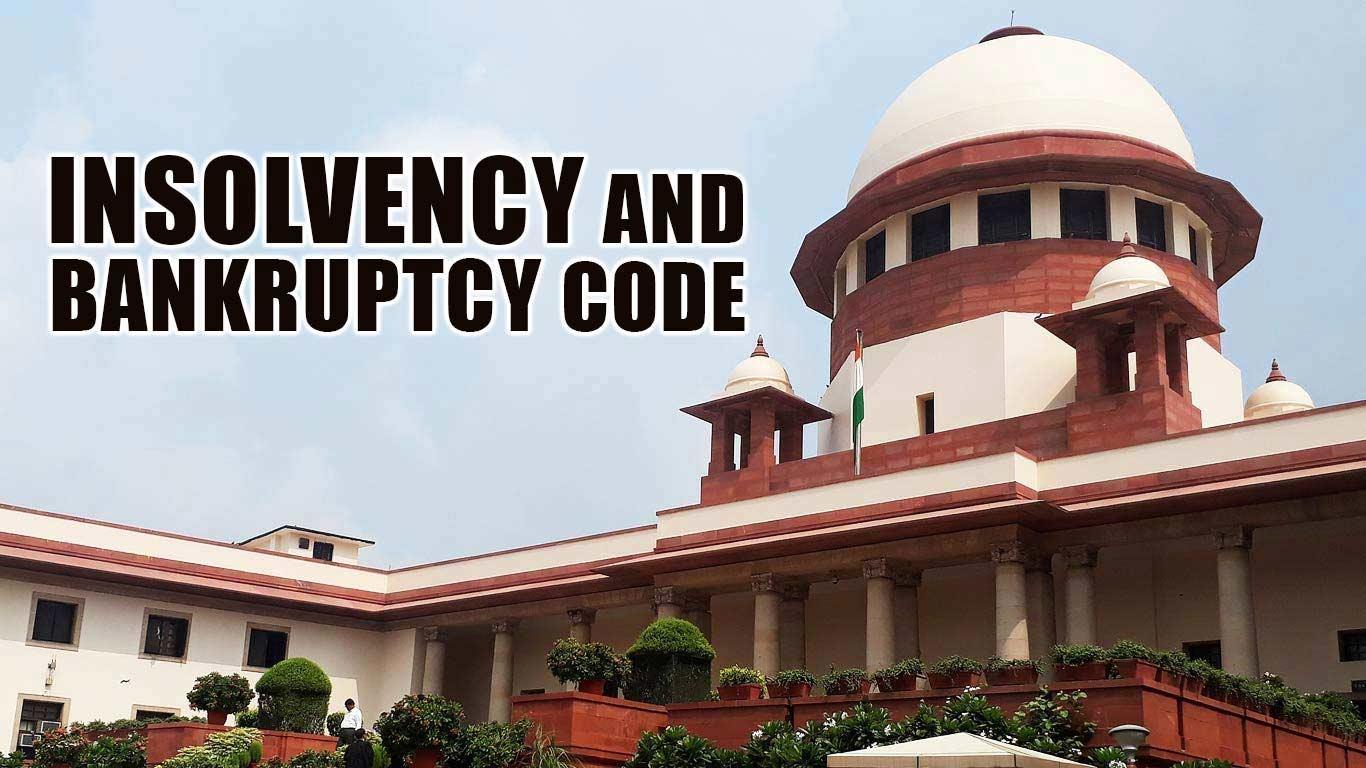
IBC Not A Tool For Enforcing Money Decrees: Supreme Court
(MENAFN- KNN India)
New Delhi, Apr 24 (KNN) In a judgment on Thursday, the Supreme Court held that the Insolvency and Bankruptcy Code 2016 (IBC) cannot be used as a substitute for executing money decrees or as a coercive recovery tool.
The Court set aside an order of the National Company Law Appellate Tribunal (NCLAT) that had admitted an insolvency plea based on a money decree, and restored the National Company Law Tribunal (NCLT) decision dismissing the petition.
Dispute and Proceedings
The case arose from a loan dispute that led to a civil court decree in favour of the lender. Instead of pursuing execution through civil courts, the lender initiated insolvency proceedings under Section 7 of the IBC.
The NCLT rejected the plea, citing misuse of the IBC against a solvent company and the existence of disputed debt. However, the NCLAT allowed the plea, holding that a money decree could trigger insolvency action.
Court's Observations
The Supreme Court reiterated that the IBC is meant for resolving genuine financial distress and reviving companies-not for individual debt recovery. It noted that the creditor bypassed standard execution under the Code of Civil Procedure 1908 and used insolvency as a pressure tactic.
The Court also highlighted serious disputes over the debt amount and inconsistencies in claims across forums, including the Income Tax Appellate Tribunal and the Delhi High Court, stating such issues must be resolved through proper legal channels, not insolvency proceedings.
Key Clarifications
While acknowledging that a money decree may provide a fresh cause of action, the Court clarified this does not grant an automatic right to invoke the IBC. It stressed that insolvency proceedings must not replace execution mechanisms or be used in disputed cases.
The judgment also underscored Section 65 of the IBC, which penalises malicious or fraudulent initiation of insolvency proceedings.
Outcome
Allowing the appeal, the Court restored the NCLT order and directed the creditor to pursue decree execution as per law. It also imposed costs of Rs 5 lakh on the respondent.
The ruling reinforces that the IBC is a collective resolution framework and not a tool for enforcing individual claims, especially where the debtor is solvent or the debt is disputed.
(KNN Bureau)

Legal Disclaimer:
MENAFN provides the
information “as is” without warranty of any kind. We do not accept
any responsibility or liability for the accuracy, content, images,
videos, licenses, completeness, legality, or reliability of the information
contained in this article. If you have any complaints or copyright
issues related to this article, kindly contact the provider above.
Most popular stories
Market Research

More Story








Comments
No comment