




403
Sorry!!
Error! We're sorry, but the page you were looking for doesn't exist.
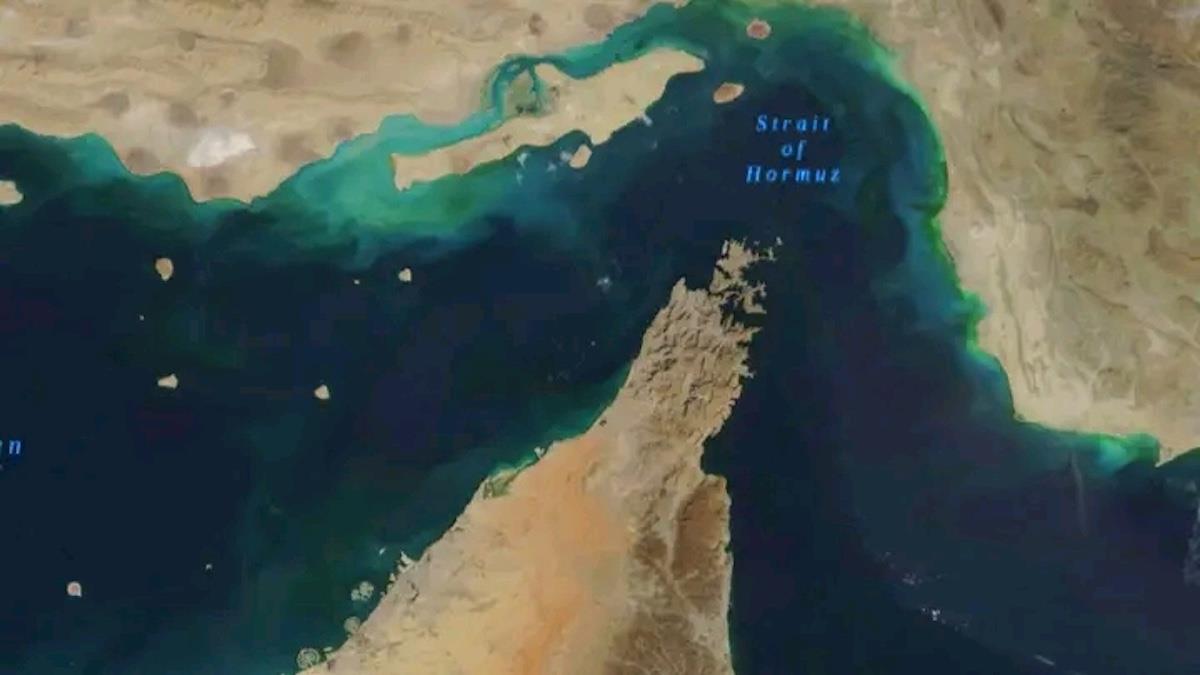
Another American Quagmire At Hormuz
(MENAFN- Asia Times)
There is a certain grim symmetry to watching Washington, in the spring of 2026, once again flailing about in the Persian Gulf - blockading Iranian ports, rattling sabers over a strait it cannot fully control and dispatching delegations to Islamabad in search of a diplomatic ladder to climb down from.
For those of us who have spent decades warning about the costs of America's compulsive interventionism in the Middle East, the Hormuz stalemate is not a surprise. It is a bill coming due.
Let us be clear about how we got here. The decision to join Israel's air campaign against Iran in late February - to assassinate the Supreme Leader and decapitate the Islamic Republic - was a gamble of historic proportions.
Whatever one thought of the Iranian regime, and there is plenty to despise, the assumption that Tehran would absorb such blows and simply capitulate reflected a fantasy about American power that should have been retired after Iraq, after Libya, after two decades of failed state-building from Kabul to Baghdad. Instead, it was indulged once more.
Iran's closure of the Strait of Hormuz beginning in late February was a predictable Iranian response to the US-Israeli air campaign and the assassination of Khamenei. Predictable, because Iran had been signaling exactly this contingency for years.
The Islamic Republic has no aircraft carriers, no power-projection force to match American conventional might. But it sits astride the world's most consequential maritime choke point. Closing Hormuz was not improvisation - it was the card Tehran had always intended to play when existentially threatened.
Now Washington finds itself in a familiar bind. The IRGC has declared that the strait“will not return to its previous state” and has framed the US naval blockade as“piracy.” Iran's parliament speaker and chief negotiator has said passage is“impossible” without American concessions.
Latest stories Is China's soft power rising, or is America's just crumbling? Lessons for new Apple CEO Ternus in Steve Jobs's wilderness years Is Trump heading to a Pyrrhic victory in Iran?Trump, for his part, has extended the ceasefire while maintaining the naval blockade and threatening to destroy Iranian infrastructure. Each side is posturing. Neither has a clean exit. This is what stalemate looks like - and stalemates in the Persian Gulf have a way of becoming permanent fixtures.
The broader strategic damage is already being tallied. About a fifth of the world's oil flows through the Hormuz Strait, and the disruption has sent shockwaves through energy markets and global supply chains at a moment when the world economy could ill afford it.
America's European allies, having initially resisted Trump's calls for naval deployments, are now organizing a defensive multinational mission to protect merchant vessels and conduct mine clearance - but only“as soon as conditions permit following a sustainable ceasefire.” In other words, they are waiting to see if Washington can find a way out of the hole it dug.
China and Russia, needless to say, have turned the crisis into a geopolitical windfall. Iran announced that ships from China, Russia, India, Iraq, and Pakistan would be allowed to transit the strait, a masterclass in Iranian diplomatic maneuvering.
Tehran has effectively used selective reopening to reward friendly nations and penalize Washington's partners, fragmenting the Western-led coalition and driving wedges into whatever multilateral solidarity the US had hoped to marshal. This is not incompetence on Iran's part – it is strategy.
Washington's response has been the usual cocktail of maximum pressure, rhetorical bravado, and improvised diplomacy. Pakistan - hardly a neutral or reliable interlocutor - has been elevated to lead mediator. US Vice President JD Vance was dispatched to Islamabad and then recalled.
Trump claimed that the Iranian government is“seriously fractured,” which may or may not be true, but which conveniently serves as justification for further delay and indecision. The administration appears to be hoping that internal Iranian contradictions will do the work that military force and economic blockade have not.
That is a thin reed.
The realist in me wants to make a simple point that gets lost in the daily noise of this crisis: the US does not have a vital national interest that requires permanent military dominance of the Persian Gulf sufficient to justify a war with Iran. The shale revolution transformed American energy dependence.
The countries most affected by Hormuz disruptions are in Asia - China, India, Japan, South Korea. Yet Washington is bearing the overwhelming burden of this confrontation, straining relationships with its European allies, alienating potential partners in the Global South, and spending political and military capital it does not have to spare.
The“freedom of navigation” principle is real and important. The EU's foreign affairs chief called it“non-negotiable.” But principles, however noble, do not resolve standoffs. Negotiations do. And negotiations require Washington to acknowledge what it actually wants and what it is prepared to offer - not simply to repeat that it“won't be blackmailed” while hoping the other side blinks.
Here is what a realist framework would suggest: the US should define its minimum acceptable outcome - genuine freedom of commercial passage through Hormuz - and pursue it through direct, unmediated diplomacy with Tehran, trading the lifting of the port blockade for Iranian withdrawal of strait controls.
Sign up for one of our free newsletters-
The Daily Report
Start your day right with Asia Times' top stories
AT Weekly Report
A weekly roundup of Asia Times' most-read stories
It should resist the temptation to use the negotiations as a vehicle for broader regime-change ambitions or permanent military posturing. And it should welcome, rather than resent, the burden-sharing that comes from letting China, India and Europe take on more responsibility for a waterway that serves their interests as much as America's.
None of this is likely, of course. Washington rarely learns the lesson that the Middle East offers at such great cost. Each crisis is treated as sui generis, as an anomaly to be managed rather than a symptom of structural overreach to be addressed.
My book“Quagmire” was written in 1992.“Sandstorm” followed in 2005. The geography changes. The cast of characters rotates. The dynamic, depressingly, does not.
The Hormuz stalemate will end - eventually. Stalemates always do. The question is whether it ends through patient, interest-based diplomacy or through an escalatory spiral that draws the United States into yet another open-ended military commitment in a region it has never successfully understood and cannot afford to dominate indefinitely.
The history of American policy in the Middle East does not inspire optimism. But history, as always, remains the only honest guide we have.
This article was originally published on Leon Hadar's Global Zeitgeist and is republished with kind permission. Become a subscriber here.
Sign up here to comment on Asia Times stories OrThank you for registering!
-
Share on X (Opens in new window)
Share on LinkedIn (Opens in new window)
LinkedI
Share on Facebook (Opens in new window)
Faceboo
Share on WhatsApp (Opens in new window)
WhatsAp
Share on Reddit (Opens in new window)
Reddi
Email a link to a friend (Opens in new window)
Emai
Print (Opens in new window)
Prin

Legal Disclaimer:
MENAFN provides the
information “as is” without warranty of any kind. We do not accept
any responsibility or liability for the accuracy, content, images,
videos, licenses, completeness, legality, or reliability of the information
contained in this article. If you have any complaints or copyright
issues related to this article, kindly contact the provider above.
Most popular stories
Market Research

More Story






Comments
No comment