



403
Sorry!!
Error! We're sorry, but the page you were looking for doesn't exist.
India's Fiscal Deficit May Overshoot Budgeted Target For FY27 Amid West Asia Crisis: BMI
(MENAFN- KNN India)
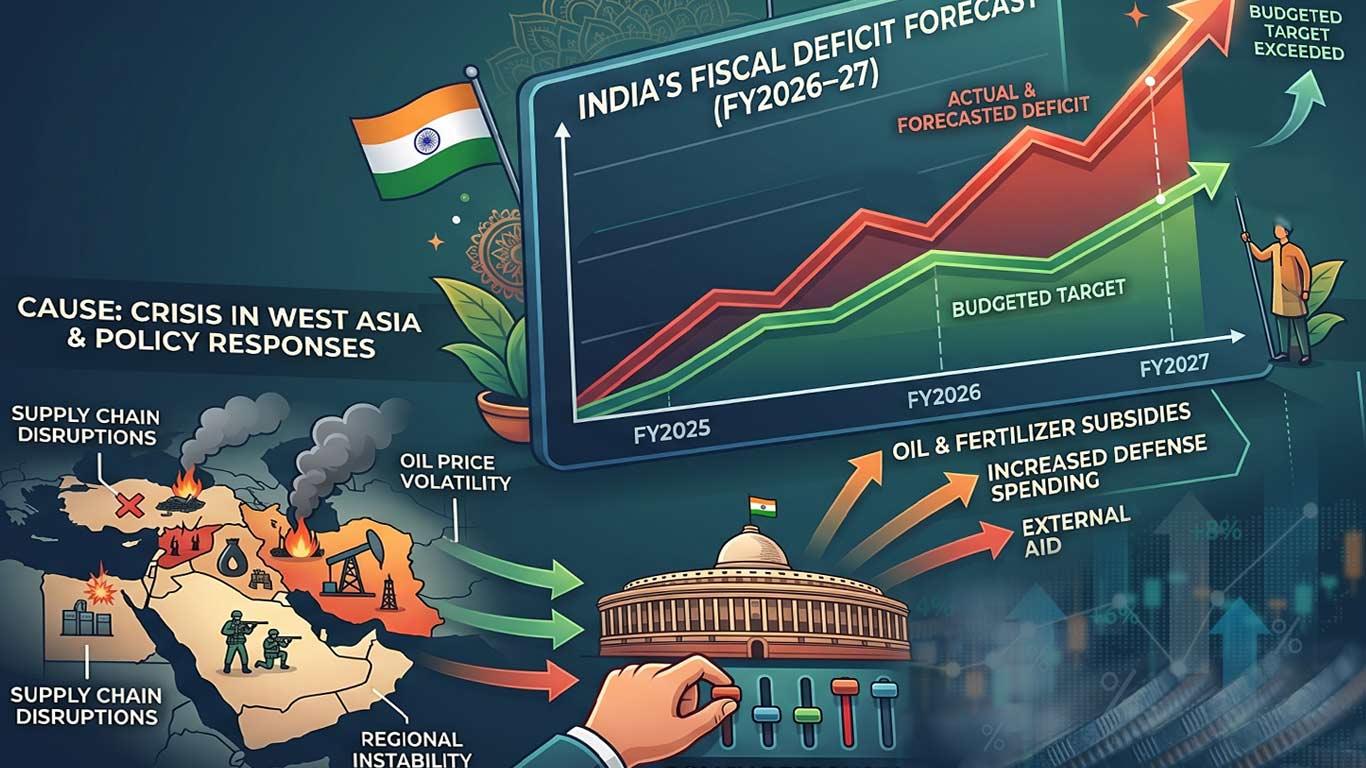
New Delhi, Apr 22 (KNN) India's fiscal deficit could exceed the budgeted target in FY2026–27 due to policy responses to the ongoing crisis in West Asia, according to research firm BMI.
The government had projected a fiscal deficit of 4.3 per cent of GDP for FY2026–27, marginally lower than the revised estimate of 4.4 per cent for the previous year. However, BMI said on Wednesday that it expects the deficit to rise to around 4.5 per cent, citing increased spending pressures, PTI reported.
Policy Measures to Cushion Economic Impact
BMI anticipates that the government may introduce targeted measures to support key industries, including redirecting critical inputs, controlling business costs and enhancing financial assistance to firms.
It also expects potential restrictions on exports of essential inputs such as sulphur and helium, which are crucial for semiconductor manufacturing. Given sulphur's role in fertiliser production, policymakers are likely to prioritise minimising disruptions to agriculture, a sector employing a significant share of India's workforce.
Energy Supply Routes & Increased Subsidy Burden
The report highlights the importance of the Strait of Hormuz, through which nearly 20 per cent of global oil and gas supplies transit. Rising tensions involving Iran have pushed up global oil prices, with Brent Crude nearing USD 95 per barrel.
To manage rising energy and fertiliser costs, the government is expected to increase subsidies, reversing recent fiscal consolidation efforts that had reduced such spending to about 1.5 per cent of GDP.
BMI estimates that the newly announced Rs 1 lakh crore Economic Stabilisation Fund could add around 0.1 per cent of GDP to fiscal expenditure in FY2026–27.
Balancing Growth and Fiscal Discipline
While the government is likely to continue pursuing long-term fiscal consolidation, rising geopolitical risks may force short-term deviations. BMI suggested that to manage expenditure, some energy-intensive infrastructure projects could be deferred to the next fiscal year.
(KNN Bureau)

Legal Disclaimer:
MENAFN provides the
information “as is” without warranty of any kind. We do not accept
any responsibility or liability for the accuracy, content, images,
videos, licenses, completeness, legality, or reliability of the information
contained in this article. If you have any complaints or copyright
issues related to this article, kindly contact the provider above.
Most popular stories
Market Research

More Story







Comments
No comment