



403
Sorry!!
Error! We're sorry, but the page you were looking for doesn't exist.
When Is A Democracy No Longer A Democracy?
(MENAFN- Swissinfo)
Beyond Switzerland's borders, democracy is coming under increasing pressure. But with gradual decline now as much of a feature as violent coups, it's not always clear when, or if, it really“ends”.
Select your language
As part of the democracy team, I report on the dynamic relationship between citizens and their institutions in Switzerland and abroad. Born in Ireland, I have a BA in European Studies and MA in International Relations. I've been at SWI swissinfo since 2017.
-
More from this aut
English Departm
I write original and in-depth data-driven articles using my skills in data analysis and visualisation. I cover a wide array of topics, among which are Switzerland's place in global trade, climate change and demographics. Born and raised in France, I studied international relations in Lyon, then graduated from Lille journalism school in 2011. I have been living in Switzerland since 2012 and worked at RTS for eight years before joining SWI swissinfo in 2020.
-
More from this aut
French Departm
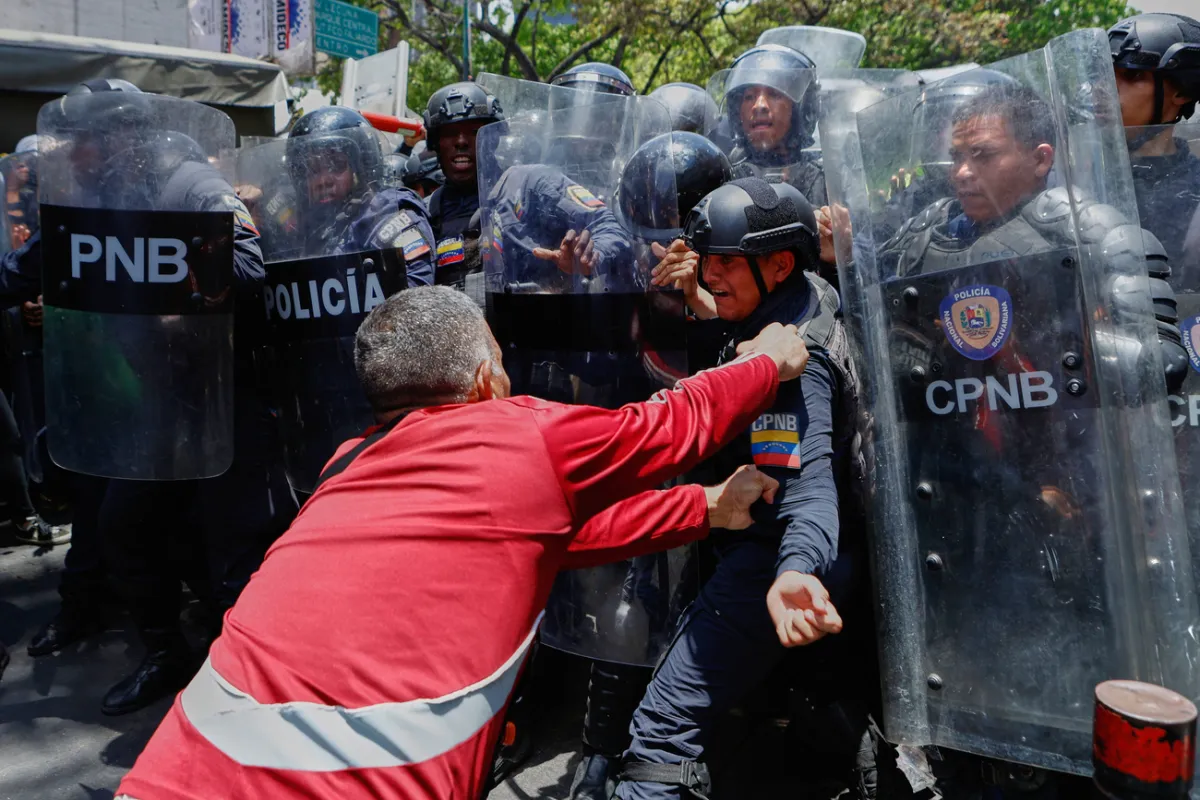
Is there a moment when a democracy stops being one?“When meaningful political change is no longer possible through the ballot box” is Kevin Casas-Zamora's rule of thumb. For the Secretary-General of International IDEA, this marks the dividing line between a place like India, where elections still matter, and Venezuela, where in recent years they have not.
But that yardstick is becoming less reliable. Democratic breakdown used to be easy to spot: a military takeover here, cancelled elections there. In the 21st century, coups still happen – the most recent was Guinea-Bissau in November 2025 – but overall the line has blurred.
Increasingly, a gradual erosion of democratic rules and norms has become the key feature of what is known as“backsliding”. And unlike tanks in the streets, this is not always so visible.
For example, does the concentration of executive power under Donald Trump mean the US is no longer a free democracy? Did Viktor Orbán's institutional revamp in Hungary from 2010-2026, or the politicisation of courts and media under the Law and Justice Party in Poland, strip those states of their democratic status? If so, do they regain it when new governments move to restore the independence of judges, media or elections? Or when – like in Hungary – an“illiberal” leader accepts defeat at the ballot box?
As Casas-Zamora put it at a 2025 event in BernExternal link co-hosted by the Swiss foreign ministry,“it's very difficult to know when the Rubicon is crossed”.
Sliding scales between regime typesSuch difficulties don't stop bodies like International IDEA – a democracy-support organisation whose 35 member states include Switzerland – from investigating.
March 2026 saw the publication of two big annual reports on the state of global democracy: by the US-based Freedom HouseExternal link and by the Varieties of DemocracyExternal link (V-Dem) institute in Gothenburg. Neither was overly optimistic. For Freedom House,“global freedom declined for the 20th consecutive year in 2025”. For V-Dem,“democracy is back to 1978 levels for the average global citizen”.
Explore how democracy at its most basic – a system which guarantees fair elections – has fared globally since 1946:
External ContentYet the assessments can vary when it comes to individual countries. Both reports noted a sharp decline in the US in 2025, but described it differently. For V-Dem, the speed of the Trump administration's concentration of executive power was unprecedented: the US even dropped from“liberal democracy” to“electoral democracy” in the separate“Regimes of the World” section of the report. Freedom House, an NGO based in Washington D.C., also saw significant freedom of expression and corruption issues in the US – but ultimately the country remains“free”.
Meanwhile yet another assessment, published in April by the Economist Intelligence UnitExternal link (EIU) in London, offered a different view again. Having already downgraded the US to a“flawed democracy” back in 2016, it saw a further decline – but only a slight one – in 2025.
Beyond the US, differences also appear. Hungary is an“electoral autocracy” for V-Dem,“partly free” for Freedom House, and a“flawed democracy” for the EIU. Fiji improved in Freedom House's rating – moving from“partly free” to“free” after gains in judicial independence and the rule of the law. For V-Dem, it remains in a“democratic grey zone”; for the EIU, it is a“hybrid regime”.
More Debate Hosted by: Benjamin von Wyl Do you trust that your country can withstand attacks against its democracy?Democracies are increasingly coming under threat, both from within and without. How do your country's institutions fare?
Join the discuss Sep 11, 2025 53 Likes 129 Comments View the discu
Legal Disclaimer:
MENAFN provides the
information “as is” without warranty of any kind. We do not accept
any responsibility or liability for the accuracy, content, images,
videos, licenses, completeness, legality, or reliability of the information
contained in this article. If you have any complaints or copyright
issues related to this article, kindly contact the provider above.
Most popular stories
Market Research

More Story





Comments
No comment