




403
Sorry!!
Error! We're sorry, but the page you were looking for doesn't exist.
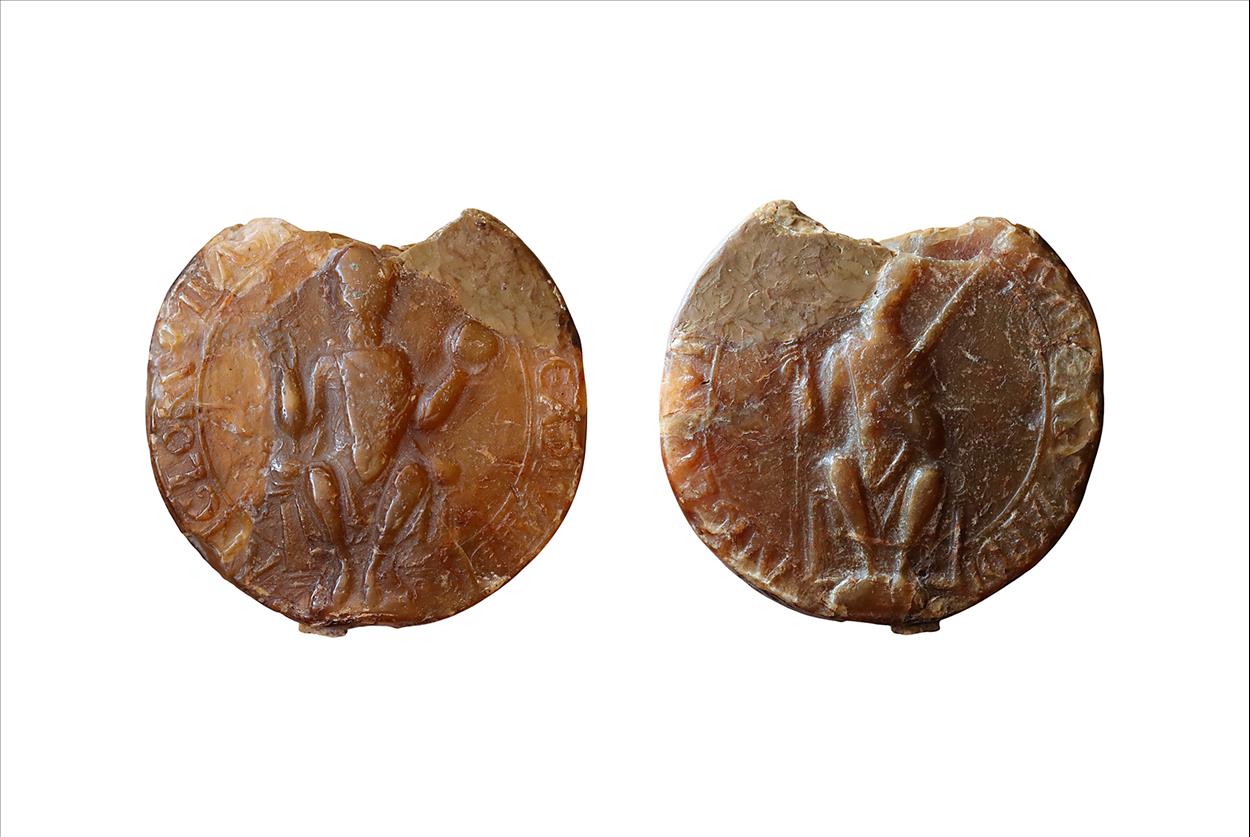
Rare Medieval Seal Rediscovered After 40-Year Disappearance
(MENAFN- USA Art News)
Edward the Confessor's Missing Seal Reappears in Paris After 40 Years
A small wax impression with an outsized historical footprint has resurfaced in France's National Archives in Paris, ending a disappearance that lasted more than four decades. The 11th-century Saint-Denis seal, linked to Edward the Confessor, was separated from its original document sometime between the late 1950s and mid-1980s and moved for conservation without any record being made. That paper trail vanished, and so did the seal - until 2021, when doctoral researcher Guilhem Dorandeu found it while working in the archives.
The seal is now described as the best-preserved of only three surviving wax impressions of Edward the Confessor. Its rediscovery has given historians a rare chance to examine how one of England's most consequential medieval rulers used imagery and authentication to project authority. On the front, Edward appears enthroned, crowned, and holding a fleur-de-lis scepter and orb. On the reverse, he carries a sword on his shoulder and a bird scepter in the other hand.
The iconography is layered with borrowings. The enthroned ruler motif first appeared on the seal of the Holy Roman Emperor Otto III in 997 and may have reached England through German craftsmen working in London during Edward's reign. The orb, fleur-de-lis scepter, and the phrase“Anglorum basileus” all draw on Byzantine precedents, while the script itself uses Anglo-Saxon capitals. The reverse image of the sword-bearing sovereign echoes Constantine IX Monomachos, whose seal used a similar pose only a few years earlier, while the bird scepter recalls East Frankish and Anglo-Saxon traditions, including coinage of Edward's father, Æthelred II.
In a study of the seal's iconography and administrative role, Guilhem Dorandeu and Levi Roach of the University of Exeter argue that these details amount to“a new and stronger concept of kingship,” assembled from western, Byzantine, and specifically English elements. The seal once authenticated a document granting land in Oxfordshire to Saint-Denis monastery, and it belonged to Edward's writ-charter system, a mid-11th-century innovation that replaced longer, unsealed royal directives with shorter documents secured by attached seals.
What began as a practical administrative tool would become standard across much of mainland Europe. In that sense, the rediscovered seal is more than a medieval curiosity: it is evidence of a ruler testing how power could be made visible, legible, and durable on parchment and wax.

Legal Disclaimer:
MENAFN provides the
information “as is” without warranty of any kind. We do not accept
any responsibility or liability for the accuracy, content, images,
videos, licenses, completeness, legality, or reliability of the information
contained in this article. If you have any complaints or copyright
issues related to this article, kindly contact the provider above.
Most popular stories
Market Research

More Story








Comments
No comment