




403
Sorry!!
Error! We're sorry, but the page you were looking for doesn't exist.
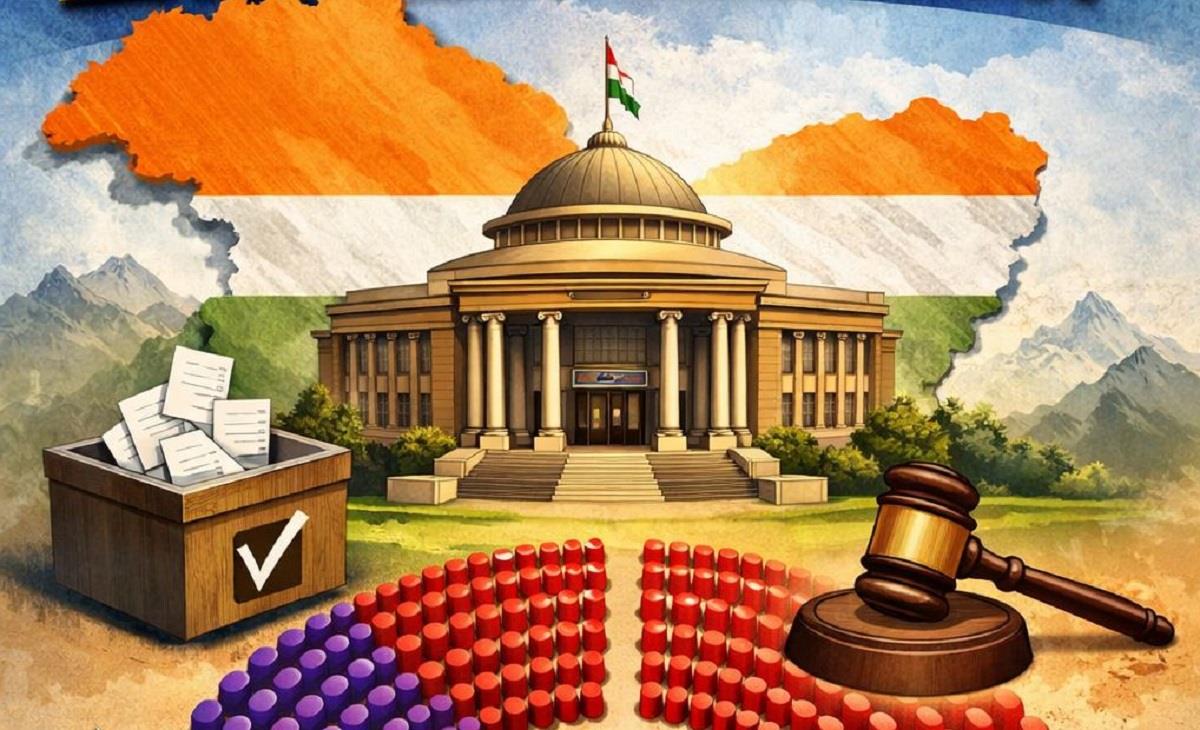
What New J&K Delimitation Bills Propose?
(MENAFN- Kashmir Observer) Srinagar- The legislation proposed to be tabled in Parliament by the Union Government will empower a delimitation commission, to be constituted by the Centre, to determine the number and boundaries of Assembly segments in the Union Territory. The Commission will also decide Jammu & Kashmir's share in Lok Sabha seats among the Union Territories, which have been allocated a maximum of 35 seats.
ADVERTISEMENT
According to the proposed amendments to the Jammu & Kashmir Reorganisation Act, 2019 the Legislative Assembly of the Union Territory of Jammu and Kashmir shall consist of such number of members, to be chosen by direct election from territorial constituencies in the Union Territory, as may be determined by the Delimitation Commission.
The proposed amendments, however, provide that the number of directly elected seats cannot be less than 114. This figure of 114 also includes 24 seats reserved for Pakistan-occupied Jammu & Kashmir.
ADVERTISEMENT
It implies that the number of directly elected seats cannot be less than the existing 90, since the total of 114 includes the 24 seats reserved for Pakistan-occupied Jammu & Kashmir Assembly.
Unlike the post-2019 delimitation, when the number of seats was already fixed in the Jammu & Kashmir Reorganisation Act, no such restriction has been placed on the proposed Delimitation Commission.
Nominated quota
The proposed legislations provide that the number of women members nominated by the Lieutenant Governor shall be increased to three, but only after the readjustment of constituencies takes effect.
They also provide that the number of seats for Kashmiri migrants shall be increased to three from the existing two but this too will become applicable only after delimitation.
It means that post- delimitation LG would have powers to nominate seven members from existing five. Currently, LG is empowered to nominate five MLAs- two women, two migrants and one refugee from Pakistan Occupied Jammu & Kashmir.
This provision will become applicable only after the Delimitation Commission's report comes into effect.
No impact on current Assembly
ADVERTISEMENTAccording to the proposed amendments, the readjustment shall not affect representation in the Legislative Assembly until the dissolution of the existing Assembly. It further provides that until such readjustment takes effect, any election to the Legislative Assembly may be held on the basis of the territorial constituencies existing before such readjustment.
33 % Women Reservation
The amendments also specify that Jammu & Kashmir will have 33 percent women's reservation in its Assembly, but only after constituencies are redrawn through delimitation. The reservation for women will last for 15 years from the date the 106th Constitutional Amendment (2023) began, unless Parliament decides to extend it further. The reserved seats for women will not be fixed permanently; they will be rotated among different constituencies in J&K (and other States/UTs) over time.
The proposed laws provide that delimitation Commission will decide about Jammu & Kashmir's share in Lok Sabha among the Union Territories and fix their boundaries.
Read Also J&K Speaker To Pick 5 MLAs For Delimitation Panel SC Asks GoI To Set Up Fresh Delimitation PanelLok Sabha
However, the number of seats to all Union Territories cannot be more than 35, the proposed bills state.
Currently, Union Territories have 19 Lok Sabha seats.
114: Minimum Assembly seats (includes 24 PoJK seats)
24: Seats reserved for Pakistan-occupied J&K
90: Current elected seats (cannot go below this)
7: Total LG nominees after delimitation (from 5)
3: Women nominees (after delimitation)
3: Kashmiri migrant nominees (after delimitation)
33%: Women's reservation in Assembly (post-delimitation)
15 years: Duration of women's quota (from 2023 amendment)
35 (cap): Max Lok Sabha seats for all UTs
19 (current): Existing UT Lok Sabha seats
With inputs from KNO
Legal Disclaimer:
MENAFN provides the
information “as is” without warranty of any kind. We do not accept
any responsibility or liability for the accuracy, content, images,
videos, licenses, completeness, legality, or reliability of the information
contained in this article. If you have any complaints or copyright
issues related to this article, kindly contact the provider above.
Most popular stories
Market Research

More Story

Comments
No comment