



403
Sorry!!
Error! We're sorry, but the page you were looking for doesn't exist.
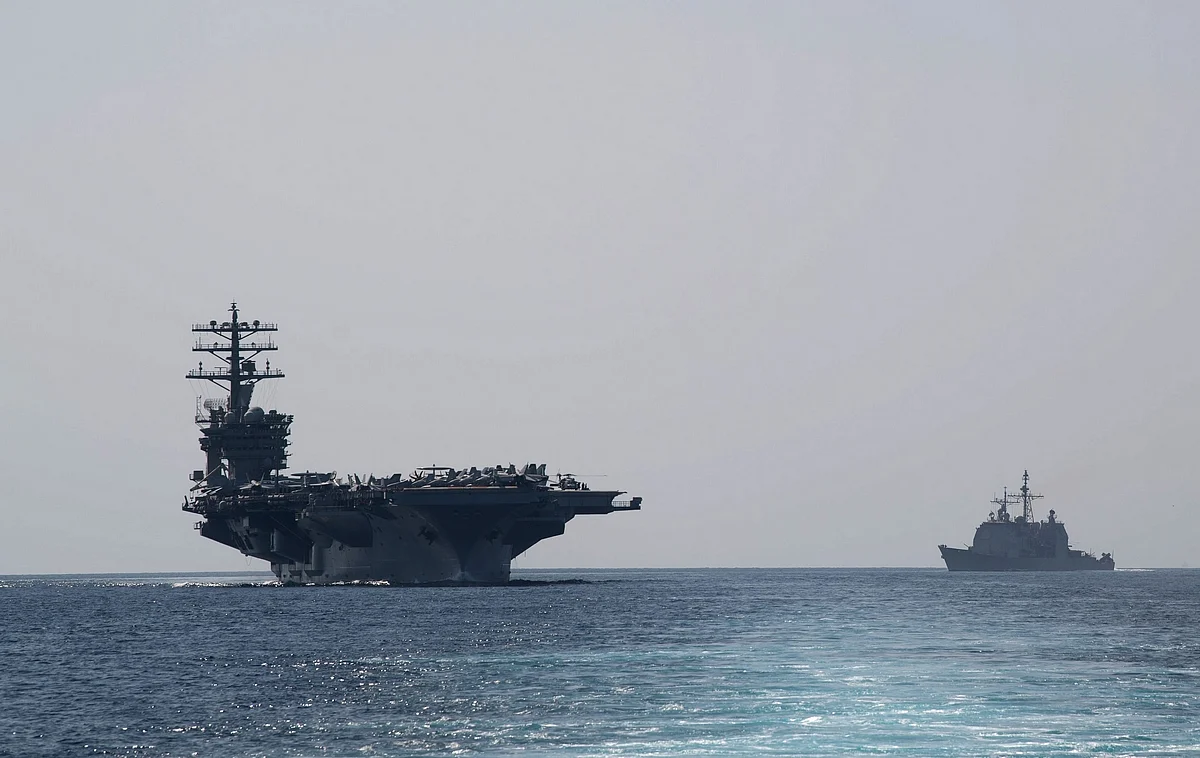
IMF Downgrades Global Growth Forecast For 2026 Due To Middle East War
(MENAFN- Khaleej Times) [Editor's Note: Follow Khaleej Times live blog for the latest regional developments with the
US-Israel-Iran ceasefire
now in effect.]
The International Monetary Fund (IMF) on Tuesday lowered its global growth forecast for 2026 by 0.2 percentage points to 3.1 per cent, as the Middle East war darkened the global economic outlook.
Recommended For You“Absent the war, global growth would have been revised upward. Indeed, forecasts based on pre-conflict assumptions would have shown a slight upward revision for 2026 relative to the January forecast, by 0.1 percentage point to 3.4 per cent. Hence, the downward revision for 2026 largely reflects disruptions from the conflict in the Middle East, partly offset by carryover from recent strong data and reduced tariff rates,” the IMF said in its latest World Economic Outlook released on Tuesday evening.
However, the Fund projected that the UAE economy will grow by 3.1 per cent this year and 5.3 per cent in 2027, as the country's economy will be less impacted than other countries in the Gulf region.
“The contraction in GDP growth for 2026 is therefore more pronounced for Bahrain, Iran, Iraq, Kuwait, and Qatar, and less significant for Oman, Saudi Arabia, and the UAE. For all these economies, growth in 2027 is expected to rebound, based on the assumption that energy production and transportation will normalise over the next few months,” the IMF said.
For the Gulf region, it projected 3.5 per cent growth for Oman and 3.1 per cent for Saudi Arabia. It forecast that the economies of Qatar, Kuwait, and Bahrain will contract by 8.6 per cent, 0.6 per cent, and 0.5 per cent this year, respectively.
In the Middle East and Central Asia, growth is projected to decline from 3.6 per cent in 2025 to 1.9 per cent in 2026, before recovering to 4.6 per cent in 2027, as the region experiences the most direct impact of the conflict and the expected subsequent rebound.
However, the Fund maintained its global growth forecast for 2027 at 3.2 per cent.
Stay up to date with the latest news. Follow KT on WhatsApp channels.
Since the outbreak of the regional conflict on February 28, the global economy has been hit by geopolitical uncertainty, high oil prices and rising inflation in major economies.
Oil prices rallied in March after the US and Israel launched attacks against Iran, targeting its military and energy infrastructure. Crude oil jumped more than 50 per cent due to the Middle East war, crossing $115 a barrel.
Oil prices have eased of late due to the ceasefire and ongoing peace talks between the US and Iran.
Recession riskHowever, the IMF warned that global financial stability risks are“elevated.”
It said:“The global financial system is confronting the ongoing war in the Middle East, potential inflationary pressures, rising risks of further tightening in financial conditions, and several channels through which market turmoil could escalate into financial instability.”
The IMF stressed that the war in the Middle East presents a“significant headwind” to the global economy – particularly for the conflict region, energy-importing countries and lower-income nations – through higher commodity prices, inflation expectations and tighter financial conditions.
The IMF said that if the Middle East conflict prolongs under an adverse scenario, global growth could be reduced by 0.8 percentage point in 2026, dropping to 2.5 per cent.
Under the severe scenario, the effects on global growth are substantial and longer lasting. Global growth would be reduced by 1.3 percentage points in 2026. This would mean a close call for a global recession, it said.
Growth in advanced economies is projected at 1.8 per cent in 2026 and 1.7 per cent in 2027. The overall impact of the Middle East conflict on advanced economies is modest, lowering growth by 0.2 percentage point in 2026 relative to the pre-conflict forecast.
In the US, the economy is projected to expand by 2.3 per cent in 2026, a 0.1 percentage point downward revision from the January 2026 WEO Update.
In the euro area, growth is expected to decline from 1.4 per cent in 2025 to 1.1 per cent in 2026, before rising slightly to 1.2 per cent in 2027. The forecast has been revised downward by 0.2 percentage point for each year compared to the January 2026 WEO Update.
ALSO READ- OECD: Iran war erases global growth upgrade, fans inflation World Bank warns of deeper slowdown risks if Iran conflict continues UAE GDP to grow 5.6% in 2026, same as last year, says Central Bank

Legal Disclaimer:
MENAFN provides the
information “as is” without warranty of any kind. We do not accept
any responsibility or liability for the accuracy, content, images,
videos, licenses, completeness, legality, or reliability of the information
contained in this article. If you have any complaints or copyright
issues related to this article, kindly contact the provider above.
Most popular stories
Market Research

More Story





Comments
No comment