






403
Sorry!!
Error! We're sorry, but the page you were looking for doesn't exist.
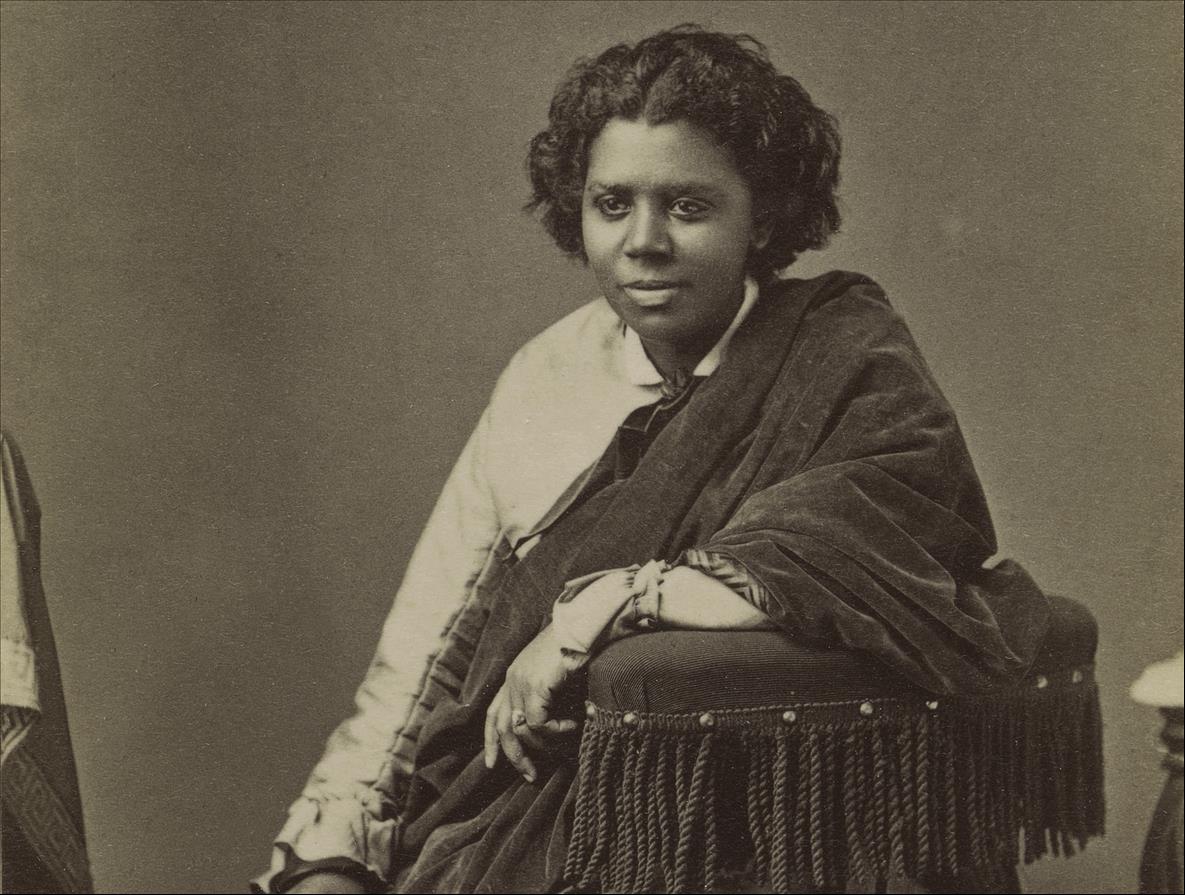
The Incredible Story Of Edmonia Lewis, America's First Black And Indigenous International Art Star
(MENAFN- USA Art News)
Edmonia Lewis's long-overdue museum retrospective restores a lost chapter of American sculpture
A century after her death, Edmonia Lewis is finally receiving the kind of institutional attention that has long eluded her.“Edmonia Lewis: Said in Stone,” now on view at the Peabody Essex Museum in Salem, Massachusetts, is the first retrospective devoted to the pioneering sculptor, whose career bridged Black and Indigenous identity, abolitionist politics, and the transatlantic art world. The exhibition, curated by Shawnya L. Harris of the Georgia Museum of Art and Jeffrey Richmond-Moll of the Peabody Essex Museum, will travel to Georgia in August.
The show took seven years to assemble, in part because Lewis worked in marble, a medium that is difficult to transport and preserve. It also had to contend with a fragmented record: of the roughly 70 to 80 sculptures known to have been made by Lewis, many are lost. The exhibition brings together 30 works, the result of extensive archival sleuthing and museum collaboration.
Richmond-Moll said the curators had to reconstruct Lewis's life from scattered traces.“There was no cache of papers,” he said.“It was a matter of sifting through, looking for fragments of correspondence and press interviews, and following those trails to find her work.”
Born in 1844, Lewis was the first Black and Indigenous artist born in the United States to achieve international acclaim as a sculptor. Orphaned at an early age, she spent part of her childhood near Niagara Falls with maternal relatives, selling moccasins, embroidered blouses, and Ojibwe baskets to tourists. The exhibition places those early years in dialogue with Indigenous-made objects from the period, underscoring the artistic inheritance that shaped her practice.
Her path changed when her half-brother Samuel Lewis used money from the California gold rush to support her education at Oberlin College, one of the first U.S. institutions to admit women and non-white students. Lewis did not graduate. She was accused of poisoning two white classmates and later of stealing art supplies, and was violently attacked before being cleared in both cases. Oberlin awarded her a degree posthumously in 2022.
At Oberlin, Lewis met Frederick Douglass, who encouraged her to pursue sculpture professionally. She moved to Boston in 1864, studied with Edward Augustus Brackett, and opened her first solo exhibition in her studio by the end of that year. From there, she built a network of abolitionist patrons and began making the works that would define her reputation, including sculptures tied to emancipation, Black military history, and Indigenous sovereignty.
Lewis traveled to Rome in 1866 after supporting herself through sales of plaster busts and other works. She died in London in 1907 and was buried in an unmarked grave. The new retrospective does more than recover a neglected artist; it shows how much of 19th-century American art still has to be reassembled from the margins.

Legal Disclaimer:
MENAFN provides the
information “as is” without warranty of any kind. We do not accept
any responsibility or liability for the accuracy, content, images,
videos, licenses, completeness, legality, or reliability of the information
contained in this article. If you have any complaints or copyright
issues related to this article, kindly contact the provider above.
Most popular stories
Market Research

More Story
Comments
No comment