




403
Sorry!!
Error! We're sorry, but the page you were looking for doesn't exist.
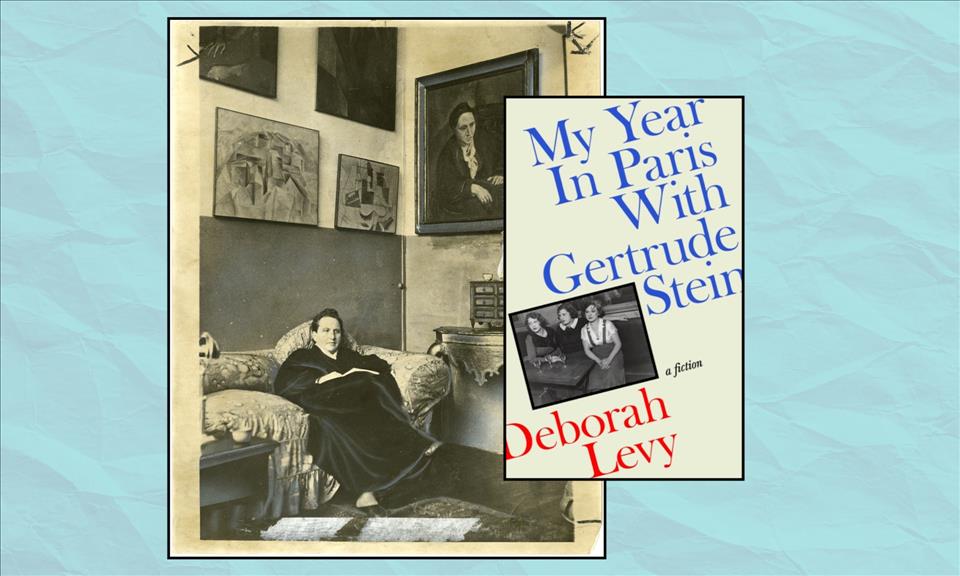
My Year In Paris With Gertrude Stein By Deborah Levy A Boundary Pushing Work Of Which The Modernist Would Be Proud
Author: Robin Styles
(MENAFN- The Conversation) My Year in Paris with Gertrude Stein is Deborah Levy's latest genre-defying novel. It is at once a compelling contemporary fiction and an extended meditation on the importance of Stein, who Levy describes as the godmother of modernism, a queer icon, a self-declared genius and a writer who has baffled readers and critics for a century.

The structure of Levy's novel artfully embraces many of Stein's concerns. Stein was an artist fascinated by methods of making, as shown in her magnum opus, The Making of Americans (1925). Levy embraces this approach, constructing a novel in which her protagonist is continually composing her essay on Stein, as she debates Stein's works with her friends, recreates recipes from the cookbook of the American writer and Stein's life partner, Alice B Toklas, and retraces the paths that Stein and Toklas followed around Paris. The form of the novel evolves as Levy's characters are continually composing their thoughts and composing themselves.
Stein is thought to have coined the term “The Lost Generation” to describe the community of expatriate writers who made Paris their home in the early 20th century. Levy's characters are similarly exiled from their homes; their lives split in important ways. Eva is an artist who has travelled to Paris to finish a graphic novel, leaving her husband in Toronto, Canada. They speak once a week. Fanny is a sexually adventurous financier from Paris attempting to conduct many simultaneous lives. Together they are searching for Eva's missing cat.
There are wonderful moments, including when the narrator is walking through Pere Lachaise Cemetery searching for Stein's grave and reflecting on the lives of great modernists. Some of the most impressive sections of the novel come when Levy expands upon the source material, riffing on her own version of Stein's projects. In Wars I Have Seen (1945), Stein's memoir of life in occupied France, she observed that“however near a war is it is always not very near. Even when it is here”. Levy crafts an updated vision, giving a sense of the simultaneous presence and absence of war in our own contemporary moment:
This duality of presence and absence haunts the novel, and the protagonist faces a similar crisis as she ruminates on Stein's poetry, and returns to the archives, frustrated, lamenting“when I look at photographs of her, I cannot get into her eyes”. Stein's eyes have meant so much to her critics and admirers. Picasso's famous portrait of her hangs in New York's Metropolitan Museum of Art, with its geometrically perplexing eyes that appear to gaze outwards, beyond the limits of its frame.
In Passionate Collaborations: Learning to Live with Gertrude Stein (2005), the poet and scholar Karin Cope ponders some of the questions which enter the viewer's mind when faced with these unusual eyes, suggesting that Stein“does not look as one ought to”. This phrase holds its multiplicity of meaning, and figures Stein as a transgressor, looking out beyond the limits of the frame – and, by extension, beyond any fixed idea of what a portrait is or could be.
And here we return to Levy's novel which is at once an extended portrait of Stein but also a contemporary fiction, and a nuanced reimagining of Stein's ideas. It is playful, experimental, formally innovative yet also grounded in a realist approach. It is original. As Levy's narrator observes of Stein:“Every century needs an artist to dismantle coherence as we have been taught it and make a space for something new to happen.”
This article features references to books that have been included for editorial reasons, and may contain links to bookshop. If you click on one of the links and go on to buy something from bookshop The Conversation UK may earn a commission.
Institution:University of Leeds

Legal Disclaimer:
MENAFN provides the
information “as is” without warranty of any kind. We do not accept
any responsibility or liability for the accuracy, content, images,
videos, licenses, completeness, legality, or reliability of the information
contained in this article. If you have any complaints or copyright
issues related to this article, kindly contact the provider above.
Most popular stories
Market Research

More Story






Comments
No comment