




403
Sorry!!
Error! We're sorry, but the page you were looking for doesn't exist.
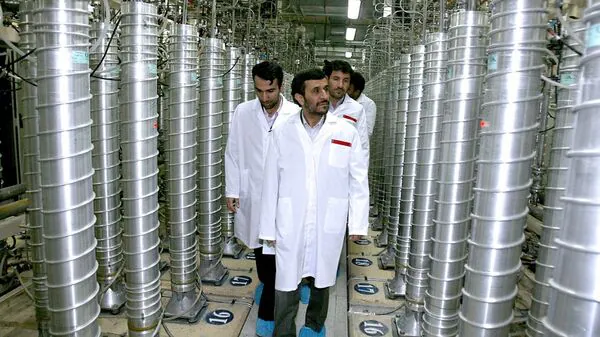
What Iran Offered To Do With Its Nuclear Programme? Why Did Trump Walk Away?
(MENAFN- Live Mint) Iran formally reportedly offered to suspend its uranium enrichment programme for up to five years, a concession the Trump administration swiftly turned down, insisting on a 20-year freeze instead. The development was confirmed by New York Times, citing two Iranian and one US official.What Happened in Islamabad? Inside the US-Iran Nuclear Talks
The weekend negotiations in the Pakistani capital were, by any measure, a significant diplomatic moment. Officials from the United States, including Vice president JD Vance, and Iran sat across from one another in Islamabad and exchanged concrete proposals on the future of Iran's nuclear programme.
Also Read | Trump reveals details of Iran deal: Key pointsAccording to two senior Iranian officials and one US official cited by NYT, Washington DC asked Tehran to suspend uranium enrichment for 20 years. Iran responded formally on Monday with a counter-offer: a suspension of up to five years. The Trump administration has reportedly rejected it.
The Enriched Uranium Dispute: Where the Fuel Goes Matters as Much as the FreezeA second and equally fraught question dominated the Islamabad talks: what happens to Iran's existing stockpile of highly enriched uranium?
The US position is clear - the fuel must leave Iran entirely. Tehran has rejected that demand, insisting the uranium remain on Iranian soil. As a compromise, Iranian negotiators offered to dilute the stockpile significantly, rendering it incapable of being used to produce a nuclear weapon in its current state.
American officials, however, remain wary. The underlying concern is that Iran would retain physical possession of the material and could, in future, re-enrich it to weapons grade. Dilution, in this reading, is a reversible concession, not a permanent one.
Also Read | Op Epic Fury Highlights: 'Give it or we take it' - US ultimatum on Iran uraniumMeanwhile, Russia has quietly offered a potential way through this impasse. Kremlin spokesman Dmitry Peskov confirmed on Monday that Moscow's proposal to accept Iran's enriched uranium as part of a broader settlement remains on the table.
"This proposal was voiced by President Putin in contacts with both the United States and regional states. The offer still stands, but it has not been acted upon," Peskov said, according to Russia's state-owned RIA Novosti news agency. Peskov added that Moscow stood ready to support efforts aimed at de-escalating the crisis.
Vance Says Iran "Didn't Move Far Enough" But Leaves Door OpenSpeaking on Fox News on Monday evening, Vice President JD Vance offered the most detailed public account yet of where the US-Iran negotiations stand.
"Some good conversations," JD Vance said of the Islamabad talks, adding that progress had been made. But he was direct about the limits of that progress.
Iran showed some flexibility but "didn't move far enough," he said. On the question of whether further talks would take place, Vance suggested the initiative now lay with Tehran: the question would be“best put to the Iranians.”
Also Read | Iran US War LIVE: Trump says 'willing to engage with Iran'On the Strait of Hormuz, the critical Persian Gulf waterway through which approximately one fifth of the world's seaborne oil passes, Vance was unambiguous about its centrality to any final settlement: reopening it would be critical to any deal.
Despite the distance between the two sides, Vance struck a note of possibility. There is "a grand deal to be had," he said, though he placed the burden of movement squarely on Iran. The "big question from here on out," he added, is "whether Iranians will have enough flexibility."
US Naval Blockade of Iranian Ports Complicates the Diplomatic PictureThe negotiations in Islamabad unfolded against a deteriorating military backdrop. President Trump announced a US naval blockade of Iranian ports on Monday, a move intended to choke off Iran's oil revenues and accelerate pressure on its leadership to accept American terms for ending a conflict now entering its second month.
Also Read | Why US is mulling sending Special Forces into Iran? What happens if they go in?The Trump-ordered naval blockade, which came into effect Monday morning, targets ships "entering or departing Iranian ports and coastal areas," while allowing other vessels to transit the Strait of Hormuz en route to other destinations. The policy carries enormous economic consequences: the price of Brent crude, the global oil benchmark, reached $102 a barrel on Monday before settling near $99 - a rise of more than 50 per cent since the conflict began in late February.
Iran responded with fury. A spokesman for its powerful Revolutionary Guards threatened to "introduce new methods of warfare," while Iranian military spokesman Ebrahim Zolfaghari warned that "no port in the Persian Gulf and the Sea of Oman will be safe" if Iranian ports were threatened.
The blockade has also created friction within the Western alliance. Several European leaders rejected Trimp's measure on Monday, declining to join the US-led effort. At least one vessel, a tanker linked to Iran, appeared to defy the blockade outright.

Legal Disclaimer:
MENAFN provides the
information “as is” without warranty of any kind. We do not accept
any responsibility or liability for the accuracy, content, images,
videos, licenses, completeness, legality, or reliability of the information
contained in this article. If you have any complaints or copyright
issues related to this article, kindly contact the provider above.
Most popular stories
Market Research

More Story





Comments
No comment