





403
Sorry!!
Error! We're sorry, but the page you were looking for doesn't exist.
Podcast: Real Time Stakeholder Intelligence Is Critical For The Function
(MENAFN- PRovoke)
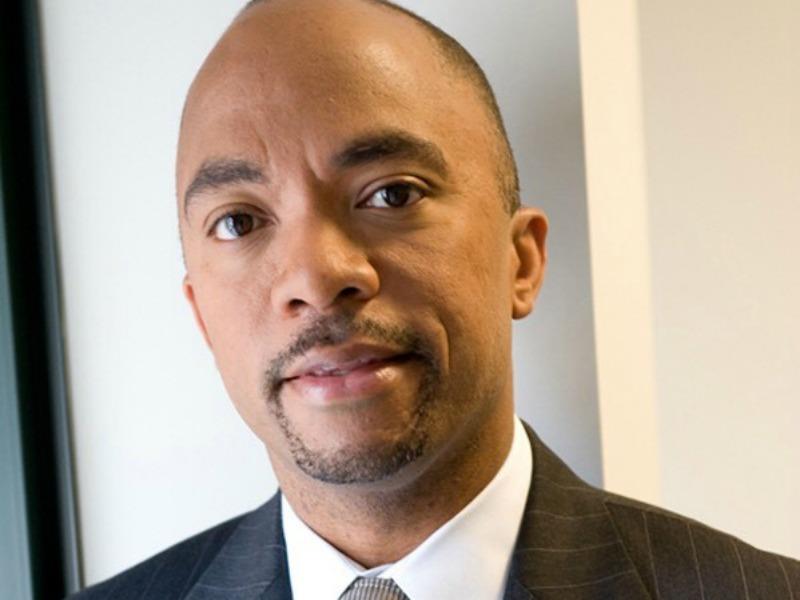
A month or so ago, reputation intelligence company Caliber announced a US advisory board, including former Medtronic and Verizon CCO Torod Neptune (pictured), now a professor at UNC–Chapel Hill, to help the company connectstakeholder intelligence to the real-world challenges organizations face every day.
At the time, Caliber CCO Shahar Silbershatz called for what he called“an intervention” on behalf of the profession, promoting a more real-time, data-driven, and disciplined approach to communication.
In this edition of the PRovoke Media podcast, editor Paul Holmes sat down with Neptune and Silbershatz to discuss the state of reputation intelligence, the need for real-time information, and the future of stakeholder capitalism itself.
These are some of the key takeaways:
At the time, Caliber CCO Shahar Silbershatz called for what he called“an intervention” on behalf of the profession, promoting a more real-time, data-driven, and disciplined approach to communication.
In this edition of the PRovoke Media podcast, editor Paul Holmes sat down with Neptune and Silbershatz to discuss the state of reputation intelligence, the need for real-time information, and the future of stakeholder capitalism itself.
These are some of the key takeaways:
-
“Most companies use reputation measurement for reporting purposes rather than decision-making purposes,” says Silbershatz
“When I think about some of the more significant challenges for me throughout my career as a CCO, one was the inability to really capture real-time insight,” says Neptune.
Silbershatz:“Comms has this dual role. It represents the business to the world, but it also represents the world to the business.”
Silbershatz:“When we talk about stakeholder intelligence, actually, what we mean is the collection and synthesis of relevant data about relevant stakeholders from different multiple sources.”
Neptune: We need to take“traditional communications KPIs-volume, sentiment-and attach them to this higher order of business outcomes.”
Silbershatz:“In a lot of the cases where we work with clients, we realize one of the things that are missing is basically data culture, just just the DNA, knowing how to work with data.”
Silbershatz:“We think a lot more work needs to be done, not just to have the right tools in place, but actually also to run the different scenarios.”
Silbershatz:“Human judgment is going to continue to be very important, because we're talking about building trust, and trust is a human quality.”
Neptune:“Our hunches are generally right, because we've all seen it before. But again, a hunch is not going to win you credibility in the boardroom.”
Neptune:“I think anywhere we can begin to put pen to paper on a dollar value that can be quantified in the boardroom, it's a positive.”
What follows is an abridged transcript, but the entire conversation is worth a listen.
Paul Holmes: I wrote an article a month or so ago in response to the Fortune Most Admired list, which continues to be of massive importance to CEOs. The article discussed some of the other measurement systems that perhaps provide more actionable information. But I wanted to ask about how companies are evaluating their reputations right now.
Shahar Silbershatz: There are a lot of methodologies out there for reputation measurement, and some of them are better than others, but the way that we see it, the problem remains the same: most companies use reputation measurement for reporting purposes rather than decision-making purposes.
A valid methodology means that it should be multi stakeholder and not single stakeholder. It should be real-time and not periodic. These two elements make any methodology more actionable, and that lends itself to being used for making decisions and taking action.
Torod Neptune: I put that in that category as a vanity KPI system that still lingers in the absence of us being able as a function to get super clear on a set of KPIs that matter and that are meaningful.
PH: The second thing that prompted this conversation is an announcement you sent out about what was described as an intervention for our industry, which sounds fairly dramatic. Why was that necessary?
TN: When I think about things that concern me, or topics that I speak consistently about, I have been of the view that the communications discipline in general is in need of becoming an intelligence discipline. When I think about some of the more significant challenges for me throughout my career as a CCO, one was the inability to really capture real-time insight, to have my finger on the pulse of what was happening across those audiences that mattered to my brand, moment to moment.
SS: One of the issues we're seeing as there's a lot of talk about how the world is changing, and there's a lot of turbulence, there's also a lot of talk about the comms function needing to become more strategic. But I'm not sure that there's enough talk about how it can become more strategic. From our perspective, data driven decision making is obviously one of those ways to become more strategic.
Having a multi-stakeholder and more of a real time view of the world, is necessary to become more strategic.
Comms has this dual role. It represents the business to the world, but it also represents the world to the business. In order to represent the world to the business to help make better decisions, you need to understand your stakeholders. And what we're seeing today are a lot of blind spots in understanding stakeholders. A lot of leaders over-rely on social listening, social data.
So leaders rely on the wrong data, or don't rely on data at all.
PH: Social listening has become de rigueur over the last decade, and while I understand the difficulty of discerning signal amid all the noise, it's still being deployed by a huge number of senior communications professionals and their agencies. On the other hand, in terms of sort of a benchmark of performance, many are still relying on that suite of metrics that are, by their nature, backward looking. So what's the alternative to those two things?
SS: We don't dislike social listening. We think it's a great source of insight, but we don't think it works well in isolation, because we think it's narrow. When we talk about stakeholder intelligence, actually, what we mean is the collection and synthesis of relevant data about relevant stakeholders from different multiple sources.
Social media is too narrow in that sense, and periodic, annual data, when change is so rapid, is not something you can wait for. You need to have that in real time, which is why we conduct the interviews on a daily basis and allow our users to look at the data in real time, so that they can be informed of what's going on and can change decisions.
PH: We're hearing a lot these days about the role of the chief communications officer in helping companies see around corners. What were the most valuable sources of stakeholder intelligence that can help them do that, in your experience?
TN: If I step back and think about what a CEO needs and a board needs, it's insight, it's clarity. Ongoing, consistent intelligence is critical, but then it takes this innate ability to translate it into business outcomes, being able to attach traditional communications KPIs-volume, sentiment-attach them to this higher order of business outcomes.
PH: I'm hearing a lot about the ability of AI to find not just correlations, but cause and effect relationships between communications activity and business outcomes. Is that something that you've begun to see?
TN: My counterparts, I'd say a third, maybe a quarter, are organizing the function around insight and intelligence, with partners who in the last several years have created much more savvy and sophistication tools. I think that allowed us as CCOs to be much more savvy about this discipline.
I think we're struggling a bit with the models to figure out how to operationalize this system of intelligence that's critical for this next phase for the function.
SS: It's not just a new tech stack that is needed. It's also new skills and new culture. And in a lot of the cases where we work with clients, we realize one of the things that are missing is basically data culture, just the DNA, knowing how to work with data.
PH: Over the last five or six years there have been a number of seismic shocks to the corporate system and to the geopolitical order, including the backlash against ESG, the tariffs and the war. I'd suggest that some of these things were more predictable than others. I wonderhow we missed all of those things, and are there currently extant systems that would have helped us recognize these things before we did?
SS: The beauty of having daily figures from around the world for us is we could see immediately, also the reputational impact of all of those events that you've mentioned.
But I think it's a fair question, why are companies not picking up enough signals to be able to prepare for this? And I think that you rightly point out that the role of comms is being on the lookout for some of the risk factors that are out there, and I think this is partly down to not having enough tools in place to pick up the signals, and maybe not having The openness or the strategic understanding of how those events will impact the business.
We think a lot more work needs to be done, not just to have the right tools in place, but actually also to run the different scenarios.
TN: When you think about the ability to synthesize insights-whether they're cultural, technological, geopolitical-and combine that with some of the data streams we're talking about, that requires a different kind of capability than is traditionally what we have built in this discipline.
That points to the future opportunity for our function, but also points to where there's some risk. The credibility of our discipline that still is a pain point.
PH: I think that this idea of managing relationships with all of your stakeholders In a coordinated, strategic way makes perfect sense. But I do wonder whether in North America, at least, that idea doesn't seem a little quaint right now, given that companies seem to understand there's one stakeholder out there who can interfere with their business to an extraordinarily damaging extent. And so that one stakeholder needs to be, if not the exclusive focus, the primary focus.
SS: I was asked a while ago about why a Danish domiciled company should be bringing the gospel to America. And I talked a little bit about how Denmark does have a history of thinking about the stakeholder ecosystem.
PH: The first time I visited the Nordics, one of the things that was striking, to the point of being shocking, was that the people I spoke to talked about citizens, rather than consumers. If you spend time in America, consumers is a synonym for people. If you go to the Nordics, they talk about citizens, not consumers.
SS: I found that after living in London and New York, two much more consumerist societies, there is there is something in the DNA here around collectivism, and that has also permeated the business world. So there are a lot of very old companies here that are foundation owned, and in their charter from 100 years ago, it's very clearly stated that they are here to contribute to society and the communities.
But of course, it's also been a commercial reality that stakeholders matter, because stakeholders will affect your success as a business, and that's true on both sides of the pond. Also in America, your stakeholders will determine whether you are a successful business.
If you cannot attract the right partners, if you cannot have loyalty among your employees and your customers, if you are not advocated for by influencers and other opinion leaders, you will not be successful as a business. That is a fact.
TN: I don't think we've ever thought that all stakeholders were created equal. I think recent events have thrown the traditional stakeholder ecosystem model into a bit of a tizzy. It's forced a real recalibration, and in some instances of serious question around the degree to which we truly are practicing stakeholder capitalism or just pragmatic survival.
But I do think it's still true that they all matter, some more than others, depending on the day or the issue or the topic, and perhaps the situation we find ourselves in.
PH: The critical part of the role has always been to balance stakeholder needs in a way that meets the objectives of the company at any given moment?
SS: Human judgment is going to continue to be very important, because we're talking about building trust, and trust is a human quality, and this is important also in the current discussion about AI and the extent to which AI is going to take over decision making from humans.
Human judgment and human involvement and control in these processes is critical if you want to show empathy, if you want to build trust, if you want to engage people and build relationships. The problem is a lot of decisions were based on gut feeling, traditionally. And we believe that today, gut feeling-especially because of the complexity of the world today-is just not good enough.
TN: I used to challenge my teams that we've got to get out of the hunch business. Now, our hunches are generally right, because we've all seen it before. But again, a hunch is not going to win you credibility in the boardroom, and the board doesn't care about your hunches.
The power in the conversation is data. It's how we can contextualize this data that is our entry point into the board conversation, or into that CEO conversation, because that's what they care about most.
I do think where we're leaning still on what we know from historical experiences it makes us vulnerable and makes our function vulnerable, certainly in this environment.
PH: To conclude, the last few months I've seen a number of pieces of research that have attempted to put a dollar value on reputation. There's more of this out there than there was. Are we getting close to being able to put a credible and convincing dollar value on reputation and stakeholder relationships, and to what extent will that address the CEO and board level concerns about the contribution of communications to the business.
TN: There are three or four that I've seen. I think they are progressive in their value. Because, again, this has been a gap for us, the ability to attach what we do to the P&L statement, or to quantify the value of the function. And so I think anywhere we can begin to put pen to paper on a dollar value that can be quantified in the boardroom, it's a positive.
SS: There's a lot of different studies about the value of reputation. I think we have about 20 listed in one of our documents.
It's pretty accepted now that businesses have a whole lot of intangible value, that the volume of intangible asset exceeds by far the value of tangible assets. There's sufficient evidence by now that reputations have a financial value, and I think all of these studies contribute to that consensus that reputations are commercially valuable, and I think that perception is important.
I think what matters is they are commercially valuable, hence they need to be managed. And what does being managed mean? It means having a professional approach to it, having a data driven approach, but also having the right practices, skills, systems in place to manage that professionally and to be taken seriously by the rest of the company.

Legal Disclaimer:
MENAFN provides the
information “as is” without warranty of any kind. We do not accept
any responsibility or liability for the accuracy, content, images,
videos, licenses, completeness, legality, or reliability of the information
contained in this article. If you have any complaints or copyright
issues related to this article, kindly contact the provider above.
Most popular stories
Market Research

More Story








Comments
No comment