




403
Sorry!!
Error! We're sorry, but the page you were looking for doesn't exist.
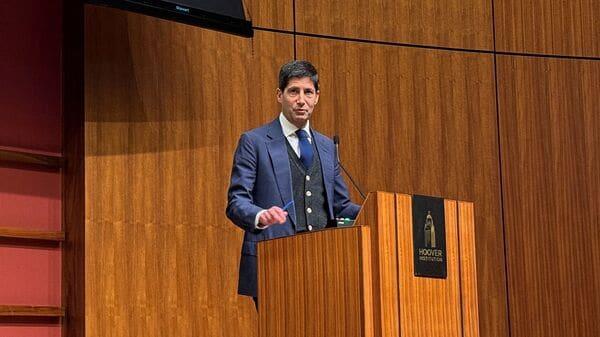
Senate Banking Committee Plans Kevin Warsh Fed Chair Hearing In Week Of April 13: Report
(MENAFN- Live Mint) The Senate Banking Committee is preparing to convene a confirmation hearing for Federal Reserve chair nominee Kevin Warsh as early as the week of April 13, according to Punchbowl News, setting the stage for a consequential debate over the future direction of US monetary policy amid mounting economic uncertainty.Senate Moves Forward Despite Political Resistance
Plans for the hearing come after weeks of political friction that have stalled Kevin Warsh's nomination in the Senate. The delay has left current Federal Reserve chair Jerome Powell in position, even as President Donald Trump continues to press for a successor more inclined towards faster interest rate cuts.
Also Read | What happens at the Fed if Kevin Warsh isn't confirmed by May 15The nomination has become a focal point in Washington DC's broader economic debate, with lawmakers weighing concerns over inflation, financial stability, and the independence of the central bank.
Inflation Pressures Complicate Leadership TransitionThe timing of the prospective hearing coincides with a deteriorating inflation outlook. Oil prices have surged following US airstrikes on Iran, while an expanding conflict in the Middle East has disrupted critical shipping routes, amplifying cost pressures across global markets.
Traders have correspondingly pared back expectations of any rate cuts this year, as elevated energy prices feed into broader inflation and constrain the Federal Reserve's ability to loosen monetary policy.
Warsh's Vision: Shrinking the Fed's Balance SheetAt the centre of Kevin Warsh's policy stance is a proposal to significantly reduce the Federal Reserve's $6.6 trillion balance sheet-a move he has suggested could create room for eventual rate cuts. However, the nominee has offered limited detail on the mechanics of such a strategy, leaving investors and analysts searching for clarity.
Also Read | Trump says he would not have picked Kevin Warsh as new Fed Chair if...The approach aligns, in part, with views expressed by senior policymakers including Fed Vice Chair for Supervision Michelle Bowman and Treasury Secretary Scott Bessent, both of whom have advocated scaling back liquidity requirements to ease pressure on bank reserves.
A Complex Roadmap for Policy ImplementationPotential pathways for reducing the balance sheet have begun to emerge from academic and policy circles. Among them is a framework outlined by Darrell Duffie, which sketches a multi-stage process requiring both operational adjustments and regulatory reform.
Initial steps could involve greater reliance on temporary open market operations by the New York Fed, a relatively swift measure designed to stabilise fluctuations in reserve demand. More structural changes, such as revising liquidity regulations and supervisory practices, would likely take months to implement and require careful coordination to avoid penalising banks for utilising facilities like the discount window.
Also Read | Kevin Warsh isn't crazy, the Fed's big balance sheet isOther proposals include adjusting the interest paid on reserve balances beyond certain thresholds, as well as introducing liquidity-saving mechanisms within the payments system, an approach adopted by central banks such as the Reserve Bank of New Zealand. These latter reforms, however, could take years to design and execute.
“You can't do much unless you reduce the demand for reserves,” Duffie said of Warsh's desire to shrink the Fed's balance sheet.“You could pick off one or two of these, have a little effect,” he said, referring to his four proposals.“If you want to have a lot of effect, it's going to be quite a lot of work.”
Markets Watch for Signals on Rates and Policy DirectionThe prospect of Kevin Warsh 's confirmation hearing is being closely monitored by financial markets, which are seeking clearer signals on the trajectory of US monetary policy. Trump has previously indicated that a willingness to lower interest rates swiftly would be a key criterion for his nominee, adding a political dimension to the Fed's traditionally technocratic decision-making.
Also Read | Fed pick Kevin Warsh 'certainly wants to cut rates', says TrumpYet with inflationary pressures intensifying and geopolitical risks rising, the scope for immediate rate cuts appears increasingly constrained-raising questions about how Warsh might reconcile policy ambitions with economic realities

Legal Disclaimer:
MENAFN provides the
information “as is” without warranty of any kind. We do not accept
any responsibility or liability for the accuracy, content, images,
videos, licenses, completeness, legality, or reliability of the information
contained in this article. If you have any complaints or copyright
issues related to this article, kindly contact the provider above.
Most popular stories
Market Research

More Story





Comments
No comment